

ENOLOGY / Original research article
Abstract
Minerality has been the most popular and yet controversial wine descriptor of the last fifteen years. Nowadays, minerality can be defined as a complex multidimensional and multimodal concept including aroma, taste and trigeminal sensation. Main descriptors associated with this concept remind gunflint, shellfish or struck match associated with slight reductive notes while underlining the molecular contribution of sulphur compounds. Since the amount of oxygen present in the wine can alter sulphur compounds composition, we hypothesized that perceived minerality can be modified by using stoppers with different oxygen permeability. To test this hypothesis, a sensory study combining experts’ minerality assessments and sensory description by a trained panel was conducted. Volatile sulphur compounds and basic oenological parameters were also quantified. Six white wines couples from different vintages were selected in this study. Each one was bottle aged with two types of closures with different oxygen permeabilities. Experts minerality ratings showed a gradient structure of perceived minerality across the samples. Descriptive results from experts and trained panellists confirmed the correlation between minerality and reductive notes and an opposition to ageing bouquet. Perceived minerality was more associated with samples using low permeability stoppers confirming our main hypothesis. In addition, four volatile thiols as well as free and total SO2 were found to be positive predictors of perceived minerality.
Introduction
Despite its increasing popularity, the term minerality has long been a topic of debate in the wine industry and among wine researchers, mainly because of its lack of clear definition. Since 2010, wine researchers have conducted many studies to describe the term as a wine descriptor (see Parr et al., 2018 for a review). One of the main difficulties in defining minerality is that the descriptor involves several sensory modalities, mainly olfaction and taste. Several studies have found that experts’ minerality judgements show rather high interindividual variability. For instance, Ballester et al. (2013) showed that for Chardonnay minerality assessments, the lack of consensus prevented discrimination between the samples and only after panel segmentation was some sort of consensus found within the experts’ sub-groups. Parr et al. (2015) showed a slight cultural effect between French and New Zealand experts in terms of the importance of olfaction on minerality assessment. Previous studies have attempted to define wine minerality through its associations with monodimensional, well-defined sensory descriptors. Concerning aromas, several authors have found significant correlations between minerality and reductive notes (flinty/smoky, gunflint, cabbage, or shellfish) as well as citrus notes. In contrast, it has been negatively correlated with descriptors such as tropical fruits, butter, vanilla, or oak (Ballester et al., 2013; Heymann et al., 2014; Parr et al., 2015; Rodrigues et al., 2017). Moreover, some studies have found significant positive correlations between minerality and acidity and, in some cases, bitterness. Moreover, minerality has been found to be negatively correlated with sweetness (Ballester et al., 2013; Parr et al., 2015; Heymann et al., 2014).
Perceived minerality has also been explored from a physicochemical perspective. The most immediate hypothesis concerning the chemical origin of wine minerality is the presence of minerals in wine that, allegedly, come from the soil. This idea has often been taken for granted by many actors in the wine industry for more than two decades. The sensory impact of soil minerals in wine has been challenged by Maltman (2013), who argued that minerals’ low cation exchange capacity, combined with minuscule concentrations of mineral nutrients in wine (usually below their detection thresholds), suggests that minerality is not the taste of vineyard minerals in the wine. According to Maltman (2013), the only significant exception is halite (sodium chloride), which is responsible for perceived saltiness.
Several studies have linked perceived minerality to the cations’ composition of the wines, including Chardonnay (Rodrigues et al., 2017), Sauvignon blanc (Parr et al., 2016), and Chasselas (Deneulin, 2025). Among all the cations considered in the different studies, very few showed significant effects on minerality. These cations can potentially affect perceived saltiness, which has been conceptually related to minerality by wine experts (Ballester et al., 2013; Rodrigues et al., 2015a; Deneulin & Bavaud, 2016) and consumers (Deneulin et al., 2016). Unfortunately, most of the sensory studies on minerality did not measure perceived saltiness, and the ones that did (Deneulin, 2025) found no significant effect. Deneulin (2025) found a significant negative effect of Al and Zn on Chasselas perceived minerality but with no significant effect on saltiness. These two cations have virtually no sensory impact at typical concentrations in wine, and the author did not propose any plausible explanation of these correlations. According to Parr et al. (2016), Na+ concentrations were significant positive predictors of minerality for Sauvignon blanc wines, but only for experts from New Zealand. No such effect was found for French experts, who showed a minerality concept more based on olfactory cues. Rodrigues et al. (2017) described an indirect negative correlation between copper (Cu+2) concentration and perception of minerality in wine. Moreover, the study showed a positive correlation between minerality perception and methanthiol (MeSH), a compound known to contribute shellfish aromas to wine. According to Franco-Luesma and Ferreira (2014), Cu+2 strongly interacts with both H2S and MeSH, leading to the formation of odourless MeSH-Cu complexes. This interaction likely reduces the aromatic contribution of MeSH, thereby diminishing its role in minerality perception.
In addition to the above-mentioned methanethiol, other sulfur volatile compounds have been repeatedly linked to perceived minerality for different cultivars. One example is benzene methanethiol (benzyl mercaptan), which is frequently used as a reference aroma for flinty/mineral and mineral/flinty/smoky attributes (Parr et al., 2010). According to Tominaga et al. (2003), benzene methanethiol is responsible for gunflint and burnt notes that can be associated with minerality. This compound can be formed in the presence of yeasts through reduction pathways (Swiegers & Pretorius, 2007). Several studies have highlighted the impact of other sulfur compounds on the perception of minerality. For instance, Starkenmann et al. (2016) showed that Chasselas wines judged as highly mineral have significantly higher concentrations of di- and trisulfanes than Chasselas wines judged as not mineral. These compounds are responsible for the gunflint aroma and are therefore associated with minerality. Parr et al. (2016) identified both free and bound SO2 as significant predictors of the perceived mineral character in Sauvignon blanc wine.
Several of the above-mentioned volatile sulfur compounds, particularly mercaptans, are also involved in reduction off-flavour (Ribereau-Gayon et al., 2006; Jackson, 2022; Franco-Luesma et al., 2016; Müller et al., 2022). The limit between reductive off-flavours and positive reduction has not been fully understood yet.
To sum up, minerality seems to be based more on the presence of sulfur compounds than on actual minerals. The concentration of sulfur compounds in wine has been shown to be significantly dependent on the oxygen permeability of cork (Brajkovich et al., 2005; Karbowiak et al., 2009; Silva et al., 2011). Another potential link is the positive correlation between perceived wine minerality and slightly reductive notes (Ballester et al., 2013; Heymann et al., 2014; Rodrigues et al., 2017; Deneulin, 2025), which suggests that wine oxidative notes may be negatively correlated with wine minerality. Moreover, SO2 acts as a protective compound against wine oxidation by reacting with oxidation intermediates such as hydrogen peroxide and quinones (Carrascón et al., 2017). Taken together, all these findings suggest a potential link between the oxygen permeability of the closure and wine minerality.
The objective of the present study was therefore to investigate whether the different cork oxygen permeabilities could impact the perception of minerality in white wine. The main hypothesis of this work was that wines using cork with lower oxygen permeability will show higher perceived minerality, whereas those using higher permeability corks will show the opposite. Moreover, based on the work of Nikolantonaki et al. (2018), Nikolantonaki et al. (2019), and Romanet et al. (2019), we also hypothesised that the effect of closure on perceived minerality will be dependent on the wine matrix. Since wine minerality involves multiple sensory modalities, the experimental design also included “nose only” and “full tasting” conditions to consider the modulation of perceived minerality by tastes and textures on the palate. Finally, the potential impact of visual cues on perceived minerality was also explored by conducting sensory evaluations both in dark and in transparent glasses. Finally, a trained panel was set up to carry out a descriptive analysis of the samples to externally validate experts’ free descriptions and the link of minerality to reductive and oxidative sensory characteristics.
Materials and methods
1. Wine samples and type of stoppers assessed
The sensory analysis of the wines was conducted on 12 samples, including 6 wines sealed with two types of stoppers: microagglomerated cork (Diam bouchage, Céret, France) with known oxygen transfer rate (OTR) and one natural cork with inconsistent OTR (Suhas et al., 2025): one with low oxygen permeability (LP) and the other with high permeability (HP). The selection criteria were the following:
- To have the exact same wine aged in bottles using two stoppers with different OTR values.
- To choose samples from different vintages and regions to cover a wide range of sensory styles.
- To have the necessary volume stored to be able to carry out the sensory studies as well as the chemical analyses.
Wines were stored in 750 mL bottles in a cellar at 13 °C ± 2 °C. The list of samples and their characteristics is presented in Table 1.
Cultivar | PDO, Country | Vintage | OTR | Ageing before bottling | Sample codes |
|---|---|---|---|---|---|
Fiano | Fiano d’Avellino DOCG, Italy | 2019 | 0.3 mg/year | 8 months | F20LP |
0.6 mg/year | F20HP | ||||
Grenache gris | AOP Collioure, France | 2018 | 0.3 mg/year | 16 months | GG18LP |
Natural cork | GG18HP | ||||
Grenache blanc | AOP Roussillon, France | 2015 | 0.3 mg/year | 5 months | GB15LP |
0.4 mg/year | GB15HP | ||||
Chardonnay | AOP Limoux, France | 2013 | 0.3 mg/year | 12 months | CH13LP |
0.4 mg/year | CH13HP | ||||
Chardonnay | AOP Limoux, France | 2011 | 0.3 mg/year | 21 months | CH11LP |
0.4 mg/year | CH11HP | ||||
90 % Grenache blanc, 10 % Roussane | AOP Roussillon, France | 2009 | 0.3 mg/year | 14 months | GB09LP |
0.4 mg/year | GB09HP |
2. Sensory analysis
2.1. Participants
For the evaluation of minerality by an expert panel, 28 wine professionals (19 men, 9 women, average age 45, SD 9.6 years) were recruited from the Côte d’Or and the Chablis areas. Participants had an average of 20.5 years (SD 15.7 years) of experience in the wine industry in Burgundy. The objective of the expert panel was to evaluate the perceived intensity of minerality in wine samples through nose only and full tasting, using first dark glasses (DG) and then transparent (TG) glasses. They were also asked to provide verbal justifications of their minerality ratings for both full tasting conditions.
In parallel to the expert panel, a trained panel was recruited to describe the samples without the bias of knowing the topic of the study. Initially, 11 candidates were recruited to undergo sixteen 40-minute training sessions. They were PhD candidates, postdocs, and wine researchers from the Institut Universitaire de la Vigne et du Vin (Dijon, France). Additionally, 24 candidates enrolled in the National Diploma of Oenology joined the rest of the panel from the 13th session on, since they already had weekly wine-tasting lessons in the oenology program. The protocol of training sessions was developed based on the methodology proposed by Ballester et al. (2018). The primary objective was to familiarise the assessors with common wine aromas, with a particular focus on the oxidative and reductive aromas using the RedOx scale (Ballester et al., 2018). They were also trained in taste and trigeminal dimensions. The training was intended to enhance participants’ discriminatory capacity and consistency in intensity ratings. Sensory aroma references were prepared using commercial food products, including syrups, jams, juices, essential oils, and macerates, as well as wines spiked with wine-related food-grade odour compounds, as indicated by Ballester et al. (2018). The taste and trigeminal references used in the training period were tartaric acid for acidity, saccharose for sweetness, quinine for bitterness, ethanol for hotness, and acacia gum for roundness.
After the training period, three selection sessions were organised to screen the best-performing candidates for the sensory profile. The final selection was carried out over three sessions and panellists were selected based on criteria of repeatability, consensus and discrimination ability using PanelCheck software (version 1.4.2, Nofima, Tromsø, Norway).
The final descriptive panel consisted of 16 panellists (7 men, 9 women, average age 27 years).
2.2. Experimental design and procedure
Expert and trained panel sessions were carried out in the sensory room at the Institut Universitaire de la Vigne et du Vin (Dijon, France).
The sensory analysis by experts consisted of two series: one using dark glasses and the other using transparent glasses. In each series, participants were presented with 25 mL of each of the 12 samples, identified by three-digit codes. Water and unsalted crackers were available for palate cleansing. The sensory evaluation was divided into four series of 12 samples. The first series consisted of an orthonasal (nose only) minerality assessment of the samples in ISO dark wine tasting glasses (DG_NO condition). The second series consisted of a full tasting (odour and flavour) minerality assessment also in ISO dark glasses (DG_FT condition). The third series started after a 5-minute break and consisted of an orthonasal minerality assessment of the samples in ISO transparent wine tasting glasses (TG_NO condition), and finally the last series consisted of a full tasting (odour and flavour) minerality assessment also in ISO transparent glasses (TG_FT condition). Minerality assessments were carried out using a 10-point scale (0 = not mineral, 10 = very mineral). During the two full tasting series, panellists were asked to explain their ratings by providing one to three descriptive terms for each sample. For each session (Dijon and Chablis), two bottles of each sample were pooled to limit bottle-to-bottle effects.
The trained panels were not informed about the topic of the study. The wine samples (25 mL) were presented in dark ISO glasses and labelled with random three-digit codes. Water and unsalted crackers were available for palate cleansing. The trained panellists were instructed to rate the intensity of specific aromatic, gustatory, and trigeminal attributes (woody, floral, wilted flower, honey, fresh fruits, cooked fruits, wet rag, cabbage, gunflint, vegetal, acidity, saltiness, sweetness, bitterness, viscosity, alcohol) using 0-to-10-point scale (0 = absence, 10 = strong). In addition, trained panellists evaluated the wines on a RedOX scale ranging from –5 to +5, where negative values indicated reductive character, positive values indicated oxidative character, and 0 indicated neither oxidation nor reduction. RedJade Sensory Solutions LLC. Version 7.2.5 (Redwood City, CA, USA) sensory science software was used to collect the sensory data from expert and trained participants.
3. Chemical analysis
Polyfunctional thiols were analysed by DTDP derivatisation and UPLC/HRMS (Chen et al., 2024), whereas volatile light sulfur compounds (H2S, CS2, DMS) were analysed by SPME GC-MS based on Lytra et al. (2014) work. The list of chemical variables analysed on the samples is presented in Table 2. Concerning volatile compounds, repeatability of the analytical methods is systematically below 10 %.
Volatile sulfur compounds | Code | Enological parameters | Code |
|---|---|---|---|
Ethyl 2-sulfanyl acetate | 2-SAE | Ethanol content | TAV (% vol.) |
3-Sulfanylhexanol | 3-SH | Glucose fructose ratio | Glu/Fru |
3-Sulfanylhexyl acetate | 3-SHA | pH | pH |
4-Methyl-4-sulfanylpentanone | 4-MSP | Malic acid | MA |
3-Sulfanylheptanol | 3-SHEPT | Total polyphenols index | TPI |
Ethyl 2-mercaptopropionate | 2-MPE | Total acidity | TA |
Ethyl 3-mercaptopropionate | 3-MPE | Volatile acidity | VA |
Furfurylthiol | FFT | Total SO2 | SO2 total |
5-Methyl-2-furfurylthiol | 5M-FFT | Free SO2 | SO2 free |
2-Methyl-3-furanthiol | 2M-3FT | ||
2-Methyltetrahydrofuran-3-thiol | 2MTHF-3T | ||
Hydrogen sulphide | H2S | ||
Benzyl mercaptan | BMT | ||
Dimethyl sulphide | DMS | ||
Carbon disulphide | CS2 |
Fine chemical analysis of volatile compounds was carried out in the laboratories of the UMR Oenology of the Institute of Vine and Wine Science (France), as well as by Oenometrics, a transfer unit hosted in the research unit. In addition, the oenological composition of wines was obtained by Fourier Transform Infrared spectroscopy (FTIR) with a Foss WineScanTM 79000 (Foss, Nanterre, France). One bottle of each sample was used for the chemical analyses. Concerning the analysis of volatile sulfur compounds, all samples were analysed in duplicate. Only one measurement was performed for the oenological parameters.
4. Data analysis
Experts’ minerality scores were first analysed by two-factor ANOVA (sample and taster) to check for significant differences between the samples. All the samples with the two permeability levels, in the two evaluation conditions and in the two types of glasses, were combined in this ANOVA. To better understand the impact of the different parameters on the experimental plan, a second ANOVA was carried out, declaring 4 factors: the participant as a random factor, and condition (nose only and global), glasses (dark and transparent), and permeability (low and high) as main effects. All the two-way interactions were also included in the ANOVA model. Moreover, correlations between minerality average scores on the four conditions (DGNO, DGFT, TGNO, and TGFT) were explored using Pearson’s correlation coefficients.
Among all the words and expressions freely given by the experts to explain their minerality scores, only nouns and adjectives were kept. The only intensity modulators kept were the negative ones (low, lack of, little, etc.). Nouns and adjectives that had no descriptive function were also removed (palate, finish, nose, nice, etc.). The remaining words were lemmatised and grouped into categories based on sensory proximity and synonymy. The cleaned vocabulary and the way they were categorised are shown in Table S1. The citation frequency was calculated for each category and sample. Based on Campo et al. (2008) and Campo et al. (2010), only categories cited by at least 15 % of the panellists for a given sample were included in the analysis. Descriptors with frequencies below this threshold were considered as noise. Correspondence Analysis (CA) was carried out to visualise how the samples had been described and how they grouped according to their sensory properties.
Descriptive results from the trained panel were analysed by two-way ANOVA with assessors as a random factor and wine as a fixed factor. To provide an overall view of the sensory characterisation carried out by the trained panel, a Principal Component Analysis (PCA) was conducted. Only descriptors that showed significant differences among samples were included in the PCA.
Partial least squares regression (PLSR) analysis was used to predict the minerality average scores from the values of the chemical parameters (volatile sulfur compounds and oenological parameters). Cross-validation of the model was carried out using the “leave-one-out” procedure.
All statistical analyses were done by XLSTAT 2024 (Addinsoft statistical software, Paris France).
Results
1. Effect of permeability, perception condition, and visual information on perceived minerality
The two-way ANOVA showed a significant sample effect (F = 4.56; p < 0.0001). The results of the subsequent post-hoc Duncan test are presented in Table 3. It is worth noting that the top 10 wines are significantly more mineral than the bottom 11 wines. All samples of the top group, except CH11HP_DG_FT and CH11HP_TG_FT, had an OTR of 0.3 mg/year. On the opposite, all the samples of the bottom group had OTR values of 0.4 mg/year or more.
Sample | Minerality average score | Differences (Duncan test) | |||||||||||||||||
GG18LP_TG_FT | 6.16 | A | |||||||||||||||||
GG18LP_DG_FT | 5.80 | A | B | ||||||||||||||||
GG18LP_DG_NO | 5.72 | A | B | C | |||||||||||||||
GG18LP_TG_NO | 5.68 | A | B | C | D | ||||||||||||||
CH13LP_TG_FT | 5.44 | A | B | C | D | E | |||||||||||||
CH13LP_DG_NO | 5.32 | A | B | C | D | E | F | ||||||||||||
CH11HP_DG_FT | 5.24 | A | B | C | D | E | F | G | |||||||||||
CH11LP_DG_NO | 5.08 | A | B | C | D | E | F | G | H | ||||||||||
CH11HP_TG_FT | 5.04 | A | B | C | D | E | F | G | H | I | |||||||||
CH13LP_DG_FT | 4.96 | A | B | C | D | E | F | G | H | I | J | ||||||||
CH11LP_DG_FT | 4.88 | A | B | C | D | E | F | G | H | I | J | K | |||||||
CH11LP_TG_FT | 4.80 | A | B | C | D | E | F | G | H | I | J | K | |||||||
CH11HP_DG_NO | 4.72 | B | C | D | E | F | G | H | I | J | K | L | |||||||
CH13HP_DG_FT | 4.64 | B | C | D | E | F | G | H | I | J | K | L | M | ||||||
F20LP_DG_FT | 4.64 | B | C | D | E | F | G | H | I | J | K | L | M | ||||||
GB09LP_TG_NO | 4.64 | B | C | D | E | F | G | H | I | J | K | L | M | ||||||
GB15LP_DG_NO | 4.60 | B | C | D | E | F | G | H | I | J | K | L | M | N | |||||
CH13LP_TG_NO | 4.52 | B | C | D | E | F | G | H | I | J | K | L | M | N | O | ||||
CH11HP_TG_NO | 4.48 | B | C | D | E | F | G | H | I | J | K | L | M | N | O | ||||
F20LP_TG_NO | 4.44 | B | C | D | E | F | G | H | I | J | K | L | M | N | O | ||||
GB09LP_DG_NO | 4.36 | B | C | D | E | F | G | H | I | J | K | L | M | N | O | ||||
GB15LP_DG_FT | 4.32 | C | D | E | F | G | H | I | J | K | L | M | N | O | P | ||||
CH11LP_TG_NO | 4.28 | C | D | E | F | G | H | I | J | K | L | M | N | O | P | ||||
CH13HP_TG_FT | 4.24 | D | E | F | G | H | I | J | K | L | M | N | O | P | |||||
GB15LP_TG_FT | 4.24 | D | E | F | G | H | I | J | K | L | M | N | O | P | |||||
GB09LP_DG_FT | 4.20 | E | F | G | H | I | J | K | L | M | N | O | P | ||||||
F20LP_DG_NO | 4.16 | E | F | G | H | I | J | K | L | M | N | O | P | ||||||
GB09LP_TG_FT | 4.16 | E | F | G | H | I | J | K | L | M | N | O | P | ||||||
F20HP_DG_FT | 3.92 | F | G | H | I | J | K | L | M | N | O | P | |||||||
GB15HP_DG_FT | 3.88 | F | G | H | I | J | K | L | M | N | O | P | |||||||
CH13HP_DG_NO | 3.84 | F | G | H | I | J | K | L | M | N | O | P | |||||||
F20LP_TG_FT | 3.76 | G | H | I | J | K | L | M | N | O | P | Q | |||||||
GB15LP_TG_NO | 3.72 | H | I | J | K | L | M | N | O | P | Q | R | |||||||
F20HP_TG_FT | 3.68 | H | I | J | K | L | M | N | O | P | Q | R | |||||||
F20HP_DG_NO | 3.56 | I | J | K | L | M | N | O | P | Q | R | ||||||||
F20HP_TG_NO | 3.52 | J | K | L | M | N | O | P | Q | R | |||||||||
CH13HP_TG_NO | 3.48 | J | K | L | M | N | O | P | Q | R | |||||||||
GB09HP_DG_FT | 3.44 | K | L | M | N | O | P | Q | R | ||||||||||
GG18HP_TG_FT | 3.40 | K | L | M | N | O | P | Q | R | ||||||||||
GB09HP_DG_NO | 3.24 | L | M | N | O | P | Q | R | |||||||||||
GB09HP_TG_FT | 3.16 | M | N | O | P | Q | R | ||||||||||||
GB09HP_TG_NO | 3.16 | M | N | O | P | Q | R | ||||||||||||
GB15HP_DG_NO | 3.16 | M | N | O | P | Q | R | ||||||||||||
GG18HP_DG_NO | 3.12 | N | O | P | Q | R | |||||||||||||
GB15HP_TG_FT | 3.08 | O | P | Q | R | ||||||||||||||
GB15HP_TG_NO | 2.84 | P | Q | R | |||||||||||||||
GG18HP_TG_NO | 2.32 | Q | R | ||||||||||||||||
GG18HP_DG_FT | 2.28 |
|
|
|
|
|
|
|
|
|
|
|
|
|
|
|
|
| R |
The results of the 4-factor ANOVA on the minerality scores are presented in Table 4. When considering the full panel of experts, Condition and Permeability main effects were significant. However, the interactions between these two main effects and Participants were also significant, indicating some level of disagreement between the experts. A closer look to the Participant*Permeability interaction plot shows that three participants (participant codes S3, S26, and S32) are the cause of this disagreement, (see Figure S1). When removing these three participants from the panel, an ANOVA carried out on the remaining 25 participants still shows a significant main effect for Permeability and a statistical trend for Condition, while none of the two-way interactions was significant. From this point, only the results from the selected panel of 25 tasters will be considered in this paper.
Full panel n = 28 | Selected panel n = 25 | ||||||
Source | d.o.f. | F | p-value | d.o.f. | F | p-value | |
Participant | 27 | 16.173 | <0.0001 | 24 | 17.864 | <0.0001 | |
Condition | 1 | 5.543 | 0.019 | 1 | 3.208 | 0.074 | |
Glass | 1 | 1.843 | 0.175 | 1 | 2.577 | 0.109 | |
Permeability | 1 | 56.793 | <0.0001 | 1 | 76.908 | <0.0001 | |
Participant*Condition | 27 | 1.540 | 0.038 | 24 | 1.143 | 0.287 | |
Participant*Glass | 27 | 0.980 | 0.494 | 24 | 1.024 | 0.430 | |
Participant*Permeability | 27 | 1.993 | 0.002 | 24 | 1.262 | 0.179 | |
Condition*Glass | 1 | 0.739 | 0.390 | 1 | 0.838 | 0.360 | |
Condition*Permeability | 1 | 0.827 | 0.363 | 1 | 1.522 | 0.218 | |
Glass*Permeability | 1 | 0.000 | 0.990 | 1 | 0.021 | 0.884 | |
Comparisons between minerality average scores and their significance level are presented in Figure 1 for each of the studied factors. It is interesting to note that none of the average scores are above 6. This is possibly due to the important variability between wine matrices in terms of cultivar, region, and vintage, as well as the between-tasters variability. Figure 1A shows that the average minerality scores of LP samples are significantly higher than those of HP samples. A statistical trend was found for the tasting condition (p < 0.1), but the difference in minerality scores between NO and FT conditions was negligible. No significant effect was found for the type of glass, suggesting that visual information does not impact the minerality evaluation of the wines.
Figure SEQ Figure \* ARABIC 1 The 4-factor ANOVA with mean values of minerality scores, A – mean minerality scores as a function of cork permability, B - mean minerality scores as a function of visual information, C - mean minerality scores as a function of perception condition
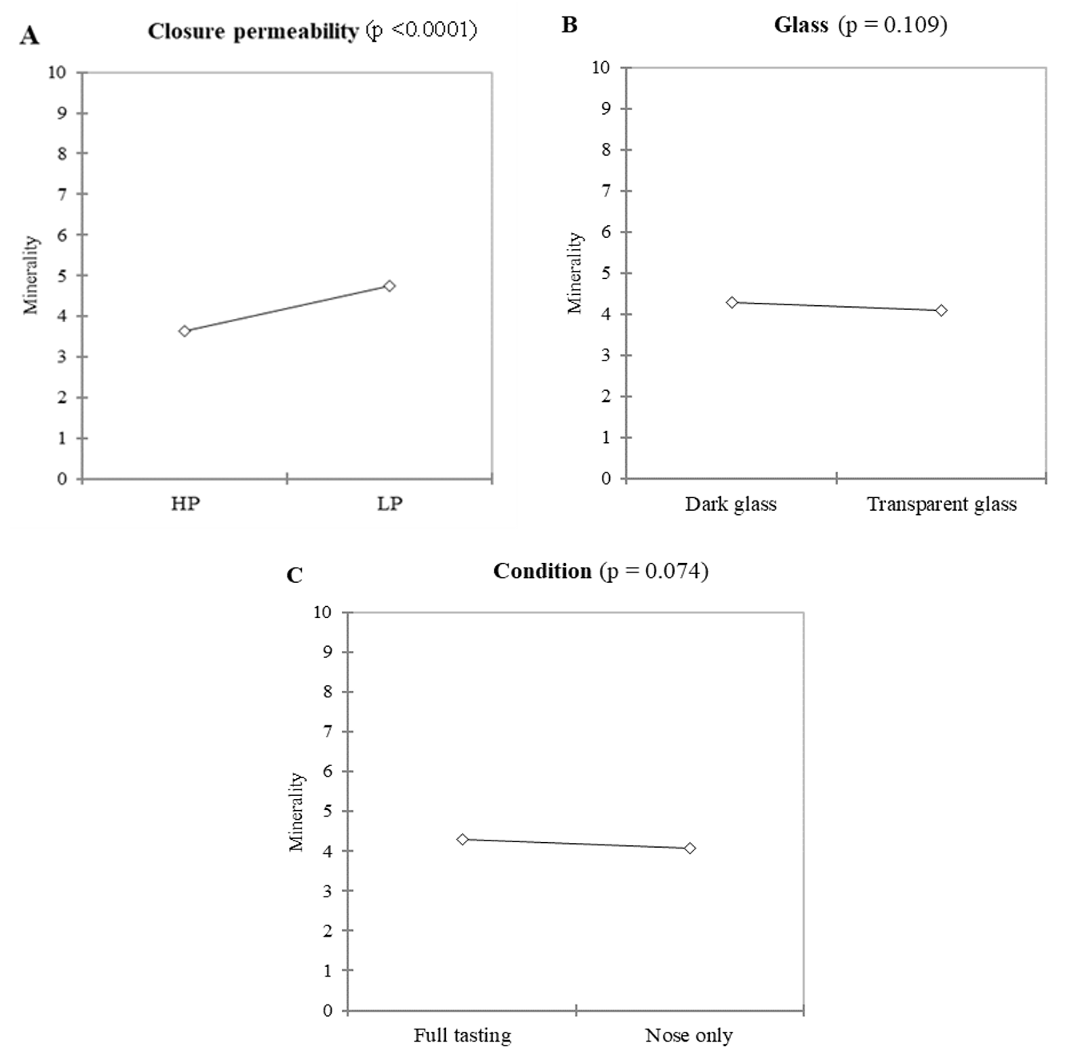
Figure 1. A – mean minerality scores as a function of cork permeability (HP: High permeability; LP: Low permeability). B – mean minerality scores as a function of the type of glasses. C – mean minerality scores as a function of perception condition.
To better understand the structure of the different minerality perceptions across samples, Pearson’s correlation coefficients have been computed between the minerality scores collected on the different conditions. Table 5 presents the correlation matrix.
All correlation coefficients were significant and high, showing strong correlations (p < 0.01) between the different conditions of assessing minerality. These results suggest that the samples are organised along a mono-dimensional minerality gradient as observed in Table 3.
Variables | TGFT | TGNO | DGFT | DGNO |
TGFT | 0.841 | 0.828 | 0.949 | |
TGNO | 0.881 | 0.892 | ||
DGFT | 0.850 | |||
DGNO |
|
|
|
Since there was no significant effect of vision on the minerality scores, TG and DG scores were averaged for Nose only and for Full tasting separately for the subsequent analyses. Moreover, neither NO nor FT minerality scores were significantly correlated with the age of the wines (r = 0.081 and 0.087, respectively) or the length of the pre-bottling ageing (r = 0.36 and 0.35, respectively).
2. Analysis of free vocabulary descriptions by experts
After lemmatisation and categorisation into semantic categories, citation frequencies were computed for each sample and each category. Since no effect of the type of glass was found, citations obtained from dark and transparent glasses were combined in a single table of frequencies, which was submitted to Correspondence Analysis (CA) (Figure 2). The first two dimensions of the CA accounted for 67.14 % of the total variance. F1 represents a minerality gradient from the most mineral wines on the positive side of the axis to the most oxidised wines on the negative side of F1. The CA shows a positive correlation of minerality with reduction, flinty, salinity/salivation, and toasty/smoky. This correlation is illustrated by five of the wine samples studied; among these, only one exhibits high permeability (CH11HP).
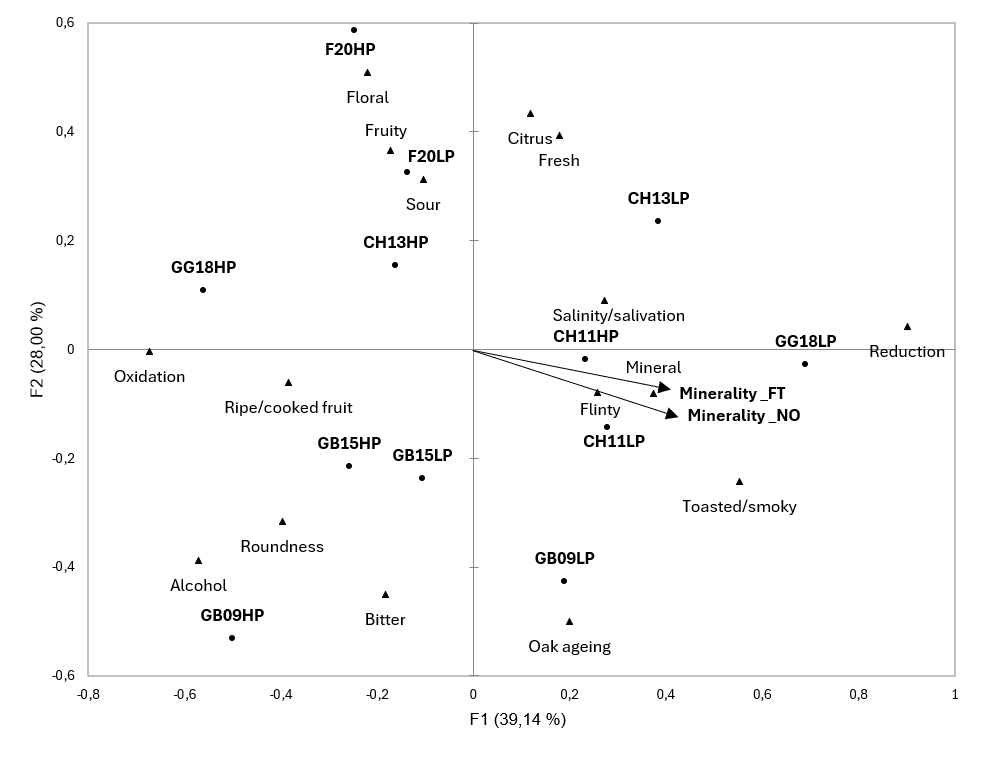
Figure 2. Correspondence analysis (F1-F2) carried out on the frequencies of citation of experts’ free vocabulary after lemmatisation and categorisation. The sums of citations from the dark and the transparent glass conditions were used in this analysis. Mean minerality scores for the 2 tasting conditions are projected as supplementary variables.
It is interesting to note that the matrix CH11 showed very little impact from permeability since both HP and LP samples are next to each other in the plot, which suggests that this particular wine matrix is quite resistant to oxidation. The wines on the negative side of F1 are characterised by ripe/cooked fruits and oxidation and are associated with low minerality levels. The wine matrix GB15 also shows little impact from permeability since both samples HP and LP have quite similar sensory properties, namely ripe/cooked fruit and roundness. On the other hand, the matrix GG18 has been strongly affected by closure permeability, possibly because GG18HP has allegedly the most permeable closure of the sample set (natural cork) for a wine matrix that seems somewhat sensitive to oxidation. F2 opposes wines that are round, oaky, bitter and that have some alcohol warmth (represented by the two GB09 wines) to wines that are more acidic and with stronger fresh fruit and floral aromas (represented by the two Fiano wines). The proximity between the two Fiano samples suggests that the strong floral and fruity aromas could mask both the mineral aromas of LP and the ageing aromas of HP. The third dimension, accounting for only 13 % of the total variance, discriminates GG18HP with its oxidative character from the rest of the samples (data not shown).
3. Sensory description by a trained panel
A two-way analysis of variance (ANOVA), with subject and product as factors, was carried out using the scores from the trained panel on the different descriptors. The ANOVA results showed significant differences between the samples for all the descriptors except Floral, Vegetal, Acidity, Saltiness, Bitterness, and Alcohol. Average intensities for each significant descriptor, along with the results of the ANOVA and the post-hoc Duncan test, are presented in Table 6. This table also shows the average intensity for the LP and for the HP samples and the p-value of the Student test used to compare them. It is interesting to note that, in general, the average intensities are quite low. This behaviour concerns mostly aromas, and it can reflect some level of insecurity and conservative use of the scale. Concerning sweetness and viscosity, the low values were expected since the wines were virtually dry. Values for Acidity and alcohol were noticeably higher, with averages of 5.15 and 4.8, respectively (data not given). Student’s t-tests showed that LP wines showed significantly higher intensities than HP for Wet rag, Cabbage, and Gunflint, and lower values of Redox, Wilted flower, Honey, Cooked fruits, and Viscosity.
Modality | Redox | Woody | Wilted flower | Honey | Fresh fruits | Cooked fruits | Wet rag | Cabbage | Gunflint | Sweetness | Viscosity |
CH11HP | –1.063 cd | 2.938 ab | 1.375 bc | 0.563 c | 2.563 bc | 0.938 cd | 1.625 abcd | 2.063 ab | 0.625 bc | 1.063 abcd | 3.438 abc |
CH11LP | –1.563 d | 1.500 b | 1.438 bc | 1.250 bc | 2.750 bc | 1.375 bcd | 2.063 ab | 2.188 ab | 2.750 a | 1.250 abc | 2.688 c |
CH13HP | 0.312 bc | 1.500 b | 2.500 ab | 2.688 ab | 1.750 c | 2.938 b | 1.938 abc | 1.563 abcd | 0.875 bc | 0.625 bcd | 3.000 abc |
CH13LP | –0.562 bcd | 1.688 b | 0.938 bc | 1.375 bc | 2.750 bc | 1.313 bcd | 1.125 abcde | 1.875 abc | 0.688 bc | 1.813 a | 2.750 bc |
F20HP | 1.063 ab | 1.688 b | 1.063 bc | 2.250 abc | 4.563 a | 2.188 bc | 0.063 e | 0.125 cd | 0.000 c | 0.500 cd | 2.313 cd |
F20LP | 0.250 bc | 1.750 b | 1.063 bc | 1.063 bc | 3.750 ab | 1.938 bcd | 0.438 cde | 0.563 bcd | 1.438 abc | 0.813 bcd | 2.563 cd |
GB09HP | 0.375 bc | 2.563 ab | 1.938 abc | 1.938 bc | 1.625 c | 2.813 bc | 0.563 bcde | 1.000 abcd | 0.688 bc | 1.000 abcd | 2.750 c |
GB09LP | –1.313 cd | 3.813 a | 0.438 c | 0.563 c | 1.938 c | 1.438 bcd | 2.375 a | 2.625 a | 0.750 bc | 0.750 bcd | 1.500 d |
GB15HP | 2.375 a | 2.250 ab | 3.500 a | 3.688 a | 1.250 c | 4.625 a | 0.250 de | 0.000 d | 0.375 bc | 0.313 d | 3.063 abc |
GB15LP | 0.250 bcd | 3.000 ab | 1.625 bc | 1.500 bc | 1.188 c | 2.813 bc | 0.875 bcde | 0.750 bcd | 1.500 abc | 1.500 ab | 3.875 ab |
GG18HP | 0.500 bc | 1.500 b | 2.313 ab | 2.250 abc | 2.375 bc | 2.438 bc | 0.750 bcde | 0.750 bcd | 1.563 abc | 1.125 abcd | 4.063 a |
GG18LP | –0.562 bcd | 3.125 ab | 1.188 bc | 1.000 bc | 2.063 c | 0.188 d | 1.563 abcde | 1.375 abcd | 1.875 ab | 0.563 cd | 2.563 c |
p-value (Sample) | <0.0001 | 0.008 | 0.013 | 0.002 | <0.0001 | <0.0001 | 0.003 | 0.011 | 0.008 | 0.007 | <0.0001 |
Average HP | 0.59 | 2.07 | 2.11 | 2.23 | 2.35 | 2.66 | 0.86 | 0.92 | 0.69 | 0.97 | 3.10 |
Average LP | –0.58 | 2.48 | 1.11 | 1.13 | 2.41 | 1.51 | 1.41 | 1.56 | 1.50 | 0.92 | 2.66 |
t-test p-value | 0.0003 | 0.1837 | 0.0009 | 0.0011 | 0.8409 | 0.0006 | 0.0250 | 0.0342 | 0.0068 | 0.7338 | 0.0205 |
The PCA on the average intensities of each descriptor for each wine is presented in Figure 3. The average minerality scores have been projected as supplementary variables. The first two principal components account for 68.96 % of the total variance. The sample configuration produced by the PCA in Figure 3 is quite similar to the one produced by experts’ free description CA (Figure 2). Indeed, significant correlations have been found between the first dimensions of both figures (r = –0.72; p < 0.01) and also the second dimensions (r = 0.69; p < 0.05). The description of the trained panel validates the opposition between oxidative and mineral characters, and the correlation between minerality and reduction. The same five wines are on the minerality side in the two figures. On the second dimension, both panels agree on the fruity character of the two Fiano samples, but experts better differentiated oak ageing from flinty notes. Another important difference concerns the sample GG18HP, which was the most oxidised for experts but not for trained panellists. This can be explained by the heterogeneity of natural cork, since it is plausible that the corks of the bottles used for the trained panel had lower permeability to oxygen than the cork of the bottle of GG18HP used for the expert panel.
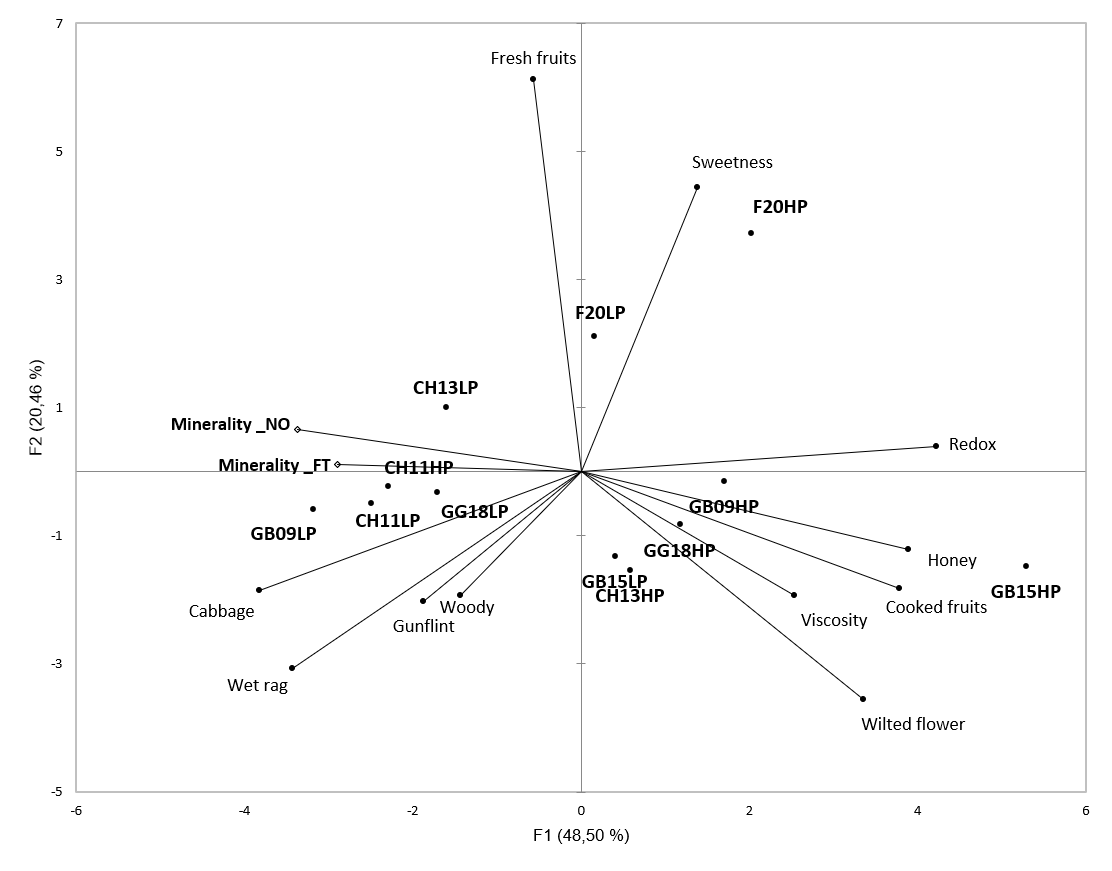
Figure 3. Biplot of the Principal Component Analysis of the sensory description by the trained panel. Mean minerality scores for the 2 tasting conditions are projected as supplementary variables.
4. Chemical analysis
The results of the chemical analysis (sulfur compounds and oenological parameters) for each sample are presented in Table S2. To explore the potential involvement of the different molecules in the perception of minerality, a PLS regression has been carried out with the chemical variables as a predictor (X matrix) and the average minerality scores from the 4 conditions as dependent variables (Y matrix). The chemical variables, including oenological composition and aroma compounds showing very low levels such as glucose/fructose, DMS, CS2, 4-methyl-4-sulfanylpentanone, and 3-sulfanylheptanol or not detected such as 3-sulfanylhexyl acetate and H2S, were not included in this analysis.
The PLSR gave an optimal solution with only one component with robust quality parameters (Q2 = 0.61, R2Y = 0.73, R2X = 0.38). The contributions of each variable X to the prediction of the minerality scores from NO and FT conditions are presented in Figure 4.
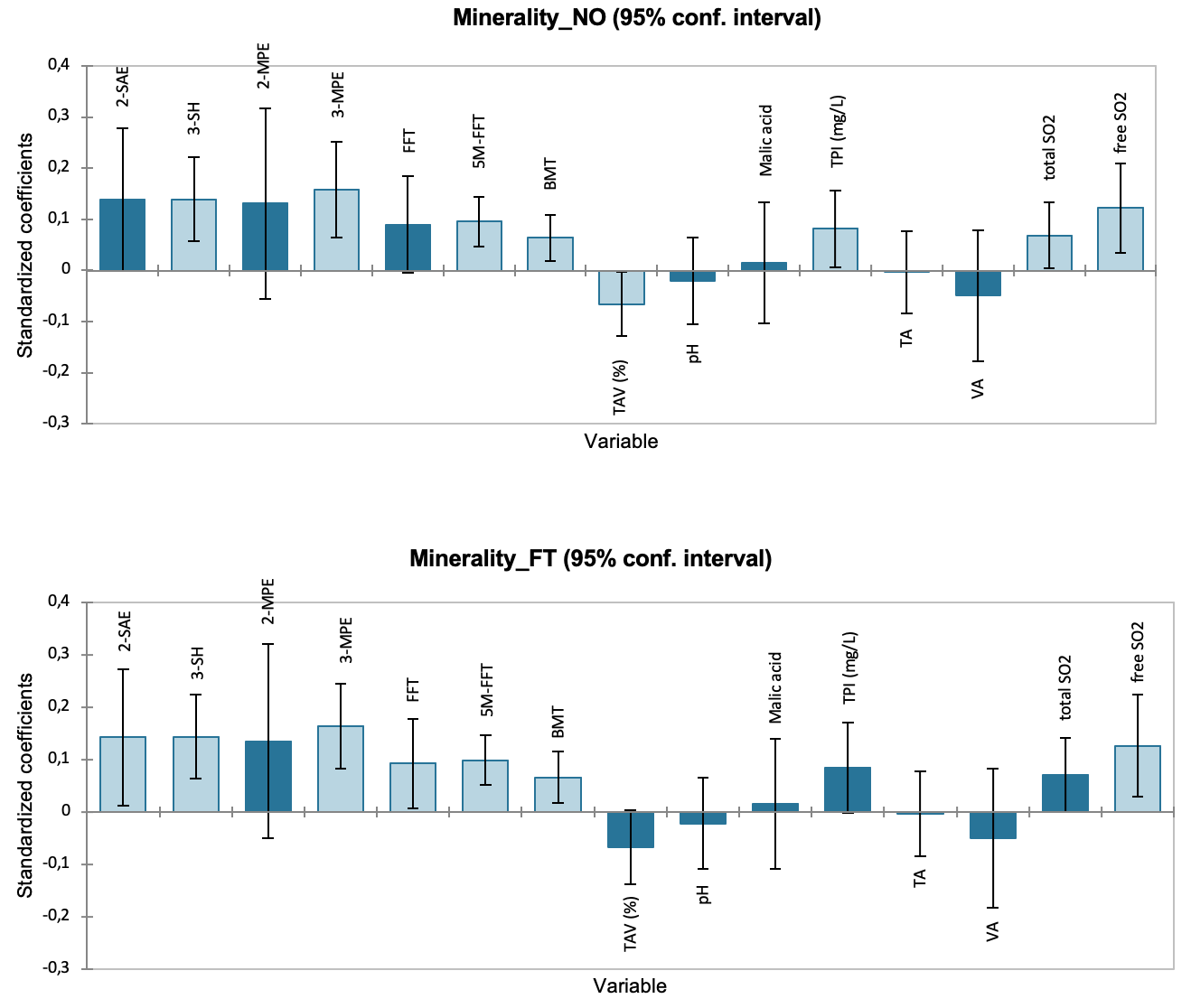
Figure 4. Normalised regression coefficients and their confidence intervals for the prediction of perceived minerality in the nose-only (NO) condition (top panel) and the full tasting (FT) condition (bottom panel). Coefficients whose confidence intervals do not cross zero are considered significant and correspond to light blue bars. The non-significant predictors correspond to dark blue bars.
The volatile sulfur compounds BMT, 3-SH, 3-MPE, and 5-M-FFT were positive predictors of minerality in both tasting conditions. 2-SAE was significant only in the FT condition. The four odorant compounds were detected at a wide range of concentrations, exceeding their individual detection threshold. Basic oenological parameters did not affect perceived minerality, except for free SO2, which affected minerality in both conditions; TPI and total SO2, which had a positive impact only in the NO condition; and alcohol content, which also had a negative impact in the NO condition.
Discussion
1. Permeability effect and link with reductive and oxidative notes
The results of the four-factor ANOVA revealed a significant difference in minerality scores between wines sealed with low permeability (LP) and high permeability (HP) corks, with LP samples receiving higher scores. This finding supports the initial hypothesis that lower oxygen permeability of the cork leads to a stronger perception of minerality in wine, while higher permeability diminishes the mineral character. The free descriptions generated by the experts showed a clear correlation between minerality and reductive characters, flinty and toasted/smoky, which is in agreement with previous works (Tominaga et al., 2003; Parr et al., 2010; Esti et al., 2010; Ballester et al., 2013; Starkenmann et al., 2016; Gambetta et al., 2014; Parr et al., 2015; Parr et al., 2016).
The proximity of minerality to empyreumatic odour nuances could explain the proximity to oak ageing, since oak with medium or high toasting levels can also contribute to the empyreumatic dimension of wine aroma (Prida & Chatonnet, 2010; Marković, 2025). A confusion between these two sources of empyreumatic odours is plausible.
In opposition to all previous literature on perceived minerality, a recent study by Miller et al. (2026) did not find a correlation between gunflint odours and minerality perception. However, the authors did not consider wine experts’ internal definition of minerality; they chose to use a trained descriptive panel instead. Since the authors provided different sensory references for flinty/gunflint (BMT at 4 µL/L in base wine) and for mineral (river stones soaked for 30 min in ethanol/water), these two sensory concepts mechanically ended up being two separate ones. Therefore, the results of Miller et al. (2026) are not comparable to the previous sensory research on minerality.
Experts’ descriptions were corroborated by the RATA results obtained by trained panellists who did not know the topic of the study. Notably, trained panels used more negative reductive descriptors than experts to describe the most mineral wines. The reason could be the fact that they only knew the negative aspects of reduction and that they were not informed about the topic of the study. Additionally, both panels confirmed the negative correlation between oxidative notes and minerality. This opposition was suggested by Ribéreau-Gayon et al. (2006) and was tested empirically by Rodrigues et al. (2015b) on Chablis wines but was verified only for 60 % of their experts. The results of the present study show unambiguously that minerality decreases when oxidative aromas appear. The most mineral wines of the study showed the lowest signs of evolution, but since the age of the wines was not correlated to the minerality scores, it seems that other variables, such as stopper permeability or matrix oxidative stability, play a more important role than just age. As the samples were not subjected to any sensory or chemical analysis prior to bottling, it is not possible to determine with certainty their initial minerality, their initial chemical composition, and their stability to oxidation; this constitutes the main limitation of this study. Further studies should explore the link between the intensity of the mineral character and the ageing potential of white wines by characterising the wines at the beginning and after some years of ageing.
These global results need to be nuanced by more detailed observations. Both experts and trained multidimensional descriptive spaces (Figures 2 and 3, respectively) show quite different behaviours among the 6 wine matrices. For instance, the wine CH11, despite being one of the oldest wines in the sample set, showed virtually no effect of cork permeability on its sensory characteristics, including its strong mineral character. One explanation here could be a particularly high natural oxidative stability, allowing this wine to preserve its minerality. Indeed, S-N containing compounds such as glutathione or/and oak ellagitannins have been found to improve wine’s antioxidant stability (Nikolantonaki et al., 2018; Nikolantonaki et al., 2019). The Fiano wine also shows little sensory difference between the LP and the HP samples. In this case, it could be due to an aromatic dominance of varietal floral and fruity odours that could overpower other odours affected by permeability. Despite being considered a neutral cultivar, the aroma of Fiano has been shown to be impacted by grape-derived terpenols and norisoprenoids that contribute to its strong fruity and floral aromas, particularly in the case of overripeness (Genovese et al., 2007).
The strongest permeability effect was observed by the experts for the GG18 pair, where the HP sample was sealed with a natural cork. One notable difference between the panels was that the experts considered the GG18HP wine to be the most oxidised, whereas that was not the case for trained panellists. A plausible explanation is the great heterogeneity observed between natural cork stoppers, which has been well established in the literature (Karbowiak et al., 2009).
2. Impact of visual cues
None of the previous studies on minerality studied the effect of visual dimensions on the conceptualisation of minerality. Some of these studies used dark glasses precisely to avoid top-down effects due to early visual information (Ballester et al., 2013; Parr et al., 2015; Parr et al., 2016; Rodrigues et al., 2017). Our results showed no significant effect of the type of glasses used, which suggests that visual perception does not have an impact on perceived minerality. It is important to note that deeper colours and oxidative aromas may be confounding variables in the present study, which makes it impossible to disentangle their effects separately.
3. Nose only versus full taste
According to Aubry and coworkers, there is good agreement and comparable product discrimination by the tasters between nose-only and full tasting modes (Aubry et al., 1999). We hypothesised that minerality ratings obtained by smelling only would differ from those obtained through full tasting. The reason is that, in some cases, taste has been shown to contribute to perceived minerality, such as bitterness or sourness, while sweetness was negatively correlated (Ballester et al., 2013; Heymann et al., 2014). Therefore, the presence of tastes was expected to modulate the perception of minerality. Surprisingly, the results showed no significant differences between perception modes. Nonetheless, these results support findings from Parr et al. (2015), who showed the same kind of effect on Sauvignon blanc wines, but only for French experts and not for experts from New Zealand. Our results confirm that minerality for French experts seems to be a sensory concept mainly based on olfaction.
4. Links with chemical composition
The PLSR models consistently highlighted the positive impact of four volatile sulfur compounds on perceived minerality. These compounds are BMT, 3-SH, 3-MPE, and 5-M-FFT.
In 2003, BMT was identified by Tominaga et al. (2003) and detected at high levels (~30 ng/L) in young Chardonnay wines from Burgundy and Limoux, exceeding its detection threshold (0.3 ng/L). For example, BMT concentrations in our data set ranged from trace to 4.5 ng/L. Whereas this compound is known to increase during bottle ageing, recent findings demonstrated that yeast strain can modulate the concentration of the young wine according to its ability to produce H2S and the amount of benzaldehyde in the must (Cordente et al., 2024). Highest levels exceed its detection threshold, whereas average concentrations are quite similar to those quantified in Australian Chardonnay wines (~5.9 ng/L) by Capone et al. (2018). In addition, the same authors showed that an increase in BMT to ~4 ng/L can modify the sensory balance of a white wine, increasing the intensity of the “gunflint” perception. These results support our hypothesis suggesting the contribution of this thiol to the aroma of Chardonnay wines and that this effect could be generalised to Grenache blanc wines since they showed similar BMT concentrations (Table S1). In the case of Sauvignon blanc, Parr et al. (2016) showed that BMT did not have a significant contribution to perceived minerality even though odour notes of gunflint were consensually associated with minerality (Parr et al., 2015).
3-SH is a varietal thiol that is responsible for fruity odours reminiscent of grapefruit and passionfruit characteristic of Sauvignon blanc wines and other thiol-based varietals (Benkwitz et al., 2012; Tominaga et al., 1998). This thiol is always present in Sauvignon blanc wines at concentrations of several hundred ng/L, and sometimes several micrograms per litre. In our wine selection, 3-SH was determined to be well above aroma threshold values in most of the samples. From sensory experiments carried out by Mateo-Vivaracho et al. (2010), it was concluded that 3‐SH can be considered unimportant to Chardonnay wines. In contrast, for the Australian Chardonnay wine data (Capone et al., 2015), 3‐SH was generally well above their detection threshold. These observations were also confirmed by Capone et al. (2018) with a wider wine selection. It is unclear how 3SH contributes to perceived minerality. Parr et al. (2016) hypothesise that Sauvignon blanc varietal thiols would have a negative impact on perceived minerality; however, they found a positive effect of 3-SH on perceived minerality for New Zealander participants. The authors suggested that the contribution of 3-SH to minerality could be explained by its citrus-like aromas (grapefruit), which have previously been linked to minerality (Parr et al., 2015). The same kind of mechanism, the enhancement of the citrus dimension, could be at play in our study.
3-MPE and 5M-FFT are two volatile thiols reminiscent of meaty aromas reported in wine by Tominaga et al. (2003) and Chen et al. (2023), respectively. The highest level of 3-MPE reached 130.6 ng/L, whereas the highest levels reported in the literature were detected in old Champagne wines, where its concentration reached 12 µg/L. On the contrary, the distribution of 5M-FFT in white wines is not described in the recent literature, whereas its levels in old red wines were similar to what we obtained in white wines, 4.8 ng/L on average (Suhas et al., 2026). Our results suggest that they could be associated with global minerality perception, but the sensory impact of these thiols has not been described in the literature yet.
In summary, some potent volatile sulfur compounds were higher in wines sealed with stoppers having a lower OTR. This observation is consistent with literature results, demonstrating the link between OTR, oxidation reaction mechanisms and volatile thiol loss during bottle ageing (Pons et al., 2021; Lopes et al., 2012).
Free and total SO2 concentrations showed differences according to the wine and also according to the permeability of the stopper. This result is consistent with its antioxidant properties and in line with literature (Ribéreau-Gayon et al., 2006). Free SO2 levels were quite low in this study, generally below 10 mg/L, but were consistently found to be correlated with minerality, as in previous studies (Heymann et al., 2014; Parr et al., 2016; Deneulin, 2025).
It is interesting to note that all the samples had concentrations of H2S below the detection limit (Table S1). This compound has a low detection threshold in wine between 1.1 and 1.6 µg/L (Siebert et al., 2010), and its absence suggests that perceived minerality may not be directly related to the reduction of off flavours.
The results regarding alcohol content and acidity are somewhat unexpected. The negative effect of TAV can be explained by the contribution of ethanol to the sensation of sweetness, which has been found to be inversely correlated with minerality in some studies (Ballester et al., 2013; Parr et al., 2015). However, it is surprising that TAV is significant on the nose and not in the full taste condition since ethanol is expected to have a broader impact on palate than on the nose.
Although acidity has quite often been associated with minerality in conceptual studies (Rodrigues et al., 2015a; Rodrigues et al., 2022; Deneulin & Bavaud, 2016), the findings regarding this link are contradictory from both a sensory and a chemical perspective. Several sensory studies have failed to establish a link between perceived acidity and minerality in Sauvignon blanc (Parr et al., 2015) and Chasselas (Deneulin, 2025). Only Ballester et al. (2013) and Heymann et al. (2014) have demonstrated positive correlations between perceived acidity and minerality. With regard to organic acid composition, Heymann et al. (2014) found that minerality was strongly associated with malic acid, tartaric acid and titratable acidity, whilst according to Parr et al. (2016), the only organic acid that could positively predict minerality was malic acid, but only for minerality scores assigned by New Zealand wine experts. In the present study, neither TA nor organic acid concentrations showed a significant link with perceived minerality.
Conclusion
The sensory results confirmed the hypothesis that low oxygen permeability of wine corks leads to a higher perception of minerality, whereas higher permeability results in a lower mineral character. The positive correlation between minerality and slight reductive notes was confirmed, in line with existing literature. Moreover, a negative correlation between minerality and oxidised notes was also confirmed, suggesting antagonism in evolution according to the amount of oxygen brought to the wine (its OTR) during bottle ageing. This particular issue is worth studying in future research. Furthermore, neither visual cues nor the perception mode affected the perception of minerality. The chemical analyses confirmed previous literature findings showing the impact of sulfur compounds on perceived minerality. Taken together, our results show that perceived minerality can be modulated just by modifying thiol composition by controlling closure permeabilities without changing the mineral composition of the wines.
Acknowledgements
The authors would like to thank Melina Korčok for her technical help as well as the trained and expert tasters for taking part in the study.
References
- Aubry, V., Schlich, P., Issanchou, S., & Etiévant, P. (1999). Comparison of wine discrimination with orthonasal and retronasal profilings. Application to Burgundy Pinot Noir wines. Food Quality and Preference, 10(4–5), 253–259. https://doi.org/10.1016/S0950-3293(99)00021-X
- Ballester, J., Magne, M., Julien, P., Noret, L., Nikolantonaki, M., Coelho, C., & Gougeon, R. (2018). Sensory Impact of Polyphenolic Composition on the Oxidative Notes of Chardonnay Wines. Beverages, 4(1), 19. https://doi.org/10.3390/beverages4010019
- Ballester, J., Mihnea, M., Peyron, D., & Valentin, D. (2013). Exploring minerality of Burgundy Chardonnay wines: A sensory approach with wine experts and trained panellists. Australian Journal of Grape and Wine Research, 19(2), 140–152. https://doi.org/10.1111/ajgw.12024
- Benkwitz, F., Tominaga, T., Kilmartin, P. A., Lund, C., Wohlers, M., & Nicolau, L. (2012). Identifying the Chemical Composition Related to the Distinct Aroma Characteristics of New Zealand Sauvignon blanc Wines. American Journal of Enology and Viticulture, 63(1), 62–72. https://doi.org/10.5344/ajev.2011.10074
- Brajkovich, M., Tibbits, N., Peron, G., Lund, C. M., Dykes, S. I., Kilmartin, P. A., & Nicolau, L. (2005). Effect of screwcap and cork closures on SO2 levels and aromas in a Sauvignon Blanc wine. Journal of agricultural and food chemistry, 53(26), 10006-10011. https://doi.org/10.1021/jf0512813
- Campo, E., Ballester, J., Langlois, J., Dacremont, C., & Valentin, D. (2010). Comparison of conventional descriptive analysis and a citation frequency-based descriptive method for odor profiling: An application to Burgundy Pinot noir wines. Food quality and preference, 21(1), 44-55. https://doi.org/10.1016/j.foodqual.2009.08.001
- Campo, E., Do, B. V., Ferreira, V., & Valentin, D. (2008). Aroma properties of young Spanish monovarietal white wines: A study using sorting task, list of terms and frequency of citation. Australian Journal of Grape and Wine Research, 14(2), 104–115. https://doi.org/10.1111/j.1755-0238.2008.00010.x
- Capone, D. L., Barker, A., Williamson, P. O., & Francis, I. L. (2018). The role of potent thiols in Chardonnay wine aroma. Australian Journal of Grape and Wine Research, 24(1), 38–50. https://doi.org/10.1111/ajgw.12294
- Capone, D. L., Ristic, R., Pardon, K. H., & Jeffery, D. W. (2015). Simple Quantitative Determination of Potent Thiols at Ultratrace Levels in Wine by Derivatization and High-Performance Liquid Chromatography–Tandem Mass Spectrometry (HPLC-MS/MS) Analysis. Analytical Chemistry, 87(2), 1226–1231. https://doi.org/10.1021/ac503883s
- Carrascón, V., Bueno, M., Fernandez-Zurbano, P., & Ferreira, V. (2017). Oxygen and SO2 Consumption Rates in White and Rosé Wines: Relationship with and Effects on Wine Chemical Composition. Journal of Agricultural and Food Chemistry, 65(43), 9488–9495. https://doi.org/10.1021/acs.jafc.7b02762
- Chen, L., De Longhi, E., Gammacurta, M., Marchal, A., & Darriet, P. (2024). Quantitation of trace polyfunctional thiols in wine by liquid chromatography quadrupole Orbitrap high-resolution mass spectrometry in parallel reaction monitoring. Journal of Chromatography A, 1736, 465360. https://doi.org/10.1016/j.chroma.2024.465360
- Chen, L., De Longhi, E., Pons, A., Buffeteau, T., Daugey, N., Redon, P., Shinkaruk, S., & Darriet, P. (2023). Identification, Quantitation, and Sensory Evaluation of Thiols in Bordeaux Red Wine with Characteristic Aging Bouquet. Journal of Agricultural and Food Chemistry, 71(43), 16248–16259. https://doi.org/10.1021/acs.jafc.3c05854
- Cordente, A. G., Kulcsar, A. G., Langone, D., Pisaniello, L., Siebert, T. E., & Bekker, M. Z. (2024). Modulation of the ‘flinty’ aroma compound phenylmethanethiol during fermentation: Impacts of yeast starter culture and nitrogen supplementation. OENO One, 58(3). https://doi.org/10.20870/oeno-one.2024.58.3.8067
- Deneulin, P. (2025). Minéralité des vins : étude sémantique et sensorielle [PhD]. Université de Lausanne.
- Deneulin, P., & Bavaud, F. (2016). Analyses of open-ended questions by renormalized associativities and textual networks: A study of perception of minerality in wine. Food Quality and Preference, 47, 34–44. https://doi.org/10.1016/j.foodqual.2015.06.013
- Deneulin, P., Le Fur, Y., & Bavaud, F. (2016). Study of the polysemic term of minerality in wine: Segmentation of consumers based on their textual responses to an open-ended survey. Food Research International, 90, 288–297. https://doi.org/10.1016/j.foodres.2016.11.004
- Esti, M., Airola, R. L. G., Moneta, E., Paperaio, M., & Sinesio, F. (2010). Qualitative data analysis for an exploratory sensory study of grechetto wine. Analytica Chimica Acta, 660(1–2), 63–67. https://doi.org/10.1016/j.aca.2009.10.014
- Franco-Luesma, E., & Ferreira, V. (2014). Quantitative analysis of free and bonded forms of volatile sulfur compouds in wine. Basic methodologies and evidences showing the existence of reversible cation-complexed forms. Journal of Chromatography A, 1359, 8–15. https://doi.org/10.1016/j.chroma.2014.07.011
- Franco-Luesma, E., Sáenz-Navajas, M. P., Valentin, D., Ballester, J., Rodrigues, H., & Ferreira, V. (2016). Study of the effect of H2S, MeSH and DMS on the sensory profile of wine model solutions by Rate-All-That-Apply (RATA). Food Research International, 87, 152-160. https://doi.org/10.1016/j.foodres.2016.07.004
- Gambetta, J. M., Bastian, S. E. P., Cozzolino, D., & Jeffery, D. W. (2014). Factors Influencing the Aroma Composition of Chardonnay Wines. Journal of Agricultural and Food Chemistry, 62(28), 6512–6534. https://doi.org/10.1021/jf501945s
- Genovese, A., Gambuti, A., Piombino, P., & Moio, L. (2007). Sensory properties and aroma compounds of sweet Fiano wine. Food Chemistry, 103(4), 1228–1236. https://doi.org/10.1016/j.foodchem.2006.10.027
- Heymann, H., Hopfer, H., & Bershaw, D. (2014). An exploration of the perception of minerality in white wines by projective mapping and descriptive analysis. Journal of Sensory Studies, 29(1), 1-13. https://doi.org/10.1111/joss.12076
- Jackson, R. S. (2022). Wine tasting: a professional handbook. Elsevier.
- Karbowiak, T., Gougeon, R. D., Alinc, J.-B., Brachais, L., Debeaufort, F., Voilley, A., & Chassagne, D. (2009). Wine Oxidation and the Role of Cork. Critical Reviews in Food Science and Nutrition, 50(1), 20–52. https://doi.org/10.1080/10408390802248585
- Lopes, P., Silva, M. A., Pons, A., Tominaga, T., Lavigne, V., Saucier, C., Darriet, P., Cabral, M., Teissedre, P.-L., & Dubourdieu, D. (2012). Impact of the Oxygen Exposure during Bottling and Oxygen Barrier Properties of Different Closures on Wine Quality during Post-Bottling. In M. C. Qian & T. H. Shellhammer (Eds.), ACS Symposium Series (Vol. 1104, pp. 167–187). American Chemical Society. https://doi.org/10.1021/bk-2012-1104.ch011
- Lytra, G., Tempere, S., Zhang, S., Marchand, S., De Revel, G., & Barbe, J.-C. (2014). Olfactory impact of dimethyl sulfide on red wine fruity esters aroma expression in model solution. OENO One, 48(1), 75. https://doi.org/10.20870/oeno-one.2014.48.1.1660
- Maltman, A. (2013). Minerality in wine: a geological perspective. Journal of Wine Research, 24(3), 169-181. https://doi.org/10.1080/09571264.2013.793176
- Marković, T. (2025). Red Wine Aging in Oak Barrels: The Influence of Toasting Levels on Aromatic Profile, Phenolic Composition, and Sensory Properties. Beverages, 11(6), 165. https://doi.org/10.3390/beverages11060165
- Mateo-Vivaracho, L., Zapata, J., Cacho, J., & Ferreira, V. (2010). Analysis, Occurrence, and Potential Sensory Significance of Five Polyfunctional Mercaptans in White Wines. Journal of Agricultural and Food Chemistry, 58(18), 10184–10194. https://doi.org/10.1021/jf101095a
- Miller, G. C., Zhang, X., Muhl, J. R., Derycke, M., Brajkovich, M., Pilkington, L. I., & Deed, R. C. (2026). A chemometrics approach to characterise styles of premium chardonnay wines based on chemical and sensory attributes: a focus on drivers of positive reduction. Food Chemistry, 148134. https://doi.org/10.1016/j.foodchem.2026.148134
- Müller, N., Rauhut, D., & Tarasov, A. (2022). Sulfane sulfur compounds as source of reappearance of reductive off-odors in wine. Fermentation, 8(2), 53. https://doi.org/10.3390/fermentation8020053
- Nikolantonaki, M., Daoud, S., Noret, L., Coelho, C., Badet-Murat, M.-L., Schmitt-Kopplin, P., & Gougeon, R. D. (2019). Impact of Oak Wood Barrel Tannin Potential and Toasting on White Wine Antioxidant Stability. Journal of Agricultural and Food Chemistry, 67(30), 8402–8410. https://doi.org/10.1021/acs.jafc.9b00517
- Nikolantonaki, M., Julien, P., Coelho, C., Roullier-Gall, C., Ballester, J., Schmitt-Kopplin, P., & Gougeon, R. D. (2018). Impact of Glutathione on Wines Oxidative Stability: A Combined Sensory and Metabolomic Study. Frontiers in Chemistry, 6, 182. https://doi.org/10.3389/fchem.2018.00182
- Parr, W. V., Ballester, J., Peyron, D., Grose, C., & Valentin, D. (2015). Perceived minerality in Sauvignon wines: Influence of culture and perception mode. Food Quality and Preference, 41, 121–132. https://doi.org/10.1016/j.foodqual.2014.12.001
- Parr, W. V., Maltman, A. J., Easton, S., & Ballester, J. (2018). Minerality in wine: Towards the reality behind the myths. Beverages, 4(4), 77. https://doi.org/10.3390/beverages4040077
- Parr, W. V., Valentin, D., Breitmeyer, J., Peyron, D., Darriet, P., Sherlock, R., Robinson, B., Grose, C., & Ballester, J. (2016). Perceived minerality in sauvignon blanc wine: Chemical reality or cultural construct? Food Research International, 87, 168–179. https://doi.org/10.1016/j.foodres.2016.06.026
- Parr, W. V., Valentin, D., Green, J. A., & Dacremont, C. (2010). Evaluation of French and New Zealand Sauvignon wines by experienced French wine assessors. Food quality and preference, 21(1), 56-64. https://doi.org/10.1016/j.foodqual.2009.08.002
- Pons, A., Lavigne, V., Thibon, C., Redon, P., Loisel, C., Dubourdieu, D., & Darriet, P. (2021). Impact of Closure OTR on the Volatile Compound Composition and Oxidation Aroma Intensity of Sauvignon Blanc Wines during and after 10 Years of Bottle Storage. Journal of Agricultural and Food Chemistry, 69(34), 9883–9894. https://doi.org/10.1021/acs.jafc.1c02635
- Prida, A., & Chatonnet, P. (2010). Impact of Oak-Derived Compounds on the Olfactory Perception of Barrel-Aged Wines. American Journal of Enology and Viticulture, 61(3), 408–413. https://doi.org/10.5344/ajev.2010.61.3.408
- Ribéreau-Gayon, P., Dubourdieu, D., Donèche, B., & Lonvaud, A. (2006). Handbook of enology, Volume 1: The microbiology of wine and vinifications (Vol. 1). John Wiley & Sons. https://doi.org/10.1002/0470010363
- Rodrigues, H., Ballester, J., Saenz-Navajas, M. P., & Valentin, D. (2015a). Structural approach of social representation: Application to the concept of wine minerality in experts and consumers. Food Quality and Preference, 46, 166–172. https://doi.org/10.1016/j.foodqual.2015.07.019
- Rodrigues, H., Sáenz-Navajas, M.-P., Franco-Luesma, E., Valentin, D., Fernández-Zurbano, P., Ferreira, V., De La Fuente Blanco, A., & Ballester, J. (2017). Sensory and chemical drivers of wine minerality aroma: An application to Chablis wines. Food Chemistry, 230, 553–562. https://doi.org/10.1016/j.foodchem.2017.03.036
- Rodrigues, H., Valentin, D., & Ballester, J. (2015b). Effet du vieillissement sur la perception sensorielle de la minéralité des vins Chablis 1 er Cru. Proceedings-10th International Symposium of Enology of Bordeaux.
- Rodrigues, H., Valentin, D., Oteguy, M., & Ballester, J. (2022). How to make a mineral wine? Relationship between production type in the Chablis vineyard and the search for a mineral wine style. Oeno One, 56(2), 29-45. https://doi.org/10.20870/oeno-one.2022.56.2.4856
- Romanet, R., Coelho, C., Liu, Y., Bahut, F., Ballester, J., Nikolantonaki, M., & Gougeon, R. D. (2019). The Antioxidant Potential of White Wines Relies on the Chemistry of Sulfur-Containing Compounds: An Optimized DPPH Assay. Molecules, 24(7), 1353. https://doi.org/10.3390/molecules24071353
- Siebert, T. E., Solomon, M. R., Pollnitz, A. P., & Jeffery, D. W. (2010). Selective determination of volatile sulfur compounds in wine by gas chromatography with sulfur chemiluminescence detection. Journal of Agricultural and Food Chemistry, 58(17), 9454-9462. https://doi.org/10.1021/jf102008r
- Silva, M. A., Julien, M., Jourdes, M., & Teissedre, P.-L. (2011). Impact of closures on wine post-bottling development: A review. European Food Research and Technology, 233(6), 905–914. https://doi.org/10.1007/s00217-011-1603-9
- Starkenmann, C., Chappuis, C. J.-F., Niclass, Y., & Deneulin, P. (2016). Identification of Hydrogen Disulfanes and Hydrogen Trisulfanes in H2 S Bottle, in Flint, and in Dry Mineral White Wine. Journal of Agricultural and Food Chemistry, 64(47), 9033–9040. https://doi.org/10.1021/acs.jafc.6b03938
- Suhas, E., Thibon, C., Loisel, C., Darriet, P., & Pons, A. (2025). Oxygen transfer rate measurements of closure systems after 12 years of aging. Impact on the aroma compounds of Sauvignon Blanc wines. Food Packaging and Shelf Life, 48, 101452. https://doi.org/10.1016/j.fpsl.2025.101452
- Suhas, E., Thibon, C., & Pons, A. (2026). Quantification and sensory impact of empyreumatic sulfur compounds in old Cabernet Sauvignon wines. Food Chemistry, In press.
- Swiegers, J. H., & Pretorius, I. S. (2007). Modulation of volatile sulfur compounds by wine yeast. Applied Microbiology and Biotechnology, 74(5), 954–960. https://doi.org/10.1007/s00253-006-0828-1
- Tominaga, T., Furrer, A., Henry, R., & Dubourdieu, D. (1998). Identification of new volatile thiols in the aroma of Vitis vinifera L. var. Sauvignon blanc wines. Flavour and Fragrance Journal, 13(3), 159–162. https://doi.org/10.1002/(SICI)1099-1026(199805/06)13:3%253C159::AID-FFJ709%253E3.0.CO;2-7
- Tominaga, T., Guimbertau, G., & Dubourdieu, D. (2003). Role of Certain Volatile Thiols in the Bouquet of Aged Champagne Wines. Journal of Agricultural and Food Chemistry, 51(4), 1016–1020. https://doi.org/10.1021/jf020755k
 Views: 8