

ENOLOGY / Original research article
Abstract
Wildfire smoke threatens the composition, quality, and marketability of grapes and wines through a phenomenon called smoke taint. In 2023, central Chile experienced severe wildfires that affected viticultural regions including the historic Itata and Biobío valleys known for their production of País wines. Herein, País wines were collected from five wineries in the Itata and Biobío valleys in 2023 (smoke-impacted) and 2024 (non-impacted). Wines were analysed for volatile phenols (VPs) and their glycoconjugates using established GC-MS/MS and LC-MS/MS methodologies, respectively. Descriptive sensory analysis was performed using a trained panel to relate chemical changes with sensory characteristics. VPs and their glycoconjugates were elevated in four out of the five samples collected from the 2023 vintage compared to the 2024 vintage. This aligned with sensory outcomes, where 2023 wines were rated higher in smoky aroma, yet this was only significant for two of the locations. The higher smoky aroma scores recorded for some 2023 wines aligned with elevated smoke-marker concentrations, although these sensory outcomes should be interpreted within the broader context of wine matrix variability, vintage effects, and winemaking practices. Relative ratios of VPs and glycoconjugates are similar to those reported in Australia and the United States, potentially indicating common chemical signatures globally. Further untargeted chemical analysis of smoke-impacted grapes and wines is necessary to determine if regional differences in fuel type affect signatures. This study provides the first assessment of wildfire smoke impact in País wines from Chile, generating initial evidence of smoke-marker accumulation and associated sensory changes in a previously unstudied cultivar and viticulture region.
Introduction
Chilean wine production has a long-standing history, dating back to the 16th century when Spaniards introduced Vitis vinifera grape cultivars to the region. Today, Chile is the seventh-largest producer and fourth-largest exporter of wine globally (Barker, 2025). In 2022, 1.244 billion litres of wine were produced in Chile, with the largest planted areas including Maule, O’Higgins, Metropolitana, and Ñuble regions (USDA-FAS, 2023). Cabernet-Sauvignon, Merlot, País, and Carmenère are the most common red grape cultivars grown in Chile (USDA-FAS, 2023).
In February 2023, the grape and wine sector was threatened by severe wildfires throughout the Maule, Ñuble, Biobío, and Araucanía regions due to drought, high temperatures, and windy conditions (Cordero et al., 2024; USDA-FAS, 2023). A total of 471 hectares of vineyards were burned (USDA-FAS, 2023). The historic Itata Valley, spanning the Ñuble and Biobío regions, was one of the most impacted areas. According to data from the Chilean National Forestry Corporation (CONAF; https://www.conaf.cl/), 31,012 hectares of Pinus radiata, 1464 hectares of Eucalyptus globulus, and 18,743 hectares of native vegetation were burned in the Itata Valley alone. In the Bío Bío Valley, wildfires consumed 58,200 hectares of P. radiata, 53,443 hectares of E. globulus, and 50,847 hectares of native vegetation. The proximity of active fires to vineyards and the magnitude of burned surface strongly suggest substantial smoke exposure across viticultural regions studied, with potential variations in smoke composition and intensity depending on the dominant vegetation type. In contrast, wildfire activity during the 2024 season was markedly lower in the study regions. According to CONAF records (https://www.conaf.cl/), only 825 hectares were affected by wildfires in the Ñuble Region, including 84 hectares of P. radiata, 44 hectares of Eucalyptus spp., and 513 hectares of native vegetation. Similarly, in the Biobío Region, total burned area reached 5271 hectares, corresponding to 325 hectares of P. radiata plantations, 685 hectares of Eucalyptus spp. plantations, and 3571 hectares of native vegetation.
In 2023, smallholder and cooperative producers across the Itata and Biobío valleys reported severe economic losses from the wildfires (Ministerio de Agricultura, 2023). The historic Itata Valley alone was projected to lose 30 to 40 % of its annual production (Feilden, 2023). This estimate, however, did not account for losses from smoke taint, a phenomenon not previously studied in Chile. Therefore, producers need resources for risk assessment and management such as regional smoke exposure mapping and best practices tailored to specific grapevine cultivars and wine styles.
Like other countries, Chilean growers were not only concerned about the loss of property, but also the indirect impacts of wildfire smoke exposure on grape composition and wine quality. Previous literature has thoroughly researched the impacts of wildfire smoke to the grape and wine industry (Hewitt et al., 2024; Høj et al., 2003; Kennison et al., 2007; Noestheden et al., 2017; Oberholster et al., 2022; Parker et al., 2023; Szeto et al., 2020; Tomasino et al., 2023) with effects ranging from suppressed photosynthesis in grapevines (Ristic et al., 2016) to the production of unsalable wines due to off flavors (Kennison et al., 2007). Smoke is composed of various volatile and semi-volatile organic compounds (Kennison et al., 2009; Reisen & Brown, 2006; Safdari et al., 2019), which can be absorbed by grapevines when lingering in a vineyard. Specifically, plant-derived lignin will thermally degrade to produce volatile phenols (VPs; Safdari et al., 2019) that grapevines uptake (Kennison et al., 2007) and metabolise into glycoconjugates (Dungey et al., 2011; Hayasaka et al., 2010a; Hayasaka et al., 2010b). These chemical changes later create smoky, ashy flavours in the resulting wines, reducing quality and marketability. To put this into perspective, in 2020, the US wine industry suffered an estimated $3.7 billion in losses due to wildfire damage (Adams, 2021).
Lignin consists of guaiacyl, syringyl, and p-hydroxyphenyl subunits, which vary in ratios depending on the plant species (i.e., hardwoods, softwoods, and brushes), influencing smoke composition (Kelly et al., 2012). Softwoods like pine lack syringyl units, whereas hardwoods like eucalyptus contain a higher proportion of guaiacyl and syringyl subunits. In contrast, grasses and brushes, which are key fuel types in Australia and California, contain higher proportions of p-hydroxyphenyl units, resulting in a broader array of smoke-derived compounds that can then be absorbed by grapevines (Kelly et al., 2012). While the Itata and Biobío Valleys are known for their wine production, they are also home to Chile’s pulp and paper industry. Pine and eucalyptus forests surround viticultural areas; these trees are highly flammable and can rapidly spread wildfires (Barker et al., 2022; Modarres et al., 2024; Pausas et al., 2017), thereby influencing wildfire smoke composition.
País, also known as Mission in California and Listán Prieto in Spain and the Canary Islands (Gutiérrez-Gamboa et al., 2020; Tapia et al., 2007), has a viticultural history dating back to the colonial period. Introduced by Spanish settlers in the sixteenth century, it was the first Vitis vinifera cultivar established in the country and underpinned Chilean winemaking for over three centuries before French cultivars arrived (Lacoste, 2021; Tapia et al., 2007). País remains central to Chile's traditional wines and fermented beverages, most notably pipeño, a fresh, rustic wine historically fermented and aged in vats and casks (pipas) made of native raulí (Nothofagus) wood. Cultivation is concentrated in the dry-farmed (secano interior) areas of the Itata, Biobío, and Maule valleys, where smallholder producers grow it as old, own-rooted bush (gobelet) vines under rainfed conditions (Mena-Acevedo et al., 2026; Serra et al., 2024). After declining in prestige and area throughout the twentieth century, País and its artisanal winemaking have revived markedly over the past two decades, repositioning the cultivar as an emblem of Chile's viticultural heritage (Gutiérrez-Gamboa et al., 2020; Mena-Acevedo et al., 2026). As of 2022, it remains one of the top planted red varieties, with more than 10,000 hectares cultivated nationwide (SAG, 2023).
In this study, País wines from the 2023 (smoke-impacted) and 2024 (non-impacted) vintages were collected from the Itata and Biobío Valleys of Chile and examined for smoke-marker compounds using internationally established methodologies, as well as smoke taint attributes. We hypothesised that País wines from the 2023 smoke-affected vintage would exhibit elevated concentrations of established smoke marker compounds relative to the 2024 non-affected vintage, with associated sensory differences consistent with smoke taint as described in Australian and American literature, despite potential differences in fuel type and grape variety. This research represents the first investigation into the effects of wildfire smoke on Chilean País wines, with results compared against documented cases in Australia, Canada, and the United States.
Materials and methods
1. Reagents and chemicals
Table S1 details the chemical name, CAS number, manufacturer, and purity for all VP standards, VP glycoside standards, and their deuterated counterparts, along with the reagents and chemicals used for VP and VP glycoside analysis. Strata-X 33 μm Polymeric Reversed Phase SPE cartridges were purchased from Phenomenex (Torrance, CA, USA).
2. Sample information
Single-variety País wines were collected in 2024 from five different wineries in the Itata and Biobío Valleys in Chile, including the communes of Coelemu, Portezuelo and Quillón in the Itata Valley and Nacimiento in the Biobío Valley (Figure 1). The study area has a Mediterranean climate with cool, wet winters and warm, dry summers. All wines were made using comparable traditional País protocols, including artisanal grape processing and ageing or storage in traditional raulí oak casks. Small-scale family producers have preserved these methods, which represent an important component of Chile's viticultural heritage (Lacoste et al., 2015). Detailed winemaking protocol information, such as barrel toast levels, was unavailable for most vineyards, as production relies on traditional knowledge and artisanal practices that are often proprietary to individual wineries. Although practices varied between wineries, each winery kept its procedures consistent across vintages, minimising variation unrelated to smoke exposure and allowing potential smoke-related effects to be isolated. Samples were collected from wines made from smoke-exposed fruit (2023) and unimpacted fruit (2024) for a total of 10 wines. Samples were transported on ice to the University of Concepción and stored at 4 °C until analysis. Chemical and sensory analyses took place within three months of each other.
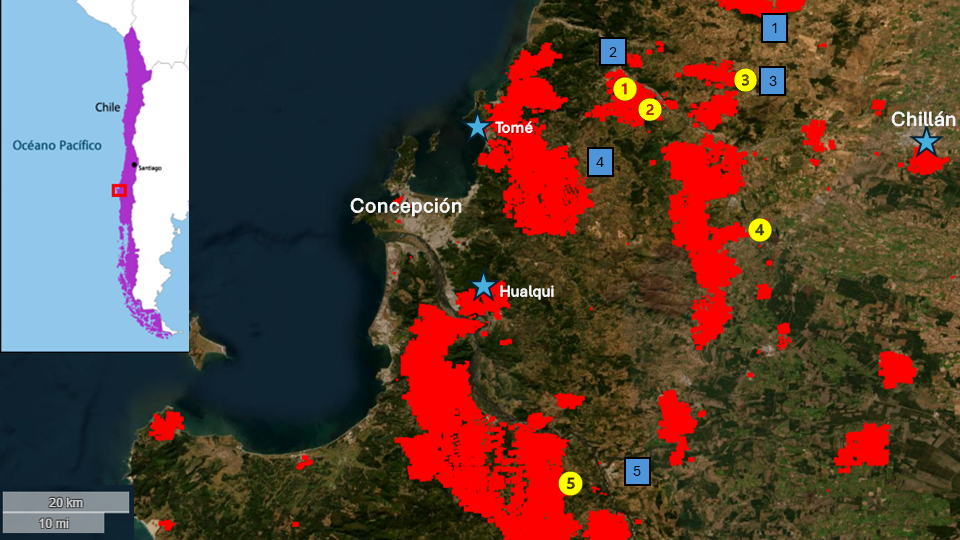
Figure 1. Map of sampling locations (yellow circle), closest weather stations (blue square), and closest air quality stations (blue stars) in central-south Chile. The red shaded area indicates the approximate regions affected by the February 2023 wildfires.
The principal wildfire smoke exposure event occurred between February 2 and 15, 2023, during the late ripening period of País grapes in the study regions. Harvest dates varied slightly among wineries according to local viticultural practices and grape maturity, occurring approximately between late February and mid-March 2023. As a result, the interval between smoke exposure and harvest differed modestly among sites. All finished wine samples were collected from commercial wineries in 2024 and analysed simultaneously. Therefore, the samples in 2024 were approximately one year older than the samples in 2023 at the time of analysis. The assessment of VPs and their glycoconjugates is specific to smoke exposure, rather than products of wine ageing, and remains stable during ageing (Parker et al., 2025), limiting the confounding effect of vintage age on the chemical results. Potential vintage effects on sensory perception are discussed in Section 3.
3. Weather information
Fire data, including Fire Radiative Power (FRP) values, burned area, and spatial distribution, were sourced from NASA FIRMS (https://firms.modaps.eosdis.nasa.gov/map) and Chilean National Forestry Corporation (CONAF – www.conaf.cl) databases and cross-referenced with regional vineyard locations. Smoke plumes were visualised (Figure 2) using NASA WorldView Platform (https://worldview.earthdata.nasa.gov/). Air quality data, including 10 m and 2.5 m particulate matter (PM10 and PM2.5, respectively), nitrogen oxides (NOX), and sulfur dioxide (SO2), were obtained from the Sistema de Información Nacional de Calidad del Aire (SINCA) website (https://sinca.mma.gob.cl) and were cross-checked with the wildfire dates, plume trajectories, and monitoring station locations used in the satellite analysis (Figure 1, Table S2). All weather data (minimum and maximum temperatures, precipitation, relative humidity and solar radiation) were collected from Agromet (https://agrometeorologia.cl).
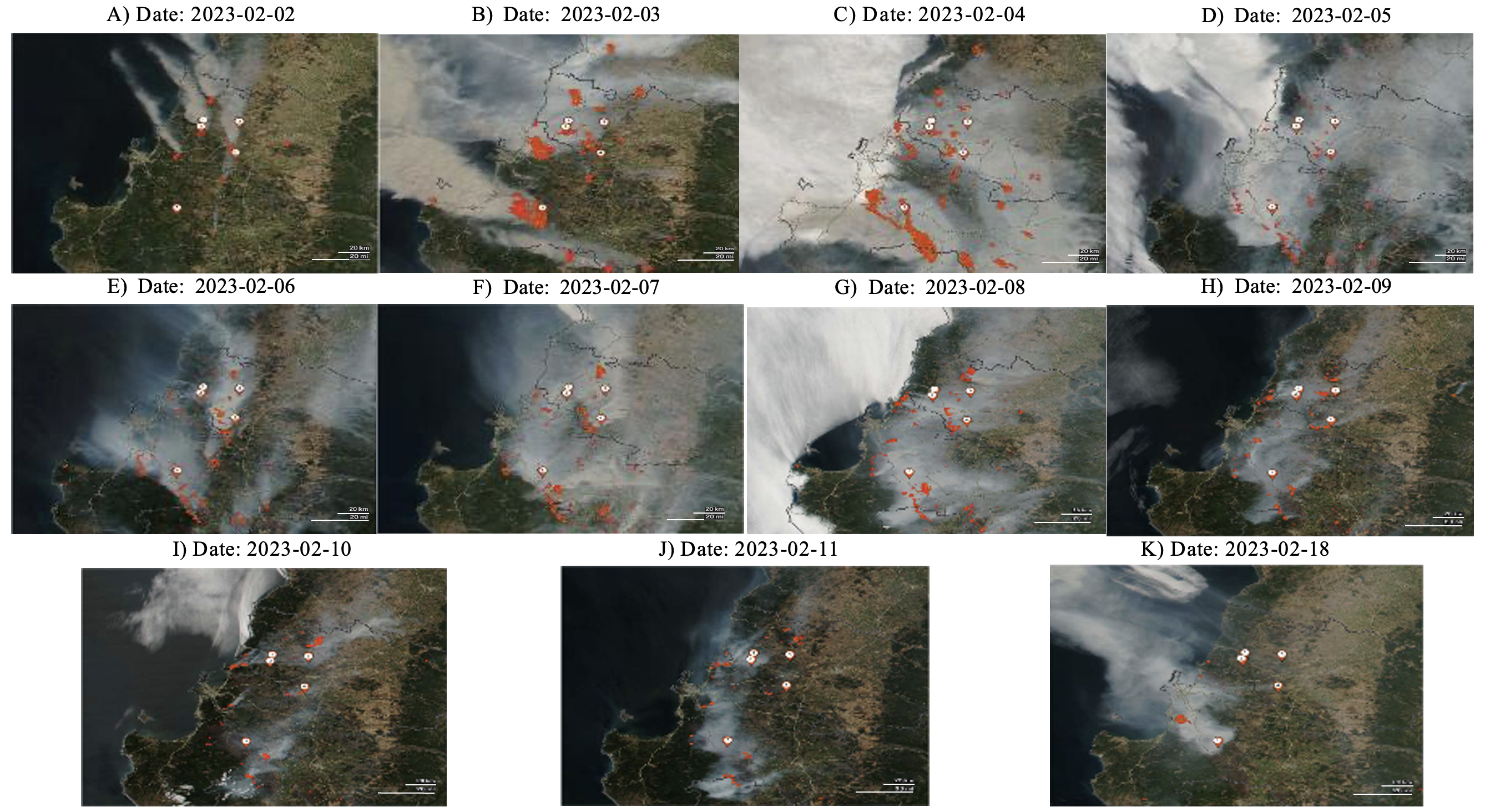
Figure 2. Temporal satellite imagery of wildfire smoke dispersion affecting vineyard areas in the Itata Valley during February 2023 wildfires. Daily satellite imagery showing wildfire activity and smoke dispersion affecting vineyard areas located in the Itata Valley, south-central Chile, during February 2023. Panels A–J correspond to satellite observations acquired between February 2 and February 11, 2023, during the main wildfire event, while panel K corresponds to a secondary wildfire event recorded on February 18, 2023. All satellite images were standardised to the same spatial scale and orientation to facilitate temporal comparison of smoke plume persistence and wildfire proximity relative to vineyard locations.
4. Chemical analysis
4.1. Volatile phenols
Eight VPs, guaiacol, 4-methylguaiacol, phenol, 4-ethylphenol, cresol (o, m, and p-isomers), and syringol were measured using previously reported methodologies (Noestheden et al., 2017; Noestheden et al., 2018; Rumbaugh et al., 2025). Briefly, a 5 mL aliquot of each wine sample was transferred to a 15 mL polypropylene centrifuge tube (Jet Biofil, Guangzhou, China), spiked with an internal standard mix containing deuterated VPs at a final concentration of 50 ng/mL of each. The internal standards used were d4-guaiacol, d3-4-methylguaiacol, d7-o-cresol, d7-m-cresol, d7-p-cresol, d5-phenol, d9-4-ethylphenol, and d6-4-methylsyringol. Each VP was quantified against its corresponding deuterated analogue, except syringol, which was quantified using d6-4-methysyringol. Subsequently, 2 mL of a 1:1 (v/v) solution of hexane:ethyl acetate and 3 mL of saturated calcium chloride solution (6 M) were added. The extraction mixtures were vortexed using an MS1 Minishaker vortex mixer (IKA-Werke GmbH & Co. KG, Staufen, Germany) for 30 s, mixed for 5 min, and centrifuged (purchased from Sigma Laborzentrifugen GmbH, Osterode am Harz, Germany) at 2800 × g for 5 min. An aliquot of the organic phase was collected for analysis. Samples were analysed in triplicate.
Analyses were performed on an Agilent Triple Quadrupole GC-MS/MS instrument (Santa Clara, CA, USA) equipped with an Agilent 7890 gas chromatograph and CombiPAL autosampler. Helium (99.999 %, Linde) was used as the carrier gas. The injection port temperature for quantitative analysis was set at 220 °C, with a 1 μL injection volume for all analyses. Analyses were performed using a ZB-WAX capillary column (30 m × 0.32 mm × 0.50 μm; Phenomenex, Inc., Torrance, CA, USA), with an Ultra Inert Agilent liner (Santa Clara, CA, USA). Transfer line and source temperatures were set at 230 °C and 250 °C, respectively. Compound recovery ranged from 88 % to 110 % of the limits of detection (LOD) and limits of quantification (LOQ), as shown in Table S1. Notably, syringol showed lower recovery efficiency compared to the other analytes, suggesting the need for alternative methodological strategies to improve quantification accuracy for this compound.
4.2. Glycoconjugates
Eight glycosylated forms of the VPs (syringol gentiobioside (SGB), 4-methylsyringol gentiobioside (MSGB), guaiacol gentiobioside (GGB), guaiacol glucoside (GG), guaiacol rutinoside (GRu), phenol rutinoside (PRu), 4-methylguaiacol rutinoside (MGRu), and p-cresol rutinoside (CRu)) were analysed using LC-MS/MS (Lim et al., 2024). Samples were prepared as in Caffrey et al. (2019). Briefly, 2 mL of each wine was diluted with 2 mL of 18MΩ water (generated through a Simplicity® UV from Merck Millipore Sigma, Burlington, MA, USA) and spiked with internal standard mixture solution (d3-guaiacol gentiobioside, d6-syringol gentiobioside, d3-guaiacol glucoside, d5-phenol rutinoside, d3-guaiacol rutinoside, d6-4-methylsyringol gentiobioside, d7-p-cresol rutinoside, d3-4-methylguaiacol rutinoside) to reach a final concentration of 125 µg/L for each deuterated compound. Each glycoconjugate was quantified against its corresponding deuterated analogue. Samples were purified and concentrated using SPE as in Caffrey et al. (2019). Eluents were dried under vacuum using a CentriVap (Labconco Corporation, Kansas City, MO, USA) and then reconstituted in 1 mL of water before being loaded onto the LC-MS/MS. Samples were analysed in triplicate using the instrumentation and acquisition method described in Rumbaugh et al. (2025).
4.3. Oenological parameters
Wine pH and titratable acidity (TA) were measured using a Benchtop pH meter (inoLab® pH 7110 Set 4; WTW, Weilheim in Oberbayern, Germany). TA was determined by titration to an endpoint of pH 8.1 ± 0.1 following Iland et al. (2004) and is expressed as g/L of tartaric acid. Ethanol content (as % alcohol by volume) was determined using an alcolyzer (LDS, Laboratoires Dujardin-Salleron, Noizay, France), and residual sugar (RS) and volatile acidity (VA) were measured using a Thermo Fisher Scientific Gallery Analyzer (Waltham, MA).
5. Sensory analysis
In accordance with Chilean regulations (Ley N.º 20.120), the study was not subject to prospective ethics committee review, as it did not constitute biomedical research. All participants were adults and provided written informed consent before participating (Figure S1). Only commercially available wines were evaluated, and no adverse events were reported.
Wines were evaluated by twelve trained panellists (four males and eight females, between the ages of 30–62) from the Faculty of Pharmacy, Universidad de Concepción. Panellists self-reported varying levels of wine experience: three as knowledgeable consumers, five as moderately experienced, and four as having limited experience. Participants were recruited based on the following inclusion criteria: (i) being 18 years of age or older (legal drinking age), (ii) being in good health and free from any medical condition that could preclude participation, and (iii) demonstrating an interest in wine. Individuals who did not meet these criteria were excluded from the study.
The panel was trained for descriptive analysis in seven 1-hour training sessions, where the panellists were asked to generate a lexicon through consensus methodologies to describe the aroma, taste, and mouthfeel of the wines (Heymann & Ebeler, 2017; Lawless & Heymann, 2010). Reference standards (Table S3) were prepared from grocery and household items in amber glasses covered with a Petri dish to familiarise panellists with the generated sensory attributes.
The evaluations were performed individually, seated in a well-ventilated laboratory, with natural lighting without direct sun exposure, at an average temperature of 25 °C. Wine samples were served blindly, coded with random 3-digit codes in 40 mL aliquots in 350 mL amber glasses covered with a Petri dish. The 10 wines were evaluated in duplicate in a randomised order in four sessions. The panellists were asked to rate each wine using an unstructured line scale anchored from ‘not present’ (0) to ‘very intense’ (100) on the attributes generated during the training. Between wine samples, panellists took a 2-min break to cleanse their palate with water and an unsalted cracker. For sensory data collection, Compusense Cloud (Version 25.1) was used.
6. Data treatment
Means and standard deviations were calculated in Excel (Version 2024). One-way ANOVA and post-hoc Tukey tests for chemical data were conducted in R (Version 4.5.1). Sensory data were analysed in XLSTAT Sensory (Version 2024.4.0). A one-way MANOVA for the main factor, wine, was used to assess overall differences among wines. A three-way ANOVA with the factors wine, judge, and replicate, including their two-way interactions, was used to detect significant sensory attributes. When wine effects were significant but involved interactions, a pseudo-mixed model was applied (Næs & Langsrud, 1998). Fisher’s LSD was used to identify significant groupings. Partial Least Squares Regression (PLSR) was used to correlate sensory and chemical data. The significance level for all tests was set at p < 0.05.
Results and discussion
1. Environmental conditions
The 2023 wildfire season in Chile was one of the most severe in recent history, with intense fires affecting the Itata and Biobío Valleys from February 2–15 (Figure 2). Satellite-derived FRP data (MODIS) show several high-severity fire clusters near vineyards, with peaks exceeding 4000 MW and corresponding to extensive burned areas. Environmental conditions – high temperatures and solar radiation coupled with low humidity and precipitation (Table 1) – further corroborate the fire intensity in 2023. In all five zones (Figure 1), monthly mean temperatures from January to March 2023 frequently exceeded 20 °C, with daily maximums peaking near or above 30 °C, and minimal precipitation recorded during the same period. The differences in wind patterns and humidity across zones likely influenced both the duration and intensity of smoke exposure on grapevines, potentially explaining regional variability in smoke-related chemical and sensory markers found in País wines.
Weather Conditions | 1_231 | 1_24 | 2_23 | 2_24 | 3_23 | 3_24 | 4_23 | 4_24 | 5_23 | 5_24 |
Relative Humidity (%) | 54.9±13.7 | 57±11.6 | 71.2±10.4 | 73.9±8 | 58.9±15.1 | 60.8±13.1 | 63.8±16 | 65.8±12.8 | 60.2±15.3 | 61.6±13.2 |
Accumulated Precipitation (mm) | 0.3±1.8 | 0.7±3.5 | 0.3±1.9 | 1±5 | 0.3±1.9 | 0.8±3.7 | 0.4±2.3 | 0.7±3.4 | 0.6±3.7 | 1.1±4.9 |
Solar Radiation (Mj/m²) | 17.3±5.3 | 16.4±5.2 | 20.1±6.6 | 20±6.6 | 21.9±6.9 | 20.8±6.8 | 22.5±7.3 | 22.5±7.3 | 17.3±7.3 | 16.3±7.7 |
Cummulative GDD | 1944 | 1712 | 1355 | 1145 | 1975 | 1684 | 1545 | 1221 | 1691 | 1408 |
Oenological Parameters | PS1_232 | PS1_24 | PS2_23 | PS2_24 | PS3_23 | PS3_24 | PS4_23 | PS4_24 | PS5_23 | PS5_24 |
pH | 3.67 | 3.47 | 3.62 | 3.67 | 3.6 | 3.67 | 3.45 | 3.66 | 3.82 | 3.96 |
TA | 6.11 | 5.48 | 5.74 | 4.54 | 5.4 | 4.24 | 4.99 | 4.84 | 5.06 | 5.33 |
RS | 7.73 | 0 | 0.07 | 0.07 | 0.01 | 0 | 0.94 | 2.7 | 0 | 2.92 |
VA | 1.85 | 0.89 | 0.9 | 0.66 | 0.99 | 0.54 | 0.76 | 0.88 | 1.13 | 0.7 |
Alcohol | 13.4 | 14 | 12.5 | 12.5 | 11 | 11.5 | 12.5 | 13.5 | 14.4 | 15 |
Air quality data from three SINCA monitoring stations (Chillán, Tomé, and Hualqui; Figure 1, Table S2) independently corroborate substantial smoke exposure across the study regions during the principal fire window (February 2–11, 2023). PM10 and PM2.5 concentrations peaked sharply on February 4–5 at all three stations, with PM10 reaching 515 µg/m3 at Chillán and 424 µg/m3 at Hualqui, and PM2.5 reaching 412 µg/m3 at Chillán and 393 µg/m3 at Hualqui, exceeding the WHO 24-hour guideline values of 45 µg/m3 and 15 µg/m3, respectively. Even outside the peak, PM10 and PM2.5 remained substantially elevated at all three stations throughout the monitoring period, indicating prolonged rather than transient smoke exposure during the late-ripening stage of País grapes. In contrast, NOx (3–22 ppb at Tomé and Hualqui; not monitored at Chillán) and SO2 (1–2 ppb across all stations) remained low throughout the period. Together, the FRP satellite data, meteorological records, burned-area extent, and ground-level air quality measurements provide convergent evidence of significant wildfire activity and associated smoke exposure across the Itata and Biobío valleys during the 2023 growing season.
2. Chemical analysis of País wines
VP and their glycoconjugate concentrations were consistently elevated in 2023 wines relative to 2024 wines (Figure 3 and Table S4). Phenol and 4-ethylphenol (4EP) are reported in Table S4 only, as they are associated with gas emissions and Brettanomyces, respectively. Unlike guaiacol, 4-methylguaiacol, and the cresols, which were consistently elevated in 2023 relative to 2024 across all sites, 4EP showed no consistent vintage effect, suggesting a substantial Brettanomyces contribution. This was further supported by 4EP concentrations exceeding reported sensory thresholds (Chatonnet et al., 1992) at sites 1 and 2 in both vintages. Wood contact from traditional País winemaking also cannot be entirely excluded as a source of VPs; however, as both vintages underwent comparable wood exposure, the observed increases in 2023 are likely attributed to smoke.
Guaiacol, 4-methylguaiacol, and o-, m-, and p-cresols were significantly elevated in 2023 wines compared to 2024 controls, apart from m-cresol in site 4. All sites except site 4 also had significantly elevated glycoconjugate concentrations (Figure 3B). Based on summed VP concentrations, site 5 was the most smoke-affected (guaiacol 15 g/L, 4-methylguaiacol 6.9 g/L), followed by sites 1, 2, 3 and 4 in decreasing order. The glycoconjugate pattern differed, with site 3 having the highest total glycoconjugate concentrations (SGB 40.7 g/L, Gru 5.8 g/L, Cru 7.6 g/L), followed by sites 2, 5, and 1. This divergence between VP and glycoconjugate rankings across sites suggests differences not only in the extent of smoke exposure but also in grape metabolism and potentially winemaking practices.
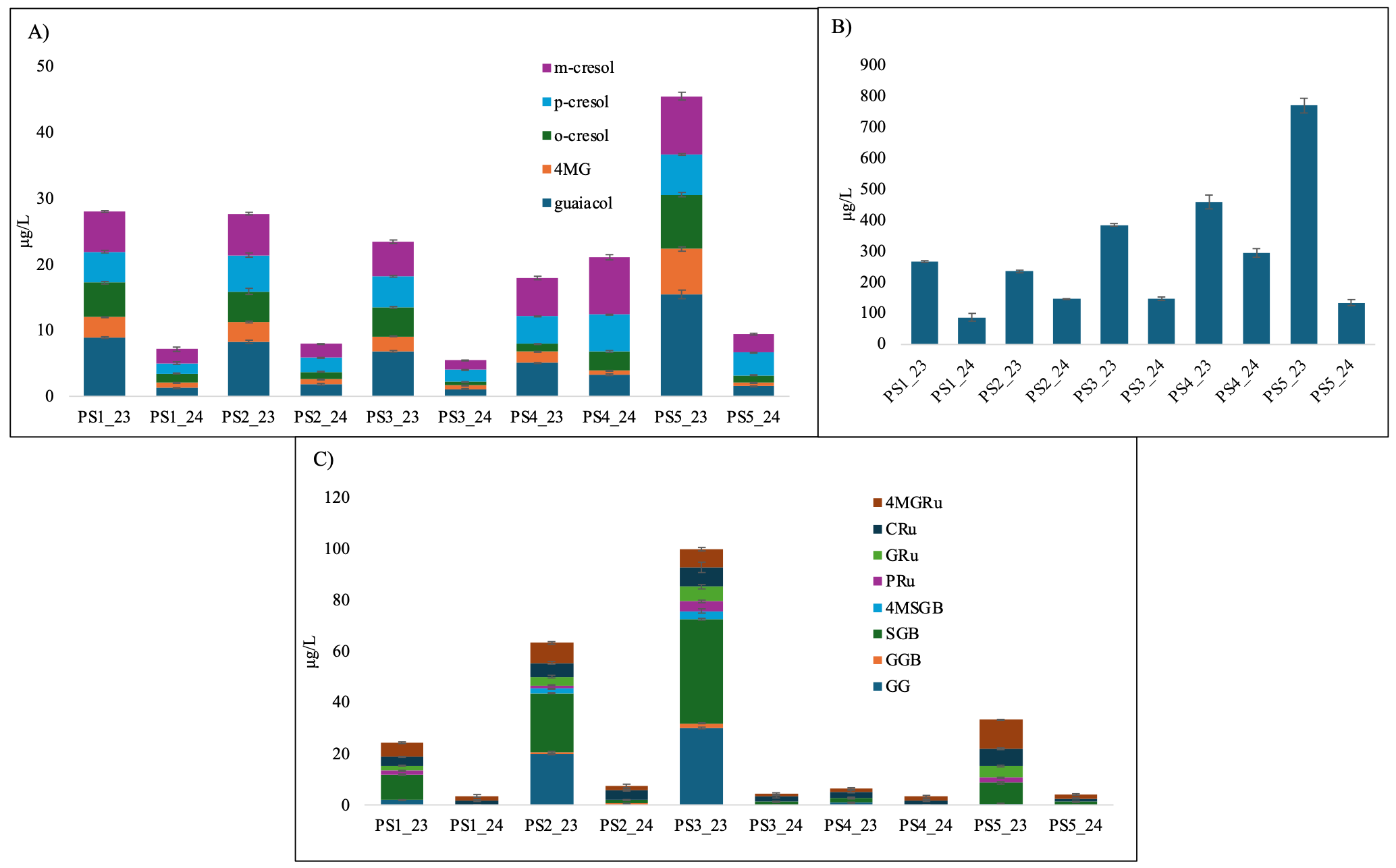
Figure 3. Concentrations (g/L) of guaiacol and cresol derivatives (A), syringol (B), and their glycoconjugates (C) in País wines produced in 2023 and 2024. The error bars depict standard deviation. 4MG = 4-methylguaiacol, PS=País, 1-5 = sites 1-5 from Figure 1, 23 = 2023, 24 = 2024, 4MGRu = 4-methylguaiacol rutinoside, Cru = cresol rutinoside, 4MSGB = 4-methylsyringol gentiobioside, Gru = guaiacol rutinoside, Pru = phenol rutinoside, GG = guaiacol glucoside, SGB = syringol gentiobioside, GGB = guaiacol gentiobioside.
Compared to previous results from Australia and the United States, VP and their glycoconjugate concentrations in the 2023 País wines were consistent with low-to-moderate smoke exposure. Maximum guaiacol (15.4 g/L) and cresols (o-cresol 8.2 g/L, m-cresol 8.8 g/L, and p-cresol 6.1 g/L) concentrations are similar to median concentrations in smoke-tainted wines reported by Parker et al. (2023) and are below the concentrations associated with perceptible smoke taint in red wine (Parker et al., 2012). Likewise, total glycoconjugate concentrations in the Chilean País wines were below the thresholds associated with moderate-to-severe smoke exposure in Australian and Californian studies (Szeto et al., 2024; Parker et al., 2023). However, even at these moderate concentrations, synergistic and additive interactions between guaiacol, the cresols, and their glycoconjugates can contribute to perceptible smoke flavour below individual sensory thresholds (Parker et al., 2012; Parker et al., 2023; Tomasino et al., 2023), which may help explain the smoke-related sensory differences observed in the 2023 wines discussed in section 3.
The 2024 control wines contained low but detectable concentrations of VPs and glycoconjugates consistent with baseline levels reported for non-smoke-exposed red wines in other regions (Merrell et al., 2020; Coulter et al., 2022). Free guaiacol (1.10–3.27 µg/L), 4-methylguaiacol (0.55–0.80 µg/L), and the cresols were within expected background ranges, and glycoconjugates were near or below the limit of quantification at most sites. One exception was site 4, which had notably elevated m-cresol (8.75 µg/L) and p-cresol (5.53 µg/L) relative to the other control wines, potentially reflecting natural variation in the País variety since no baseline concentrations of smoke marker compounds have been previously reported. Syringol concentrations in the control wines (86–295 µg/L) were considerably higher than baseline values reported for Australian cultivars (Coulter et al., 2022), which may reflect a distinct phenolic background of País wines, similar to high levels of guaiacol measured in Syrah wines (Parker et al., 2023), or prolonged wood contact during vinification (Parker et al., 2024a).
When the proportional composition of VPs and glycoconjugates is compared across Chilean, Australian (Parker et al., 2023- Study B, only Pinot noir wines), American (Lim et al., 2024), and Canadian (Favell et al., 2022) datasets (Figure 4) the profiles were remarkably similar despite differences in grape variety, winemaking, and fire fuel source. Guaiacol was the dominant VP across all four regions, with varying contributions from the cresols, and SGB was consistently the most abundant glycoconjugate. The regional consistency in compound ratios suggests that the key chemical targets for smoke taint detection in wines may be broadly applicable across viticultural regions. One notable difference was the relatively higher proportional contribution of cresols in the Chilean País wines compared to the Australian, Canadian, and US datasets, which may reflect differences in fuel composition, grape variety, or winemaking practices, and warrants further investigation. In addition, formal statistical comparisons are difficult to justify given the small and compositionally heterogeneous sample sets in each dataset, and any conclusions about conserved profiles across regions should be interpreted cautiously until confirmed with larger, more systematic studies across additional cultivars and smoke events.
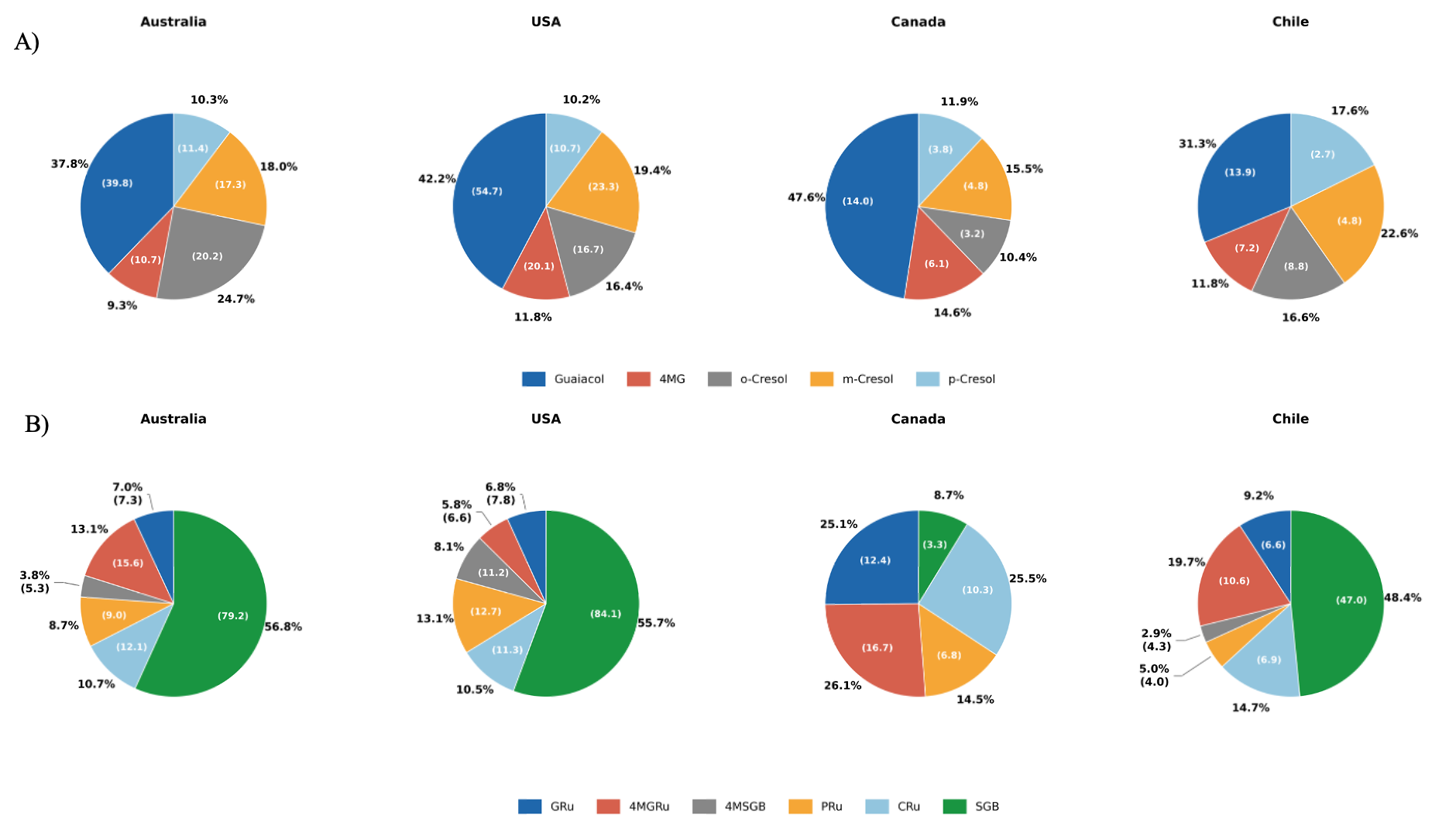
Figure 4. Proportional profiles of A) volatile phenols and B) their glycoconjugates in smoke-impacted wines from Australia (Parker et al., 2023- Pinot noir Study B), US (Lim et al., 2024), Canada (Favell et al., 2022), and Chile (current study). Profiles are expressed as the mean proportion (%) of each compound relative to the total detected in each wine. Values in parentheses represent the standard deviation of proportions across samples. Data are expressed as proportions to account for differences in overall smoke impact between regions. Smoke-exposed samples from natural wildfire events were only included (Australia n = 9, USA n = 18, Canada n = 6, Chile n = 5). 4MG = 4-methylguaiacol, Gru = guaiacol rutinoside, 4MGRu = 4-methylguaiacol rutinoside, 4MSGB = 4-methylsyringol gentiobioside, Pru = phenol rutinoside, Cru = cresol rutinoside, SGB = syringol gentiobioside.
3. Sensory chemometrics
The trained panel identified twenty-five sensory attributes, including retronasal and orthonasal aromas, tastes, and mouthfeels. Five aromas (one was retronasal), four tastes, and three mouthfeels significantly differentiated the wines (Table S5). Although the smoky aroma was consistently rated higher in 2023 wines than in 2024, it differed significantly between vintages only at sites 2 and 5, further highlighting that the wines studied here were low to moderately impacted by wildfire smoke. Fruity aromas, such as red fruits and black fruits (Table S3), were not significantly different between wine samples analysed, contrary to previous smoke taint studies (Parker et al., 2023; Parker et al., 2024b). This is likely due to the low to moderate smoke impact observed in these wines (Figure 3). In addition, the panel did not perceive ashy flavours in the smoke-impacted samples, as was described in Californian wines as a retro-nasal ashtray character (Lim et al., 2024; Tomasino et al., 2023) or the medicinal and smoky flavours and burnt ashy aftertaste described in reconstituted wine samples (Kristic et al., 2015). The other attributes found to be significant in the 2023 smoke-tainted samples were bitter taste and astringent mouthfeel.
While the sensory data supports the chemical evidence of smoke impact in the 2023 wines, it cannot be attributed exclusively to smoke-derived compounds. As noted above, traditional wood contact and elevated levels of 4EP may have contributed to the sensory outcomes. In addition, the differences in oenological parameters (Table 1) could have influenced sensory perception of the wine. For instance, alcohol content ranged broadly across samples, which can influence mouthfeel, body, and the perception of heat (Heymann et al., 2013), while wines from site 5 exhibited notably higher pH values in both years, increasing susceptibility to microbial activity. Lastly, 2023 and 2024 wines were analysed simultaneously, which may have introduced differential ageing effects between wines. Nonetheless, because winemaking practices and oenological parameters were comparable between vintages within each site, the within-site comparisons remain relevant. The sensory results herein should be interpreted as evidence consistent with wildfire smoke exposure under real-world commercial conditions, rather than as a fully controlled smoke exposure experiment.
PLSR analysis (Figure 5) was used as an exploratory tool to investigate differences between smoke-impacted (2023) and non-impacted wine samples (2024). The first two latent variables (t1 and t2) cumulatively explained 36.4 % of the sensory variance (R2Y) and 70.6 % of the chemical variance (R²X). However, the model showed limited predictive ability in cross-validation (Q2 = 0.061), indicating that the PLSR should be interpreted as exploratory rather than predictive.
PS = País, 1-5 = sites 1-5 from Figure 1, 23 = 2023, 24 = 2024, R = retronasal, O = orthonasal, RS = residual sugar, TA = titratable acidity, VA= volatile acidity, 4EP= 4-ethylphenol, 4MG = 4-methylguaiacol, 4MGRu = 4-methylguaiacol rutinoside, CRu= cresol rutinoside, 4MSGB = 4-methylsyringol gentiobioside, GRu = guaiacol rutinoside, PRu = phenol rutinoside, GG = guaiacol glucoside, SGB= syringol gentiobioside, GGB = guaiacol gentiobioside. 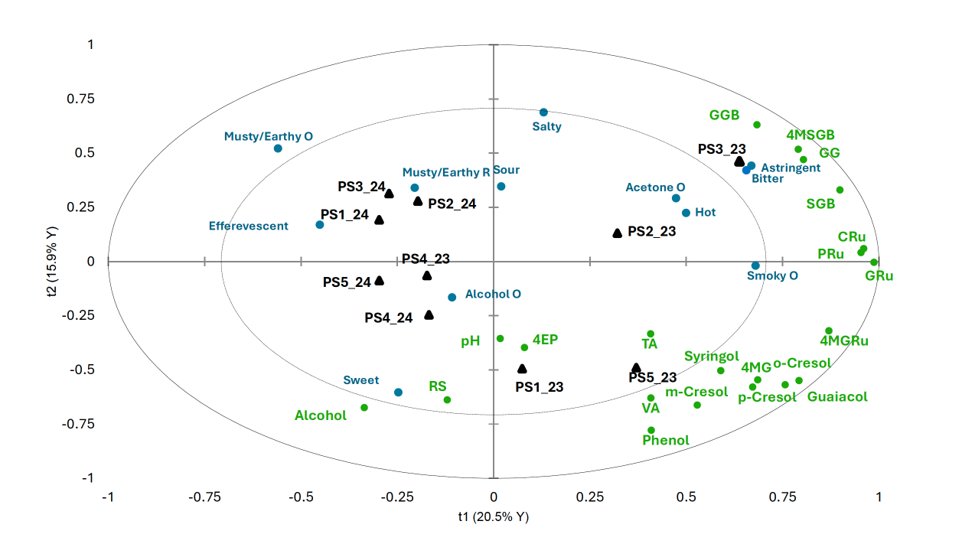
Figure 5. PLSR correlation loading plot showing relationships between sensory attributes (Y variables) and chemical composition (X variables). The first two latent variables (t1 and t2) cumulatively explain 36.4 % of the sensory variance (R2Y) and 70.6 % of the chemical variance (R2X).
The 2023 samples strongly correlated with the VPs and glycosides analysed, as well as sensory descriptors like smoky, hot, bitter, and astringent mouthfeel. In contrast, the non-exposed samples (as well as PS4_23) are associated with sensory attributes such as effervescent, sweet, sour, salty, and musty/earthy. However, oenological parameters (Table 1) varied among wines produced from the same winery and likely impacted the final sensory characteristics. Smoke-impacted wines were further separated based on high VP concentrations (PS2_23 and PS3_23) or high glycoconjugate concentrations (PS1_23 and PS5_23), with the latter strongly associated with the smoky attribute. This is interesting considering previous studies have observed an association of VP glycoconjugates with smoky and ashy flavours in wines (Crews et al., 2022; Mayr et al., 2014; Tomasino et al., 2023)
One of the smoke-impacted samples, from location 4, tends to be grouped with the 2024 samples. This sample presented concentrations of glycosides considerably lower than those of the other wine samples from 2023. The concentration of free VPs in this sample, although lower, was not as marked and could still be differentiated from the non-smoke-impacted samples. Many factors can contribute to this difference; however, it may be due to location and wind direction, considering that this location was the farthest east (with the main plume of smoke moving to the west) and in a flatter and more ventilated area.
Conclusion
This study evaluated smoke taint in commercial wines produced from vineyards and wineries directly affected by the 2023 Chilean wildfires, representing the first assessment of smoke impact in País wines and in South American viticulture. An inter-vintage design comparing smoke-impacted wines from 2023 and non-impacted wines from 2024 was employed, with production protocols maintained identically between vintages at each winery.
Herein, our findings demonstrate 1) variable concentrations of smoke-marker compounds in smoke-impacted wines in Chile, indicating chemical analyses and atmospheric modelling are needed to predict vineyard impact; 2) higher contribution of cresols to VP profiles in País wines, potentially suggesting a difference in fuel type, grape absorbance of VPs, or winemaking protocols; and 3) the similarities of VP glycoside compound profiles between Australia, the US, and Chile, potentially suggesting minimal regional influence on the chemical signatures of smoke exposure. Together, these results provide the first evidence consistent with wildfire smoke impact on Chilean País wines under real-world conditions, establishing a foundation for future controlled studies on smoke exposure in South American viticulture.
Acknowledgements
The authors gratefully acknowledge the collaboration of smallholder and cooperative wine producers in the Itata and Biobío Valleys for providing País wine samples and regional fire exposure data. We are especially thankful to the sensory panellists from the Faculty of Pharmacy at Universidad de Concepción for their critical contributions to the descriptive analysis. This research was supported by the ANID projects PINC23007, PINC230012 and Fondequip AIC 018. We also acknowledge the support of the technical board of the project Herramienta Químico-Sensorial Predictiva para Evaluar el Impacto del Humo de Incendios Forestales en Uvas y Vinos, with special thanks to Larry Lerno for his expert input and guidance. Additional thanks to the teams at UC Davis Chile and Universidad de Concepción for their analytical support.
References
- Adams, A. (2021). 2020 Fires Caused $3.7 billion in losses for Wine Industry. Wine Business.
- Barker, J. (2025). State of the global vine and wine sector international organisation of vine and wine. OIV Press Conference.
- Barker, J. W., Price, O. F., & Jenkins, M. E. (2022). High severity fire promotes a more flammable eucalypt forest structure. Austral Ecology, 47(3), 519–529. https://doi.org/10.1111/aec.13134
- Caffrey, A., Lerno, L., Rumbaugh, A., Girardello, R., Zweigenbaum, J., Oberholster, A., & Ebeler, S. E. (2019). Changes in smoke-taint volatile-phenol glycosides in wildfire smoke-exposed Cabernet-Sauvignon grapes throughout winemaking. American Journal of Enology and Viticulture, 70(4), 373–381. https://doi.org/10.5344/ajev.2019.19001
- Chatonnet, P., Dubourdie, D., Boidron, J. N., & Pons, M. (1992). The origin of ethylphenols in wines. Journal of the Science of Food and Agriculture, 60(2), 165-178. https://doi.org/10.1002/jsfa.2740600205
- Cordero, R. R., Feron, S., Damiani, A., Carrasco, J., Karas, C., Wang, C., Kraamwinkel, C. T., & Beaulieu, A. (2024). Extreme fire weather in Chile driven by climate change and El Niño–Southern Oscillation (ENSO). Scientific Reports, 14(1). https://doi.org/10.1038/s41598-024-52481-x
- Coulter, A., Baldock, G., Parker, M., Hayasaka, Y., Francis, I. L., & Herderich, M. (2022). Concentration of smoke marker compounds in non-smoke-exposed grapes and wine in Australia. Australian Journal of Grape and Wine Research, 28(3), 459-474. https://doi.org/10.1111/ajgw.12543
- Crews, P., Dorenbach, P., Amberchan, G., Keiffer, R. F., Lizama-Chamu, I., Ruthenburg, T. C., McCauley, E. P., & McGourty, G. (2022). Natural Product Phenolic Diglycosides Created from Wildfires, Defining Their Impact on California and Oregon Grapes and Wines. Journal of Natural Products, 85(3), 547–561. https://doi.org/10.1021/acs.jnatprod.2c00028
- Dungey, K. A., Hayasaka, Y., & Wilkinson, K. L. (2011). Quantitative analysis of glycoconjugate precursors of guaiacol in smoke-affected grapes using liquid chromatography-tandem mass spectrometry based stable isotope dilution analysis. Food Chemistry, 126(2), 801–806. https://doi.org/10.1016/j.foodchem.2010.11.094
- Favell, J. W., Wilkinson, K. L., Zigg, I., Lyons, S. M., Ristic, R., Puglisi, C. J., Wilkes, E., Taylor, R., Kelly, D., Howell, G., McKay, M., Mokwena, L., Plozza, T., Zhang, P., Bui, A., Porter, I., Frederick, O., Karasek, J., Szeto, C., . . . Noestheden, M. (2022). Correlating Sensory Assessment of Smoke-Tainted Wines with Inter-Laboratory Study Consensus Values for Volatile Phenols. Molecules, 27(15), 4892. https://doi.org/10.3390/molecules27154892
- Feilden, E. (2023, April 11). Blaze of glory: Winemakers in Chile rise above fire damage. The Drinks Business. Retrieved August 28, 2026 from https://www.thedrinksbusiness.com/2023/04/blaze-of-glory-chile-winemakers-rise-above-fire-damage/
- Gutiérrez-Gamboa, G., Liu, S. Y., & Pszczólkowski, P. (2020). Resurgence of minority and autochthonous grapevine varieties in South America: A review of their oenological potential. Journal of the Science of Food and Agriculture, 100(2), 465–482. https://doi.org/10.1002/jsfa.10003
- Hayasaka, Y., Baldock, G. A., Pardon, K. H., Jeffery, D. W., & Herderich, M. J. (2010a). Investigation into the formation of guaiacol conjugates in berries and leaves of grapevine vitis vinifera L. CV. Cabernet-Sauvignon using stable isotope tracers combined with HPLC-MS and MS/MS analysis. Journal of Agricultural and Food Chemistry, 58(4), 2076–2081. https://doi.org/10.1021/jf903732p
- Hayasaka, Y., Baldock, G. A., Parker, M., Pardon, K. H., Black, C. A., Herderich, M. J., & Jeffery, D. W. (2010b). Glycosylation of smoke-derived volatile phenols in grapes as a consequence of grapevine exposure to bushfire smoke. Journal of Agricultural and Food Chemistry, 58(20), 10989–10998. https://doi.org/10.1021/jf103045t
- Hewitt, S., Aragon, M., Ashmore, P. L., Collins, T. S., & Dhingra, A. (2024). Transcriptome analysis reveals activation of detoxification and defense mechanisms in smoke-exposed Merlot grape (Vitis vinifera) berries. Scientific Reports, 14(1). https://doi.org/10.1038/s41598-024-72079-7
- Heymann, H., & Ebeler, S. E. (2017). Sensory and Instrumental Evaluation of Alcoholic Beverages. Academic Press/Elsevier. https://doi.org/10.1016/B978-0-12-802727-1.00018-1
- Heymann, H., LiCalzi, M., Conversano, M. R., Bauer, A., Skogerson, K., & Matthews, M. (2013). Effects of Extended Grape Ripening With or Without Must and Wine Alcohol Manipulations on Cabernet-Sauvignon Wine Sensory Characteristics. South African Journal of Enology and Viticulture. 34(1), 86-99. https://doi.org/10.21548/34-1-1084.
- Høj, P., Pretorius, I., & Blair, R. (2003). The Australian Wine Research Institute annual report 2003 (pp. 37–38). Australian Wine Research Institute. https://www.awri.com.au
- Iland, P., Bruer, N., Edwards, G., Weeks, S., & Wilkes, E. (2004). Chemical Analysis of Grapes and Wine: Techniques and Concepts (1st edition). Patrick Iland Wine Promotions.
- Kelly, D., Zerihun, A., Singh, D. P., Eckstaedt, C. V. V., Gibberd, M., Grice, K., & Downey, M. (2012). Exposure of grapes to smoke of vegetation with varying lignin composition and accretion of lignin derived putative smoke taint compounds in wine. Food Chemistry, 135(2), 787–798. https://doi.org/10.1016/j.foodchem.2012.05.036
- Kennison, K. R., Wilkinson, K. L., Pollnitz, A. P., Williams, H. G., & Gibberd, M. R. (2009). Effect of timing and duration of grapevine exposure to smoke on the composition and sensory properties of wine. Australian Journal of Grape and Wine Research, 15(3), 228–237. https://doi.org/10.1111/j.1755-0238.2009.00056.x
- Kennison, K. R., Wilkinson, K. L., Williams, H. G., Smith, J. H., & Gibberd, M. R. (2007). Smoke-derived taint in wine: Effect of postharvest smoke exposure of grapes on the chemical composition and sensory characteristics of wine. Journal of Agricultural and Food Chemistry, 55(26), 10897–10901. https://doi.org/10.1021/jf072509k
- Kristic, M. P., Johnson, D. L., & Herderich, M. J. (2015). Review of smoke taint in wine: Smoke-derived volatile phenols and their glycosidic metabolites in grapes and vines asbiomarkers for smoke exposure and their role in the sensory perception of smoke taint. Australian Journal of Grape and Wine Research, 21, 537–553. https://doi.org/10.1111/ajgw.12183
- Lacoste, P. (2021). La variedad de uva País (Listán Prieto) en el Cono Sur de América: trayectoria histórica. Idesia 39(2), 75–84. https://doi.org/10.4067/S0718-34292021000200075
- Lacoste, P., Castro, A., Briones, & Mujica, F. (2015). El pipeño: Historia de un vino típico del sur del Valle Central de Chile. Idesia, 33(3), 87–96. https://doi.org/10.4067/S0718-34292015000300013
- Lawless, H. T., & Heymann, H. (2010). Descriptive analysis. Sensory evaluation of food: Principles and practices. (2nd ed., 227-257). Springer. https://doi.org/10.1007/978-1-4419-6488-5
- Lim, L. X., Medina-Plaza, C., Arías-Perez, I., Wen, Y., Neupane, B., Lerno, L., Guinard, J.-X., & Oberholster, A. (2024). Using sensory and instrumental analysis to assess the impact of grape smoke exposure on different red wine varietals in California. Scientific Reports, 14(1), 27033. https://doi.org/10.1038/s41598-024-77041-1
- Mayr, C. M., Parker, M., Baldock, G. A., Black, C. A., Pardon, K. H., Williamson, P. O., Herderich, M. J., & Francis, I. L. (2014). Determination of the importance of in-mouth release of volatile phenol glycoconjugates to the flavor of smoke-tainted wines. Journal of Agricultural and Food Chemistry, 62(11), 2327–2336. https://doi.org/10.1021/jf405327s
- Mena-Acevedo, G., Estay, K., Gil-i-Cortiella, M., Ubeda, C., Miranda-Avendaño, P., Jara-Campos, C. and Peña-Neira, A., (2026). Chemical and sensory characterization of dry-farmed Vitis vinifera L. cv. País wines from the Maule and Itata valleys: evidence from a single vintage. Horticulturae, 12(5), 558. https://doi.org/10.3390/horticulturae12050558
- Merrell, C. P., Arvik, T. J., & Runnebaum, R. C. (2020). Understanding smoke taint results: Pinot noir baseline concentrations of smoke taint markers across five vintages. University of California, Davis. https://escholarship.org/uc/item/98m5b9s8
- Ministerio de Agricultura. (2023). Ministerio de Agricultura entregará asesoría a viñateros afectados por incendios en Valle del Itata [Ministry of Agriculture to provide advisory support to winegrowers affected by fires in the Itata Valley]. Gobierno de Chile. Retrieved February 28, 2025, from https://minagri.gob.cl/noticia/ministerio-de-agricultura-entregara-asesoria-a-vinateros-afectados-por-incendios-en-valle-del-itata/
- Modarres, M., Almeida, M., & Viegas, D. X. (2024). Experimental and numerical fire behaviour analysis in Eucalyptus globulus trees. International Journal of Wildland Fire, 33(11). https://doi.org/10.1071/WF23131
- Næs, T., & Langsrud, Ø. (1998). Fixed or random assessors in sensory profiling? Food Quality and Preference, 9(3), 145–152. https://doi.org/10.1016/S0950-3293(96)00050-X
- Noestheden, M., Dennis, E. G., & Zandberg, W. F. (2018). Quantitating Volatile Phenols in Cabernet Franc Berries and Wine after On-Vine Exposure to Smoke from a Simulated Forest Fire. Journal of Agricultural and Food Chemistry, 66(3), 695–703. https://doi.org/10.1021/acs.jafc.7b04946
- Noestheden, M., Thiessen, K., Dennis, E. G., Tiet, B., & Zandberg, W. F. (2017). Quantitating Organoleptic Volatile Phenols in Smoke-Exposed Vitis vinifera Berries. Journal of Agricultural and Food Chemistry, 65(38), 8418–8425. https://doi.org/10.1021/acs.jafc.7b03225
- Oberholster, A., Wen, Y., Suarez, S. D., Erdmann, J., Girardello, R. C., Rumbaugh, A., Neupane, B., Brenneman, C., Cantu, A., & Heymann, H. (2022). Investigation of Different Winemaking Protocols to Mitigate Smoke Taint Character in Wine. Molecules, 27(5). https://doi.org/10.3390/molecules27051732
- Parker, M., Bilogrevic, E., Jiang, W., Wilkes, E., Francis, I. L. & Herderich, M. J. (2025). Bottle Aging of Smoke-Affected Wines: Changes in Smoke Flavor and Chemical Composition. Journal of Agricultural and Food Chemistry, 73(3), 2114-2123. https://doi.org/10.1021/acs.jafc.4c10590
- Parker, M., Jiang, W., Siebert, T. E., & Herderich, M. J. (2024b). Smoky Characters in Wine: Distinctive Flavor or Taint?. Journal of Agricultural and Food Chemistry, 72(17), 9581-9586. https://doi.org/10.1021/acs.jafc.4c00811
- Parker, M., Jiang, W. M., Bilogrevic, E., Likos, D., Gledhill, J., Coulter, A. D., Cowey, G. D., Simos, C. A., Francis, I. L., & Herderich, M. J. (2023). Modelling Smoke Flavour in Wine from Chemical Composition of Smoke-Exposed Grapes and Wine. Australian Journal of Grape and Wine Research, 2023. https://doi.org/10.1155/2023/4964850
- Parker, M., Jiang, W. W., Coulter, A. D., Siebert, T. E., Bilogrevic, E., Francis, I. L., & Herderich, M. J. (2024a). Prevalence of wildfire smoke exposure markers in oaked commercial wine. American Journal of Enology and Viticulture, 75(1), 0750017. https://doi.org/10.5344/ajev.2024.23076
- Parker, M., Osidacz, P., Baldock, G. A., Hayasaka, Y., Black, C. A., Pardon, K. H., Jeffery, D. W., Geue, J. P., Herderich, M. J., & Francis, I. L. (2012). Contribution of several volatile phenols and their glycoconjugates to smoke-related sensory properties of red wine. Journal of Agricultural and Food Chemistry, 60(10), 2629–2637. https://doi.org/10.1021/jf2040548
- Pausas, J. G., Keeley, J. E., & Schwilk, D. W. (2017). Flammability as an ecological and evolutionary driver. Journal of Ecology, 105(2), 289–297. https://doi.org/10.1111/1365-2745.12691
- Reisen, F., & Brown, S. K. (2006). Implications for Community Health from Exposure to Bushfire Air Toxics. Environmental Chemistry, 3(4), 235–243. https://doi.org/10.1071/EN06008
- Ristic, R., Fudge, A. L., Pinchbeck, K. A., Bei, R. D., Fuentes, S., Hayasaka, Y., Tyerman, S. D., & Wilkinson, K. L. (2016). Impact of grapevine exposure to smoke on vine physiology and the composition and sensory properties of wine. Theoretical and Experimental Plant Physiology, 28(1), 67–83. https://doi.org/10.1007/s40626-016-0054-x
- Rumbaugh, A. C., Liang, C., Wen, Y., Khlystov, A., Campbell, D., Wallis, C., Fang, H., Wexler, A., & Son, Y. (2025). Evaluation of passive samplers as a cost-effective method to predict the impact of wildfire smoke in grapes and wines. Food Chemistry, 463, 141191. https://doi.org/10.1016/j.foodchem.2024.141191
- Safdari, M. S., Amini, E., Weise, D. R., & Fletcher, T. H. (2019). Heating rate and temperature effects on pyrolysis products from live wildland fuels. Fuel, 242, 295–304. https://doi.org/10.1016/j.fuel.2019.01.040
- SAG. (2023). SAG presenta Catastro Vitícola Nacional 2022. Servicio Agrícola y Ganadero. https://www.sag.gob.cl/noticias/sag-presenta-catastro-viticola-nacional-2022
- Serra, I., Calderón-Orellana, A., & Hidalgo, M. (2024). Heroic viticulture in Itata Valley, Chile: Characteristics and challenges for the development of unique wines in southern Chilean vineyards. In G. Gutiérrez-Gamboa & M. Fourment (Eds.), Latin American viticulture adaptation to climate change (pp. 215–227). Springer. https://doi.org/10.1007/978-3-031-51325-1_14.
- Szeto, C., Feng, H., Sui, Q., Blair, B., Mayfield, S., Pan, B., & Wilkinson, K. (2024). Exploring variation in grape and wine volatile phenol glycoconjugates to improve evaluation of smoke taint risk. American Journal of Enology and Viticulture, 75, 0750013. https://doi.org/10.5344/ajev.2024.23060
- Szeto, C., Ristic, R., Capone, D., Puglisi, C., Pagay, V., Culbert, J., Jiang, W. W., Herderich, M., Tuke, J., & Wilkinson, K. (2020). Uptake and Glycosylation of Smoke-Derived Volatile Phenols by Cabernet Sauvignon Grapes and Their Subsequent Fate during Winemaking. Molecules, 25(16). https://doi.org/10.3390/molecules25163720
- Tapia, A. M., Cabezas, J. A., Cabello, F., Lacombe, T., Martínez-Zapater, J. M., Hinrichsen, P., & Cervera, M. T. (2007). Determining the Spanish Origin of Representative Ancient American Grapevine Varieties. American Journal of Enology and Viticulture, 58(2), 242–251. https://doi.org/10.5344/ajev.2007.58.2.242
- Tomasino, E., Cerrato, D. C., Aragon, M., Fryer, J., Garcia, L., Ashmore, P. L., & Collins, T. S. (2023). A combination of thiophenols and volatile phenols cause the ashy flavor of smoke taint in wine. Food Chemistry Advances, 2. https://doi.org/10.1016/j.focha.2023.100256
- USDA-FAS. (2023). Wine production and trade, Chile (GAIN Report No. CI2023-0007). United States Department of Agriculture Foreign Agricultural Service. https://apps.fas.usda.gov/newgainapi/api/Report/DownloadReportByFileName?fileName=Wine+Production+and+Trade_Santiago_Chile_CI2023-0007.pdf
 Views: 292
 XML: 27