

ENOLOGY / Original research article
Abstract
The growing global demand for high-quality wines with distinctive territorial identities has sparked interest in biotechnological innovations, such as the use of non-Saccharomyces yeasts. This study evaluated the impact of a newly isolated strain of Torulaspora delbrueckii (LC 2-1) in combination with a commercial Saccharomyces cerevisiae strain (BW333) on the oenological and sensory profiles of wines from two iconic Apulian cultivars: Verdeca white wines and Nero di Troia rosé wines. Using pilot-scale vinification, three strategies were compared: pure S. cerevisiae fermentation (BW333), co-inoculation (TOR-COI), and sequential inoculation (TOR-SEQ).
Fermentation kinetics revealed that TOR-SEQ led to a more gradual sugar consumption, particularly in Verdeca, while maintaining low volatile acidity. Comprehensive GC×GC-MS analysis identified significant shifts in the wine volatilome; the TOR-SEQ strategy nearly doubled total ethyl esters and quadrupled acetate esters in Verdeca wines. In Nero di Troia rosé wines, sequential fermentation triggered a steep increase in grape-derived terpenes and norisoprenoids, such as citronellol and damascenone. Rate-All-That-Apply (RATA) sensory analysis corroborated these chemical findings, with TOR-SEQ wines receiving significantly higher scores for fruity (orange, cherry) descriptors.
Hierarchical clustered correlation heatmaps revealed that fermentation-derived esters collectively drove the aromatic profile of Verdeca wines, while a synergistic matrix of aliphatic esters and free monoterpenes dictated the red-berry character of Nero di Troia rosé wines, corroborating the chemical basis of the sensory differences observed.
These results suggest that the metabolic impact of T. delbrueckii is highly cultivar-dependent but consistently enhances aromatic complexity. Consequently, the use of T. delbrueckii LC 2-1 via sequential inoculation represents a powerful technological tool to differentiate Apulian wines and meet modern market preferences for sophisticated, fruit-forward profiles.
Introduction
In recent years, Apulian wines have gained prominence in the national and international markets, thanks to the enhancement of native varieties and the growing attention to quality and territorial identity. Grape varieties such as Nero di Troia, Negroamaro, and Primitivo for reds and rosés, along with white varieties such as Verdeca and Minutolo, embody the tradition and richness of Apulia's wine heritage (Baiano & Varva, 2019; Benucci et al., 2024; Natrella et al., 2023; Noviello et al., 2025; Prezioso et al., 2024, Prezioso et al., 2025). This region, known for its diversified and ever-expanding wine production, contributes significantly to the Italian wine sector, with a strong ability to adapt to the demands of a market increasingly oriented toward high-quality products with a distinctive aromatic profile (Ritrovato, 2019). In this context, technological and biotechnological innovation complements tradition, offering new opportunities to improve the complexity and sensory quality of Apulian wines. Among the emerging strategies, the use of unconventional yeasts, such as non-Saccharomyces yeasts, in combination with traditional Saccharomyces cerevisiae, has proven particularly effective in enhancing the flavour profile of white, red, and rosé wines (Ivić et al., 2024; Paradiso et al., 2022; Silva-Sousa et al., 2024; Zhang et al., 2024).
Torulaspora delbrueckii is gaining increasing importance for several potential benefits in winemaking. Its contribution to improved aroma properties of wines has been reported (Cheng et al., 2025; Zhang et al., 2024). Strong fermentative capability and the ability to enhance wine aroma have been reported with pure fermentation as well as in co-fermentation with S. cerevisiae, though the impact was cultivar-dependent (Cheng et al., 2025; Granchi et al., 2025). Moreover, T. delbrueckii has been studied as a potential source of mannoproteins (Oyón-Ardoiz et al., 2024a, Oyón-Ardoiz et al., 2024b) as well as for bioprotection purposes (Simonin et al., 2018; Windholtz et al., 2023). However, the impact of T. delbrueckii on fermentative performances and aroma profile appears to be strain-dependent and cultivar-specific (Cheng et al., 2025; Silva-Sousa et al., 2024). A high genetic variability has been observed among T. delbrueckii strains for ethanol tolerance, succinate, and glycerol synthesis, acetate production and capability to ferment sugars completely. Other works reported a range in acetic acid (0.1–0.8 g L–1), ethanol content (0.1–4.0 % v/v) and acetaldehyde (up to 68 %) decreased for T. delbrueckii compared to S. cerevisiae, as a function of cultivar (Moreno et al., 1991; Ciani & Picciotti, 1995; Ciani & Maccarelli, 1997; Bely et al., 2008; Cheng et al., 2025; Villar et al., 2025) in white, red, and rosé wines. Moreover, a colour shift in rosé wines has been reported (Villar et al., 2025). The specific metabolic activity of T. delbrueckii also determines shifts in the volatile profile of wines compared to traditional fermentation with S. cerevisiae. Cheng et al. (2025) reported that, for the 15 genotypes evaluated in synthetic must, more monoterpenes and higher alcohols, with lower production of acetate esters, fatty acids, and their corresponding ethyl esters and lactones. Studies reported high phenotypic variability, resulting in a low production of undesirable volatile compounds, such as hydrogen sulfide and ethyl phenol, and studied the release of 3SH and 3SHA in sequential inoculum with S. cerevisiae and T. delbrueckii showing and increase of both metabolites, fourfold and threefold respectively, compared to the pure S. cerevisiae culture at the end of fermentation (Renault et al., 2009; Renault et al., 2016). Working in synthetic musts, Vicente et al. (2024) observed peculiar behaviour of T. delbrueckii in the release of varietal thiols from the corresponding precursors. In particular, T. delbrueckii presented higher 3SH release from glutathionylated precursors and its subsequent transformation into 3SHA thiol, the 3SH-derived acetylated thiol and enhanced the production of 4-MSP when co-inoculated with S. cerevisiae. When tested on real musts, the response of T. delbrueckii was variable and partly cultivar-dependent. Compared to other non-Saccharomyces yeasts in sequential inoculation, lower levels of esters were reported in both Treixadura (Blanco et al., 2020) and Viura (Escribano et al., 2018) musts. Loira et al. (2014) also mentioned that T. delbrueckii fermentations increased values of some esters, such as ethyl lactate or 2-phenylethyl acetate, more than in the single-culture S. cerevisiae fermentations. High isobutyric acid and ethyl acetate levels were reported as characterising compounds of wines of different cultivars, increasing the impact of varietal aroma, such as terpenes (Cheng et al., 2025). In particular, T. delbrueckii increased the levels of neryl alcohol in Merlot wine, linalool in Zidaifu wine, α-terpineol and D-limonene in Sauvignon blanc, and geraniol and farnesyl alcohol in Petit Manseng wine. On the other hand, metabolites produced by T. delbrueckii in sequential fermentation promoted the biosynthesis of aroma compounds such as ethyl esters and isoamyl acetate (Zhang et al., 2024). As a consequence, the sensory profiles of the resulting wines were significantly affected by T. delbrueckii, as well as by the fermentation strategy. When fermenting in mixed culture, this yeast increased aroma complexity (Villar et al., 2025). In Treixadura wines, sequential fermentation with T. delbrueckii resulted in lower fruity aroma and sensory preference scores (Castrillo et al., 2019). Limited impact was observed in Sauvignon blanc wine instead (Beckner Whitener et al., 2016).
Considering these results, the combined use of a newly isolated strain of T. delbrueckii (LC 2-1) and S. cerevisiae, both in co-inoculum and sequential inoculum, was evaluated in the fermentation of Apulian white and rosé wines, with particular attention to their volatile and aroma complexity. In the present study, a commercial S. cerevisiae strain (BW333) and the new T. delbrueckii strain LC 2-1 were applied either in co-inoculum (TOR-COI) or sequential inoculums (TOR-SEQ) at pilot scale, with the aim of comparing their effects on both volatile profile and sensory properties of white Verdeca and rosé Nero di Troia wines.
Materials and methods
1. Yeasts
The Torulaspora delbrueckii strain LC 2-1, belonging to the UNIBAS Yeast Collection (UBYC) (University of Basilicata, Potenza, Italy), was isolated from a spontaneous grape must fermentation of the Cococciola grape variety. This strain has already been characterised for parameters of technological relevance, such as tolerance to high ethanol and sugar concentrations, β-glycosidase activity, and resistance to oxidative stress (Alberico et al., 2019).
The S. cerevisiae BW333 strain was provided by Enolife srl (Montemesola, Italy). The strains were maintained at 4 °C on YPD medium (2 % glucose, 2 % peptone, 1 % yeast extract; Oxoid, Hampshire, UK) with 2 % agar (Oxoid, Hampshire, UK).
2. Pilot-scale winemaking
Pilot-scale experimental vinifications were conducted using musts of either Verdeca or Nero di Troia to produce white and rosé wines, respectively. Fermentations were carried out in a pilot-scale plant equipped with 50 L stainless steel tanks fitted with internal cooling plates connected to a temperature-controlled unit. Temperature was monitored continuously via probes inserted directly into tanks. Grapes were destemmed and crushed, then pressed in a horizontal pneumatic press. No pellicular maceration was carried out. Musts were added with 8 g hL–1 of potassium metabisulfite prior to static clarification (8 °C, 12 h) and racked at a turbidity of 150 NTU. The composition of musts is reported in Table S1.
The fermentation protocol involved three fermentation strategies: control fermentation with only S. cerevisiae (BW333); co-inoculation of T. delbrueckii and S. cerevisiae (TOR-COI), in which both yeasts were inoculated simultaneously into the must; and sequential inoculation of T. delbrueckii and S. cerevisiae (TOR-SEQ), in which T. delbrueckii was used to start fermentation, and S. cerevisiae was inoculated 4 days later. To inoculate T. delbrueckii, a single colony was taken from a Petri dish and used to prepare a 2-step starter culture, which was incubated for a total of 96 hours (48 + 48) in a synthetic must and inoculated at a final concentration of 2 × 10⁶ CFU mL–1 in real must. For both TOR-COI and TOR-SEQ, the same concentration of T. delbrueckii cells was used. S. cerevisiae was inoculated as dry active yeast BW333 at a 1:20 dilution to achieve a final concentration of 20 g hL–1, corresponding to 2 × 10⁶ CFU mL–1. Fermentation was carried out at 17 °C. A fermentation aid composed of ammonium diphosphate, vitamin B1 and yeast derivative (Fermireg Activ Green, Enolife s.r.l., Montemesola, Italy) was added during fermentation (40 g hL–1); yeast assimilable nitrogen concentration after addition was 120.3 mg L–1 and 194.1 mg L–1 for Verdeca and Nero di Troia wines, respectively. Three independent replicates were carried out for each inoculation strategy. Microbiological monitoring of yeast implantation and population dynamics throughout fermentation was beyond the scope of the present study, which focused on the chemical and aromatic outcomes of different inoculum strategies.
At the end of fermentation, wines were cooled, racked, sulfited (60 mg L–1 of potassium metabisulfite), and bottled until analyses.
2.1. Analysis of wine oenological parameters
During fermentations, the main oenological parameters (glucose + fructose, acetic acid, pH) were monitored. The analysis of glucose + fructose, acetic acid, lactic acid, citric acid, malic acid, tartaric acid (g L–1), primary amino acid nitrogen, ammonium (ammoniacal nitrogen), yeast assimilable nitrogen, calcium and potassium (mg L–1) were determined using an enzymatic multiparametric analyzer (Dyonisos 150, Sinatech, Grottazzolina, Italy); pH and titratable acidity, tartaric acid (g L–1), determined using an automatic titrator (EasyFlash Data, Steroglass, Perugia, Italy); and ethanol concentration (v/v %), analysed using a Bulteh200 Ebulliometer (Stara Zagora, Bulgaria). In addition, post-fermentation parameters such as calcium tartrate and potassium bitartrate stability were analysed with an EasyCheck conductimeter (Steroglass srl, Perugia, Italy).
2.2. Analysis of wine colour coordinates
Total phenols (measured as absorbance at 280 nm) and CIELab colour coordinates were determined using a Shimadzu i1900 UV-Vis spectrophotometer (Shimadzu Italia, Milan, Italy) and the MSCV® software (Ayala et al., 2013; Valentin Pérez-Caballero et al., 2003). A modified Somers method was applied for total anthocyanins determination (Mercurio et al., 2007; Paradiso et al., 2024). Colour difference with respect to control wines (fermented by only S. cerevisiae) was calculated as Euclidean distance (Bonnardel et al., 2026).
2.3. SPE-GC×GC/MS analysis of bound and free volatile compounds in wines
2.3.1. Sample preparation and SPE extraction
The analysis of free and glycosylated aromatic fractions was performed according to Carlin et al. (2022), with slight operational modifications. All the solvents were Suprasolv®MS grade (Merck, Darmstadt, Germany). Briefly, 100 mL of diluted wine, to which 60 μL of 2-octanol (as internal standard at 400 ppm) had been added, was extracted by loading it onto Isolute ENV+ cartridges (1 g, Biotage, Uppsala, Sweden), pre-activated with 5 mL of methanol followed by 10 mL of Milli-Q water. The flow rate during sample loading was set to 2 mL min–1. The cartridges were rinsed with 20 mL of Milli-Q water, then eluted using 10 mL of dichloromethane for the elution of free volatiles and collected in glass tubes. Any traces of moisture were removed by adding anhydrous sodium sulphate. The extracts were concentrated to 200 μL under a gentle nitrogen flow and immediately analysed. The bound fraction was recovered by eluting the cartridge with 20 mL of methanol and then storing the solution at –40 °C until further steps. The methanolic fraction was then concentrated with a rotary evaporator, and the resulting residue was resuspended in 6 mL of phosphate-citrate buffer (0.1 M Na2HPO4 and 50 mM citric acid, pH 5). The hydrolysis of the glycosidic bonds was carried out by incubating the solution for 16 hours at 40 °C, in the presence of 2.6 mL of β-glycosidase (enzyme solution at 250 mg L–1; Cytolase, 3000 U g–1). After hydrolysis, 60 μL of 2-octanol (400 mg L–1) was added and the solution was loaded onto previously activated 500 mg ENV+ cartridges. After loading, the volatile compounds were extracted with 5 mL of dichloromethane. Again, water was removed using anhydrous sodium sulphate, and the sample was concentrated to 200 μL under a gentle nitrogen flow and immediately analysed.
2.3.2. GC×GC-MS analysis
For the GC×GC, 1 µL was sampled by an automatic AOC-6000 system (Shimadzu Italia, Milan, Italy) and injected at 260 °C in splitless mode. The comprehensive analysis was performed through a Nexis GC-2030 GC×GC system coupled to a TQ8040 NX MS detector (both Shimadzu Italia, Milan, Italy). The columns setup consisted of an apolar 1D SLB-5ms (Supelco, 20 m × 0.18 mm × 0.18 μm) coupled to a polar 2D SupelcoWAX (Supelco, 5 m × 0.32 mm × 0.25 μm); for both columns and modulator, the oven temperature program was set as follow: initial temperature of 40 °C for 2 min, programmed at 4 °C min−1 to 220 °C. The modulation was achieved by a flux modulator with a modulation time of 4.0 sec, pulse of 0.4 sec. Ultrapure helium (AirLiquide Italia, Milan, Italy) was used as carrier gas. The MS was performed in single quadrupole mode; both the transfer line and ion source temperature were at 260 °C, the mass range was 41/360 m/z, and the acquisition speed was 20,000 amu s–1. The compound identification was performed following a triple criterion: first, their mass spectra and retention time were compared with those of authentic standards if available. Then, the other compounds were putatively identified by matching their respective mass spectra with those present in commercial libraries (NIST 2020/Wiley 12; similarity > 80 %) and confirmed by published linear retention index (∆LRI < 10) obtained under our conditions on comparable D1 columns. The volatiles were semi-quantified by area comparison against an internal standard in total ion current (TIC). Bidimensional chromatograms were obtained using Chrome Square 2.1 software (Chromaleont Srl, Messina, Italy). The detected peaks of interest were integrated using the same software with a custom integration method under the following conditions: noise:minimum area ratio 1:9.
2.4. Rate-all-that-apply (RATA) sensory analysis
Rate-all-that-apply sensory analysis with a semi-trained panel was adopted to characterise the wines (Giacalone & Hedelund, 2016; Llobell et al., 2024; Rabitti et al., 2022). A panel of 10 assessors (5 women and 5 men), aged 22 to 56, conducted the sensory analysis of the wines. The panel included professionals of the wine sector and researchers. The vocabulary and the descriptors list (Table S2) were developed during the panel training sessions (six 1-hr sessions), with the support of existing aroma kits (Tasterplace©, TasterPlace S.r.l., Montebelluna, Italy), existing literature on the considered cultivars (La Notte et al., 2012; Natrella et al., 2023; Prezioso et al., 2024) and commercial monovarietal wines. The panel training also consisted of familiarisation with the RATA method and the use of structured scales. The evaluation form for RATA analysis listed the attributes by sensory modality (colour, aroma, taste and tactile sensations). A hierarchical structure was adopted for aroma descriptors (Koenig et al., 2023).
The 18 wines were evaluated over two weeks, one wine per week. Panellists received samples served in transparent glasses. The judges were asked to check all attributes describing the samples. For the checked descriptors, they were asked to evaluate the intensity on a scale ranging from 1 (“Low”) to 3 (“High”). The judges were provided with natural water and unsalted crackers to cleanse their mouths between tastings. Wines, marked with random three-digit numbers, were served at the set temperature of 15 °C. All experimental replicates were analysed independently, using a completely randomised design to balance the order of presentation and avoid carry-over effects.
3. Statistical analysis
Two-way ANOVA with interactions, followed by Tukey’s HSD post-hoc test, was carried out to assess different oenological parameter responses to the inoculum strategy in the two cultivars. Two-way ANOVA with interactions for the individual sensory descriptors was carried out considering inoculum strategies and panellists as factors. The analyses were conducted using JASP (JASP Team, 2024) and Metaboanalyst 6.0 (Xia Lab, 2024).
Hierarchical clustering with heatmap visualisation (data autoscaling, Euclidean distances, Ward’s clustering algorithm) was performed using Metaboanalyst 6.0 (Xia Lab, 2024).
Pearson correlation coefficients were calculated between the volatile compound concentrations and the RATA (Rate-All-That-Apply) sensory scores for each wine separately. Prior to analysis, volatile and glycoside-bound compound concentrations were log-transformed [log(x+1)] to reduce the skewness of the distribution and the influence of high-concentration outliers, while RATA scores were used as measured given their approximately symmetric distribution. Statistical significance was set at p < 0.05 (two-tailed, n = 9). The resulting correlation matrices were visualised as clustered heatmaps. Rows (volatile compounds) were restricted to those showing at least one |r| > 0.40 with any sensory descriptor. Both rows and columns were independently clustered using hierarchical agglomerative clustering with Ward's linkage criterion (Ward.D2) and Euclidean distance, applied to the respective correlation profiles. Columns (RATA descriptors) were grouped into k = 3 clusters and rows into k = 4 clusters based on the dendrogram structure. Cluster boundaries are indicated by spacing between heatmap tiles. Cells with statistically significant correlations (p < 0.05) are highlighted with a black border. Free volatile compounds and glycoside-bound compounds (enzymatic SPME fraction) are distinguished by row label colour. All analyses were performed in R (v4.6.0; R Core Team) using the packages readxl, ComplexHeatmap and circlize. Datagraph software ver. 5.2 was used for other Figures. The significance level was set at p < 0.05, unless otherwise specified.
Results and discussion
1. Alcoholic fermentation kinetics
Fermentation kinetics (Figure 1) showed distinct trends across Verdeca white wines, Nero di Troia rosé wines, and the different inoculum strategies. Verdeca fermentations ended after nine days for BW333 and TOR-COI, with substantially overlapping kinetics, though the initial phases of TOR-COI fermentation showed a slower rate. Although total yeast biomass was higher in TOR-COI, the active S. cerevisiae fraction may have been constrained by interspecific competition for nitrogen in a must with low YAN levels (120.3 mg L–1), partially offsetting the expected kinetic advantage (Ruiz et al., 2020). In the TOR-SEQ treatment, sugar consumption was more gradual, suggesting modulation of fermentation dynamics related to the interaction between T. delbrueckii and S. cerevisiae. Acetic acid production was very low in all cases, though increasing levels were observed during fermentation in TOR-SEQ wines. This difference appears to contradict findings that sequential inoculation can reduce acetic acid production, potentially improving the organoleptic characteristics of the final product (Belda et al., 2017). The acetic acid concentration measured at any time reflects the net balance between continuous production and reassimilation. The divergent profiles between Figures 1B and 1D are consistent with this framework and can be explained by differences in must composition. The Nero di Troia must in Figure 1D had a higher yeast-assimilable nitrogen content (190 mg L–1) compared to Verdeca white must (Figure 1B, 120 mg L–1), supporting greater metabolic activity following S. cerevisiae inoculation at day 5. Under these conditions, the greater metabolic activity, through enhanced acetyl-CoA metabolism, shifted the net balance toward consumption after day 5, producing the bell-shaped profile. In contrast, the lower YAN in Verdeca must did not support net consumption, resulting in a progressive accumulation pattern. However, the highest levels recorded in this pilot-scale trial (0.21 g L–1) can be considered very low from an oenological point of view, as well as lower than, or comparable to, levels observed in other studies involving T. delbrueckii (Azzolini et al., 2015; Cheng et al., 2025; Ruiz-de-Villa et al., 2025; Villar et al., 2025). Nero di Troia rosé wine trials showed a simultaneous end of fermentation, with a total of thirteen days. Acetic acid reached low final levels in all the inoculum strategies (0.14–0.16 g L–1).
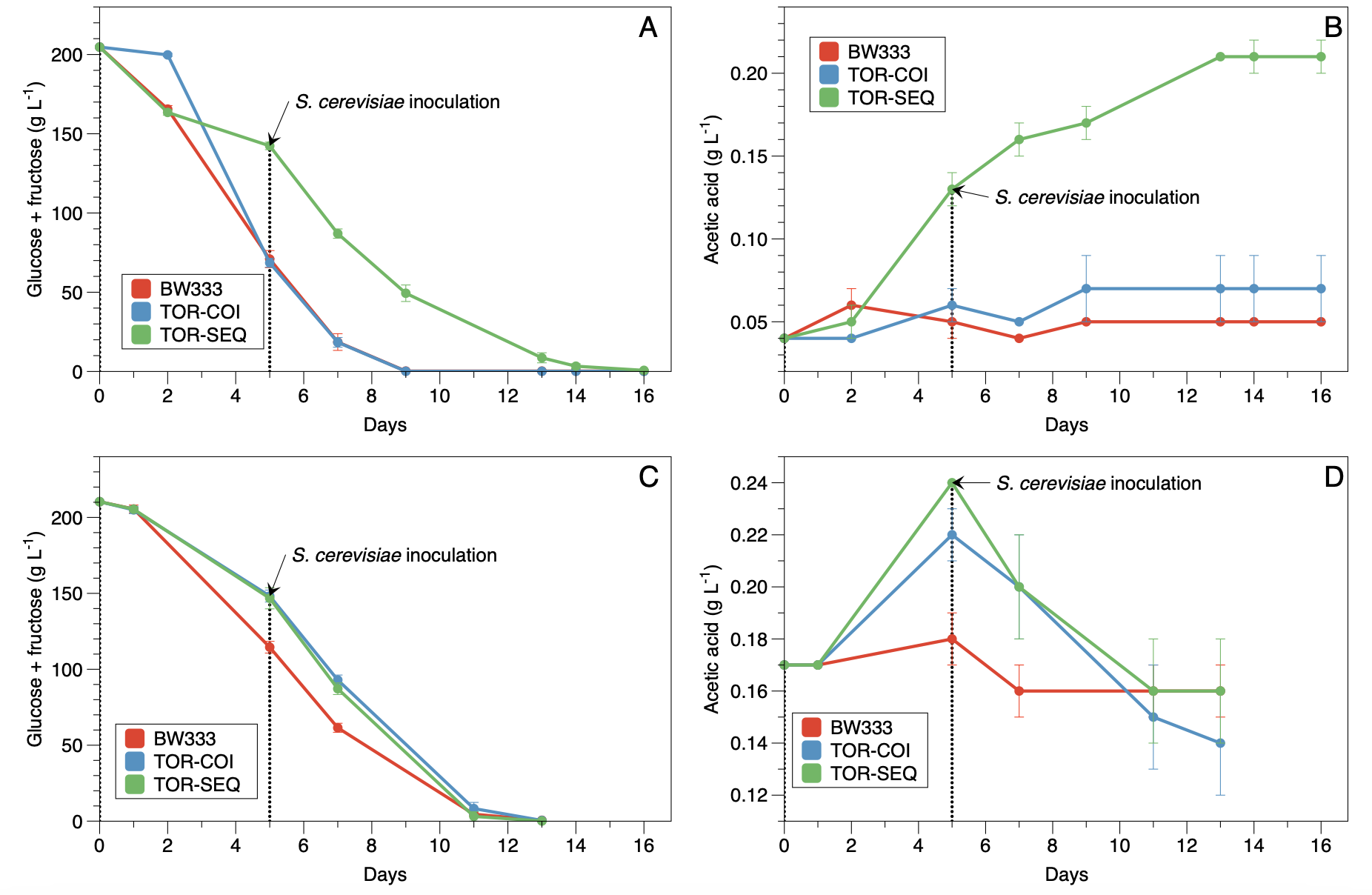
Figure 1. Kinetics of glucose and fructose consumption (A, Verdeca; C, Nero di Troia) and acetic acid production (B, Verdeca; D, Nero di Troia) during fermentation with S. cerevisiae (BW333), S. cerevisiae and T. delbrueckii in co-inoculum (TOR-COI) and S. cerevisiae and T. delbrueckii in sequential inoculum (TOR-SEQ).
The similarities between co-inoculation and sequential fermentations, despite differences in protocols, indicate the importance of physiological adaptations and metabolic interactions between the two yeast species. This includes the production of metabolites that can inhibit other species or increase T. delbrueckii tolerance to high ethanol levels (Azzolini et al., 2015; Chen & Liu, 2016; Vicente et al., 2024). Such adaptations underscore the flexibility of non-Saccharomyces yeasts, such as T. delbrueckii, in mixed fermentations, not only to diversify the wine flavour profile but also to improve fermentation management (Sadoudi et al., 2012).
2. Wines characterisation
2.1. Oenological parameters
The oenological physico-chemical parameters of wines produced from Verdeca and Nero di Troia grapes were analysed to evaluate the impact of different inoculation strategies (Table 1).
Parameter | Cultivar | Inoculum | Verdeca | Nero di Troia | |||||||||||||||
V* | NdT | BW-333 | TOR-COI | TOR-SEQ | BW333 | TOR-COI | TOR-SEQ | BW333 | TOR-COI | TOR-SEQ | |||||||||
mean | SD | mean | SD | mean | SD | mean | SD | mean | SD | mean | SD | ||||||||
pH | B | A | AB | A | B | 3.14c | 0.01 | 3.13c | 0.01 | 3.03d | 0.01 | 3.24b | 0.02 | 3.28a | 0.02 | 3.30a | 0.02 | ||
Ethanol (% vol.) | B | A | 12.27 | 0.23 | 12.45 | 0.27 | 12.23 | 0.10 | 12.48 | 0.14 | 12.83 | 0.12 | 12.74 | 0.16 | |||||
Acetic acid (g L–1) | B | B | A | 0.05 | 0.01 | 0.07 | 0.02 | 0.21 | 0.01 | 0.17 | 0.01 | 0.15 | 0.02 | 0.16 | 0.03 | ||||
Glucose + fructose (g L–1) | 0.25 | 0.17 | 0.12 | 0.03 | 0.71 | 0.44 | 0.57 | 0.19 | 0.52 | 0.16 | 0.25 | 0.01 | |||||||
Titratable acidity (g L–1) | A | B | 7.2 | 0.5 | 6.6 | 0.1 | 6.9 | 0.3 | 6.1 | 0.1 | 5.7 | 0.2 | 5.6 | 0.1 | |||||
Lactic acid (g L–1) | B | A | n.d. | - | n.d. | - | n.d. | - | 0.11 | 0.01 | 0.08 | 0.02 | 0.13 | 0.05 | |||||
Malic acid (g L–1) | B | A | A | B | A | 0.62d | 0.02 | 0.63d | 0.02 | 0.88c | 0.01 | 1.24a | 0.04 | 1.06b | 0.05 | 0.99b | 0.01 | ||
PAN (mg L–1) | B | A | 10.9 | 3.8 | 10.1 | 0.5 | 10.1 | 0.7 | 14.0 | 3.0 | 15.7 | 1.1 | 16.1 | 1.1 | |||||
Ammonia (mg L–1) | A | B | 5.7 | 1.8 | 5.3 | 0.6 | 11.8 | 0.5 | 0.0 | 0.0 | 1.4 | 2.1 | 1.0 | 1.2 | |||||
YAN (mg L–1) | 15.4 | 5.0 | 14.2 | 3.1 | 19.3 | 0.7 | 14.1 | 3.1 | 16.7 | 2.1 | 16.9 | 1.8 | |||||||
Calcium (mg L–1) | B | A | 67.2 | 0.4 | 64.6 | 1.9 | 65.5 | 2.3 | 104.4 | 1.0 | 99.3 | 0.4 | 95.2 | 3.8 | |||||
Potassium (mg L–1) | A | B | A | A | B | 1006.3a | 8.05 | 1021.0a | 5.9 | 925.8b | 13.4 | 859.9c | 19.1 | 848.3c | 14.2 | 841.3c | 9.2 | ||
Free SO2 (mg L–1) | 17.1b | 2.4 | 21.9ab | 0.9 | 19.2ab | 1.6 | 24.0a | 2.8 | 19.7ab | 0.9 | 17.6b | 1.6 | |||||||
Total SO2 (mg L–1) | B | A | 73.1b | 7.6 | 80.0ab | 3.2 | 78.4ab | 2.8 | 91.2a | 8.3 | 86.9ab | 7.9 | 75.7ab | 2.4 | |||||
Potassium stability (μS cm–1) | A | B | 179.0 | 19.9 | 156.3 | 9.4 | 171.0 | 10.8 | 134.7 | 3.06 | 168.0 | 10.5 | 147.3 | 2.1 | |||||
Calcium stability (Δ mg L–1) | B | A | 11.7 | 6.4 | 15.7 | 7.6 | 8.2 | 1.5 | 53.4 | 11.2 | 45.9 | 4.2 | 52.5 | 3.7 | |||||
* V, Verdeca; NdT, Nero di Troia; PAN: Primary Amino Nitrogen; YAN: Yeast Assimilable Nitrogen | |||||||||||||||||||
Several parameters highlighted the differences between both grape varieties and vinification techniques. Verdeca white wines and Nero di Troia rosé wines differed significantly in pH, ethanol content, malic and lactic acid levels, titratable acidity, nitrogenous compound content, mineral content, and tartaric salt stability.
Regarding pH levels, Verdeca wines exhibited lower values, specifically 3.14, 3.13, and 3.03 for BW333, TOR-COI, and TOR-SEQ, respectively. In contrast, the Nero di Troia rosé wines showed higher pH values of 3.24, 3.28, and 3.30 for the same respective samples.
The ethanol content remained relatively consistent across both varieties, with slightly higher concentrations observed in the Nero di Troia rosé wines. Acetic acid concentrations were remarkably low; Verdeca wines yielded levels of 0.05, 0.07, and 0.21 g L–1 (BW333, TOR-COI, and TOR-SEQ, respectively), while Nero di Troia rosé wines presented values of 0.17, 0.15, and 0.16 g L–1.
Titratable acidity was found to be higher in the Verdeca wines. Specifically, malic acid concentrations in Verdeca were reported at 0.62, 0.63, and 0.88 g L–1 for BW333, TOR-COI, and TOR-SEQ. For the Nero di Troia wines, these values were 1.24, 1.06, and 0.99 g L–1, respectively.
Significant differences were also noted in potassium and calcium composition. Higher potassium levels were found in Verdeca wines, ranging from 925.8 to 1006.3 mg L–1, with a statistically significant difference observed in the TOR-SEQ sample (Table 1). In comparison, the Nero di Troia rosé wines ranged between 841.3 and 859.9 mg L–1. Finally, calcium content was found to be lower in the Verdeca variety compared to the Nero di Troia wines.
Regarding the effect of the inoculum, some parameters showed significant variation among the experimental wines. In particular, an interesting decrease of 0.11 in pH was observed in Verdeca wines produced with the sequential inoculum, compared to BW333. By contrast, fermentation with T. delbrueckii resulted in slightly higher pH values in Nero di Troia wines. Previous research has reported contrasting effects of T. delbrueckii on pH, predominantly observing increases, with few cases of pH decreases (Balmaseda et al., 2024; Beckner Whitener et al., 2016; Morata et al., 2020; Vaquero et al., 2021; Villar et al., 2025). Although a decrease in pH can be beneficial for wines produced in warm-climate areas, the response of the tested T. delbrueckii strain is clearly dependent on the characteristics of the processed must. Therefore, further investigation is necessary to assess the factors that could enhance this response.
Unexpectedly, the sequential inoculum resulted in higher acetic acid levels than the other fermentation strategies. The difference was observed in Verdeca wines, where S. cerevisiae and co-inoculum produced wines with very low levels of acetic acid. The results obtained are inconsistent with the well-known capacity of T. delbrueckii to produce wines with very low volatile acidity (Granchi et al., 2025; Silva-Sousa et al., 2024), even though slight increases relative to conventional yeasts have been previously reported by other authors (Azzolini et al., 2015; Belda et al., 2015; Morata et al., 2020). It should be stated, however, that acetic acid levels were quite low in all experimental wines, falling within the legal limit (International Organisation of Vine and Wine, 2026). Malic acid consumption also differed with inoculum and cultivar, with trends consistent with the observed pH differences. The sequential inoculum resulted in reduced malic acid consumption in Verdeca wines, whereas Nero di Troia rosé wines showed higher malic acid consumption than pure S. cerevisiae fermentation. The impact of T. delbrueckii on malic acid consumption has been reported to vary with strain and must characteristics (Balmaseda et al., 2024; Belda et al., 2015; Granchi et al., 2025; Muñoz-Redondo et al., 2021).
Lower potassium levels were also found in TOR-SEQ Verdeca wines compared with the other inoculum strategies. However, no impact was observed on tartaric salts stability.
2.2. Colour and phenolic parameters
Colour and phenolic parameters of the wines are reported in Table 2 and Figure 2. Besides the obvious differences discriminating white and rosé wines, no significant variation in total phenols, total anthocyanins or colour coordinates were observed across either white Verdeca wines or rosé Nero di Troia wines as a consequence of the fermentation strategy.
However, the calculated colour difference ΔE* highlighted that slight colour differences, perceivable by experienced observers, could be induced by T. delbrueckii, compared to pure fermentation with S. cerevisiae. Such differences corresponded to slight increases of the a* colorimetric coordinate (green/red component) in Nero di Troia wines. In TOR-SEQ Verdeca wines, by contrast, the b* colorimetric coordinate (yellow/blue component) increased relative to BW333, resulting in a difference that could be perceived by non-experienced observers.
Parameter | Cultivar | Inoculum | Verdeca | Nero di Troia | |||||||||||||||
V | NdT | BW-333 | TOR-COI | TOR-SEQ | BW333 | TOR-COI | TOR-SEQ | BW333 | TOR-COI | TOR-SEQ | |||||||||
mean | SD | mean | SD | mean | SD | mean | SD | mean | SD | mean | SD | ||||||||
Total phenols (Abs280nm) | B | A | 0.73 | 0.10 | 0.67 | 0.02 | 0.60 | 0.01 | 11.59 | 0.31 | 11.53 | 0.07 | 11.62 | 0.22 | |||||
Total anthocyanins (mg L–1) | - | - | - | - | - | - | 44.9 | 5.2 | 40.1 | 1.8 | 44.7 | 5.2 | |||||||
L* | A | B | 96.2 | 1.5 | 97.5 | 0.4 | 95.2 | 1.0 | 92.6 | 1.7 | 92.4 | 1.5 | 91.8 | 0.5 | |||||
a* | B | A | -0.47 | 0.23 | -0.46 | 0.07 | -0.29 | 0.02 | 5.99 | 1.14 | 7.55 | 0.60 | 7.31 | 0.51 | |||||
b* | B | A | 6.48 | 0.80 | 6.14 | 0.13 | 7.70 | 0.16 | 2.01 | 0.22 | 2.12 | 0.07 | 2.20 | 0.14 | |||||
ΔE*a | - | 1.38 | 2.81 | - | 1.58 | 1.57 | |||||||||||||
a, ΔE* < 1: unnoticeable difference; 1 < ΔE* < 2: difference noticeable by experienced observers; 2 < ΔE* < 3.5: difference noticeable by non-experienced observers; 3.5 < ΔE* < 5: clearly noticeable difference; ΔE* > 5: observers notice two different colours (Bonnardel et al., 2026).
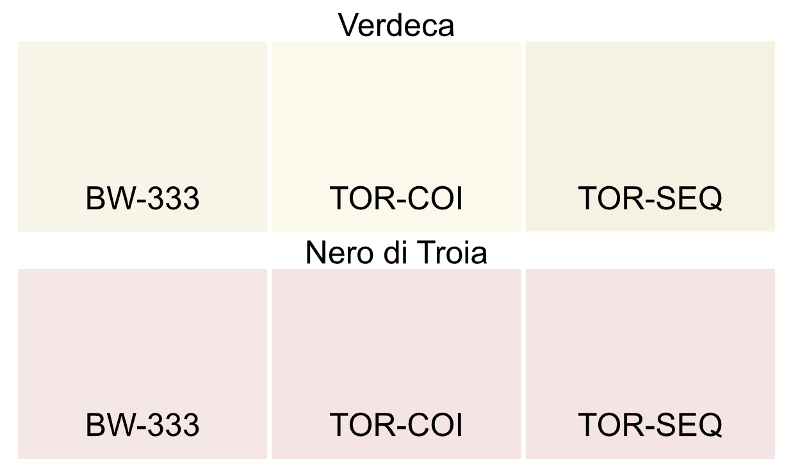
Figure 2. Digital colour from the mean coordinates in the CIELAB system of the Verdeca and Nero di Troia wines produced at 50 L fermentation pilot scale, with S. cerevisiae (BW333) and either co-inoculum (TOR-COI) or sequential inoculum (TOR-SEQ) of S. cerevisiae and T. delbrueckii.
2.3. GC×GC/MS analysis of bound and free volatile compounds
2.3.1. Bound and free volatile compounds wines
Comprehensive two-dimensional gas chromatography (GC×GC) is a powerful analytical technique due to its higher resolution in complex matrices, such as wine, providing detailed insights into their profiles and potential impact on wine quality (Bonini et al., 2025). This method enables detection of both major and trace-level compounds, providing a more comprehensive profile than traditional one-dimensional gas chromatography (GC) (Lukić et al., 2022; Vestner et al., 2011; Weldegergis et al., 2011). Multivariate analysis provided a synthetic picture of the impact of yeast and inoculum strategy on the volatile profile of wines. The 65 free and bound compounds could be grouped into seven main clusters within the volatilome heatmap shown in Figure 3. Only 9 out of 65 compounds were not significantly affected by the independent variables (i.e., yeast and cultivar) or by their interaction, as shown by the results of two-way ANOVA with interactions performed in the Metaboanalyst environment, reported in the Venn diagram in Figure 4 and in the plot of the adjusted p-values in Figure 5. In particular, 35 compounds were significantly affected by the inoculum strategy and/or its interaction with the cultivar, while 52 showed differences between cultivars or highlighted different responses of cultivars to the inoculum strategy.
Cluster I, from the top to the bottom of Figure 3, included ten compounds characterising the Verdeca wines. Eight compounds showed significant differences between the cultivars (Figure 5); bound limonene, however, showed a significant interaction, particularly in Verdeca wines fermented with Saccharomyces cerevisiae. Some of the compounds in this cluster were derived from grapes or grape precursors and ranged from esterified and glycosylated monoterpenes (gly-9-hydroxylinalol, gly-limonene, gly-cis-geraniol, geranyl acetate) to sesquiterpenes (t-calamenene) and esters (ethyl 2-hydroxy-4-methylpentanoate, also known as ethyl leucate). Although semi-quantitative data do not allow the sensory relevance of these compounds to be inferred at the concentrations present in the analysed wines, the varietal comparison suggests investigating the potential contribution of the terpene components to the aroma complexity and longevity in Verdeca (Li et al., 2019; Lytra et al., 2012; Puertas et al., 2018). However, the inoculation strategy (co-inoculum or sequential inoculum) appeared to have little to no significant impact on the profile of the volatiles belonging to this specific cluster.
The cluster of volatiles II included four compounds significantly influenced by the inoculum strategy or the interaction yeast*cultivar. The sensory-relevant phenylethyl alcohol was the only free volatile of this cluster. The other three compounds were in the bound form: the aldehydes benzaldehyde and nonanal, and an epoxide humulene. The release of aldehydes such as benzaldehyde and nonanal after enzymatic treatment with β-glycosidase is consistent with the presence of glycosidic precursors in fruits and, in particular, in Vitis vinifera grapes, as previously reported (Sefton, 1998; Sefton et al., 1993; Zhou et al., 2022). All these compounds were found at higher levels in wines with the initial involvement of S. cerevisiae, with a marked difference in Nero di Troia wines.
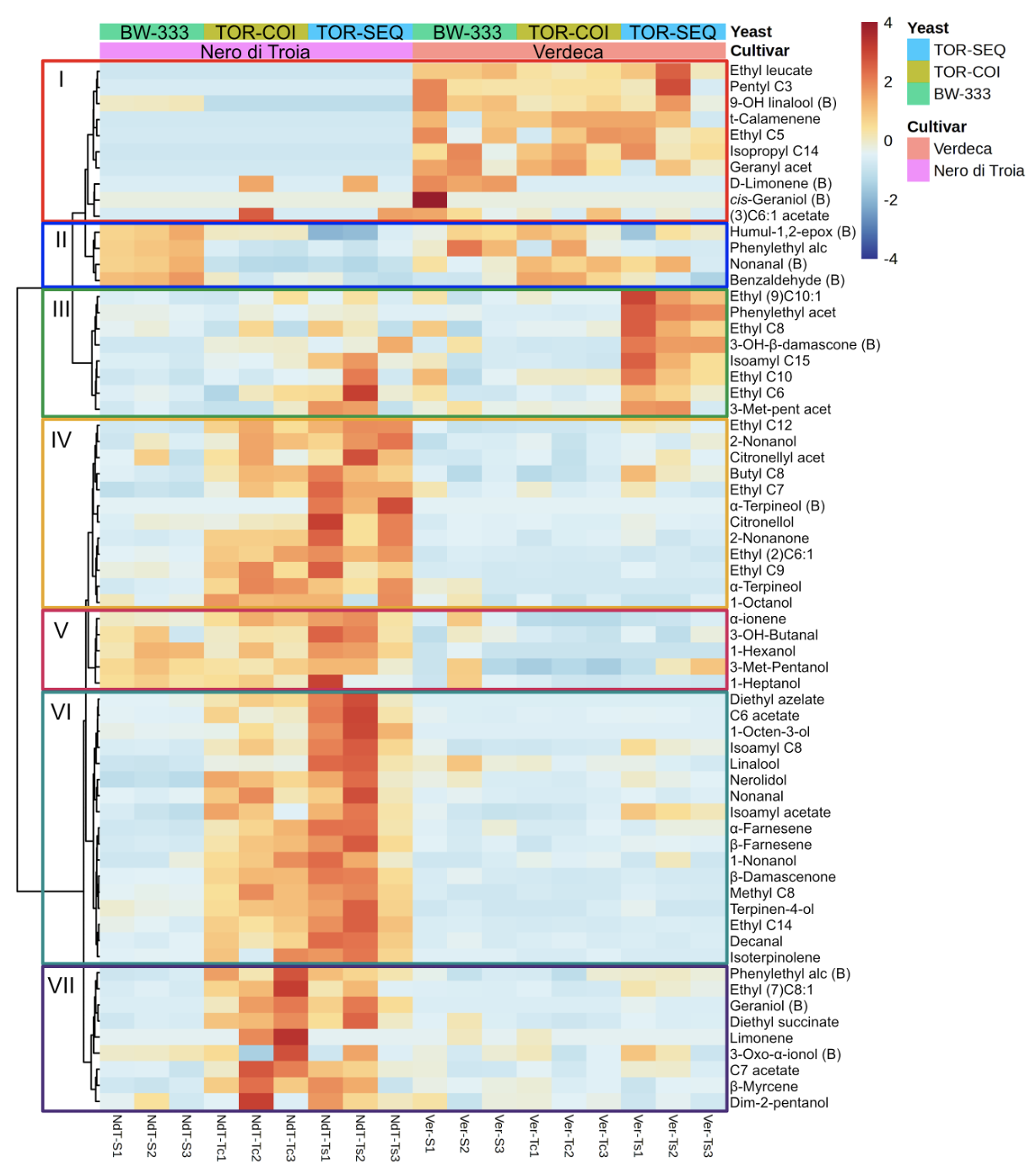
Figure 3. Heatmap of free and bound (B) volatile compounds in Verdeca and Nero di Troia wines produced at 50 L fermentation pilot scale, with S. cerevisiae (BW333) and either co-inoculum (TOR-COI) or sequential inoculum (TOR-SEQ) of S. cerevisiae and T. delbrueckii. Full names corresponding to abbreviations are reported in Table S3 along with their respective values.
Cluster III comprised seven esters and a bound norisoprenoid with relatively higher amounts in wines from sequential inoculum. The impact of T. delbrueckii appeared more evident in Verdeca white wines. Though two-way ANOVA showed a significant effect of yeast only for phenylethyl acetate, ethyl 9-decenoate and the bound form of 3-hydroxy-β-damascone, the other compounds were, however, highly correlated and presented p-values slightly above the 0.05 threshold. A richer profile in fruity esters was therefore obtained in wines fermented with sequential inoculum (Hu et al., 2018; Kong et al., 2021). According to previous findings, T. delbrueckii often leads to reduced amounts of esters compared to S. cerevisiae (Beckner Whitener et al., 2015; Benito, 2018; Ramírez & Velázquez, 2018; Renault et al., 2009; Silva-Sousa et al., 2024), even though some specific esters were reported to be enhanced by T. delbrueckii (Renault et al., 2015). However, a recent study (Zhang et al., 2024) revealed that some T. delbrueckii metabolites enhance wine aroma by upregulating key metabolic genes in S. cerevisiae during mixed fermentation, involving ester biosynthesis, amino acid transport, branched-chain amino acid metabolism, and pyruvate decarboxylation.
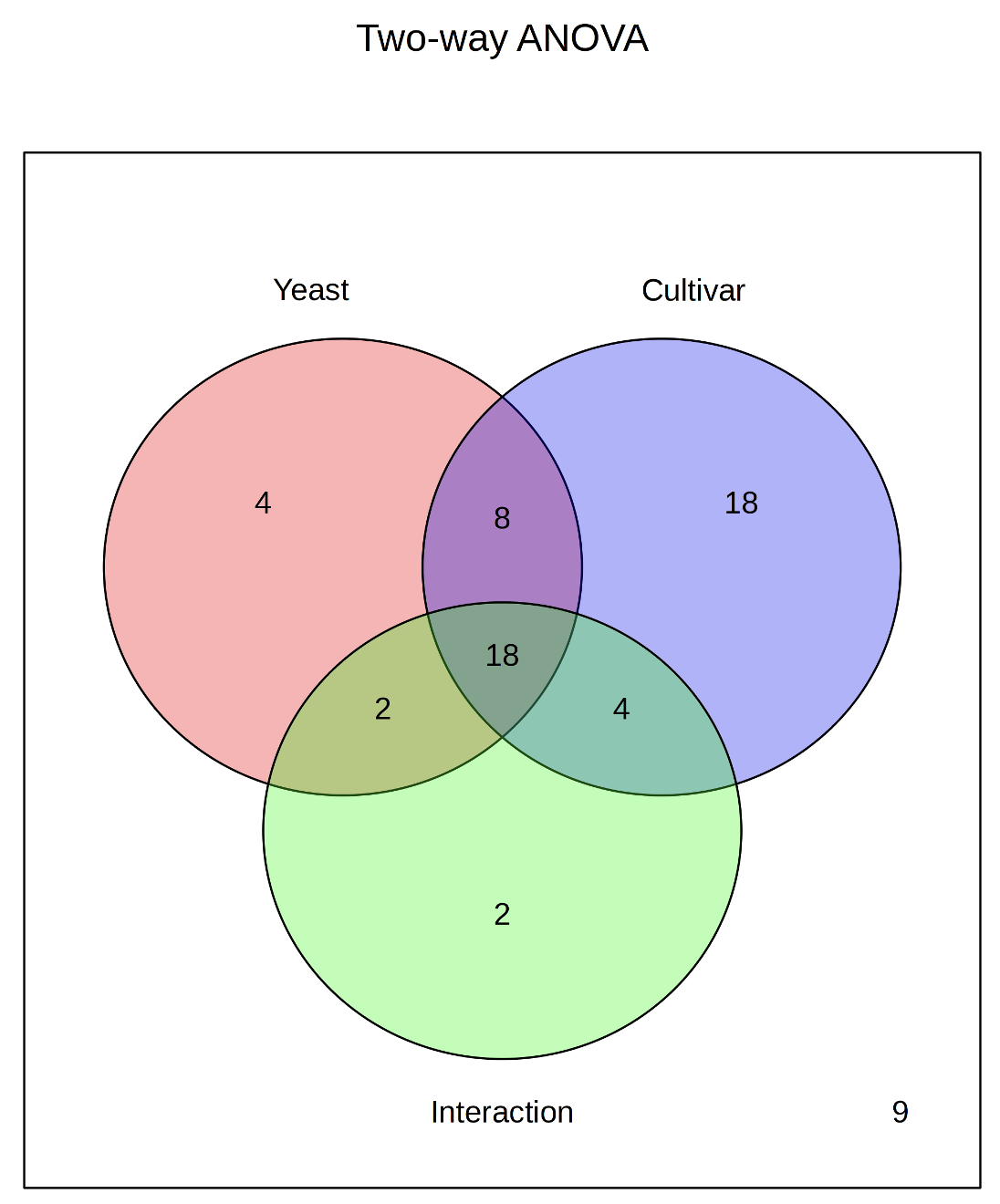
Figure 4. Venn diagram of the significant effects from two-way ANOVA with interactions, carried out on the free and bound volatile compounds in Verdeca and Nero di Troia wines produced at 50 L fermentation pilot scale, with S. cerevisiae (BW333) and either a co-inoculum (TOR-COI) or a sequential inoculum (TOR-SEQ) of S. cerevisiae and T. delbrueckii.
Interestingly, C8 and C10 ethyl esters were produced in higher amounts by pure S. cerevisiae cultures as a result of the addition of the selected T. delbrueckii metabolites. Therefore, sequential inoculation could be an effective strategy to improve ester biosynthesis by S. cerevisiae, though a cultivar-dependent behaviour can be observed. In the same manner, the timing of secondary inoculum, as well as the strain genetic variability, should be considered as relevant variables (Renault et al., 2015; Zhang et al., 2024).
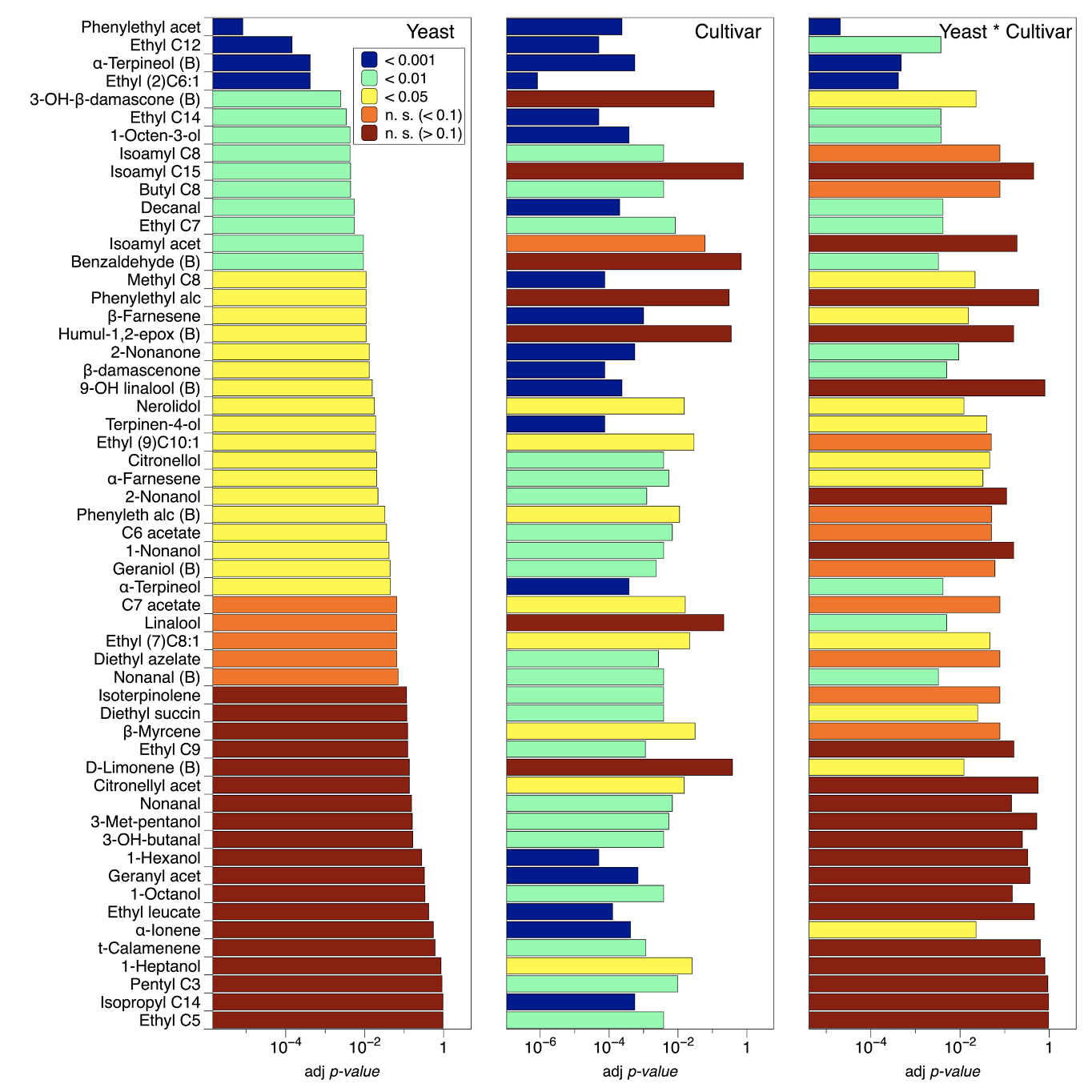
Figure 5. Bar chart of the p-values from two-way ANOVA with interactions, carried out on the free and bound volatile compounds in Verdeca and Nero di Troia wines produced at 50 L fermentation pilot scale, with S. cerevisiae (BW333) and either co-inoculum (TOR-COI) or sequential inoculum (TOR-SEQ) of S. cerevisiae and T. delbrueckii. Full names corresponding to abbreviations are reported in the Table S3.
The cultivar-dependent impact of T. delbrueckii could be observed in the trends of the remaining volatile compounds, belonging to a second cluster family, including clusters IV-VII. Almost all these compounds, in fact, were found at increased levels in TOR-COI and TOR-SEQ Nero di Troia rosé wines. In particular, clusters IV and VI grouped a large number of volatiles (28 free and one bound compound) showing the highest levels in Nero di Troia wines fermented with sequential inoculum. Ethyl esters ((2)C6:1, C7, C9, C12 and C14) and acetate esters (including hexyl acetate and isoamyl acetate) confirmed in rosé winemaking of Nero di Troia grapes the positive impact of T. delbrueckii metabolites on ester biosynthesis. Moreover, several grape-derived compounds, mainly terpenes (citronellol, gly-α-terpinolene, citronellyl acetate, α-terpineol, linalool, nerolidol, α- and β-farnesene, terpinene-4-ol, isoterpinolene), besides the norisoprenoid β-damascenone, followed a similar trend. A cultivar- and strain-dependent effect on terpenes was observed by Azzolini et al. (2015), who reported higher levels of citronellol and α-terpineol in Chardonnay wines fermented with one of the two commercial strains under examination. Interestingly, no significant effect was found in Soave wines. On the other hand, the R12 strain, recently tested by Cheng et al. (2025) across eight red and white varieties, systematically determined increases in the levels of farnesyl alcohol, linalool, and citronellol. The authors included these terpenes among the signature compounds of T. delbrueckii R12. Analogously, Silva-Sousa et al. (2024) observed in most of the 15 T. delbrueckii strains under examination increased levels of monoterpenes compared to a commercial S. cerevisiae strain. They also commented on a change of the monoterpene pattern, with increased levels of linalool, suggesting a bioconversion of terpenes by T. delbrueckii.
Cluster V included five compounds (three alcohols, a hydroxy-aldehyde, and a norisoprenoid), mainly affected by the cultivar variable and characterising the Nero di Troia wines compared to the Verdeca ones. Finally, cluster VII characterised TOR-COI Nero di Troia wines and included mainly varietal aromas in free and bound form.
The waterfall charts in Figure 6 highlight the differences in the semiquantitative patterns of ethyl esters, acetate esters, and terpenes/norisoprenoids in Verdeca and Nero di Troia wines. The dominant ethyl esters in both Verdeca and Nero di Troia were ethyl hexanoate, ethyl octanoate, ethyl 9-decenoate and ethyl decanoate. T. delbrueckii did not substantially change this pattern, except for a relevant contribution of ethyl dodecanoate (particularly in Nero di Troia wines). On the other hand, the sequential inoculation dramatically increased the total amount of ethyl esters, almost doubled in Verdeca and increased by more than 50 % in Nero di Troia, compared to BW333 wines. Acetate esters showed a more dramatic increase in TOR-SEQ wines compared to BW333 wines (almost 4-fold and 3-fold in Verdeca and Nero di Troia wines, respectively). Moreover, in this case, no relevant changes in the acetate ester patterns were observed, with isoamyl acetate and phenylethyl acetate the most abundant esters in both wines, and hexyl acetate another key volatile in Nero di Troia.
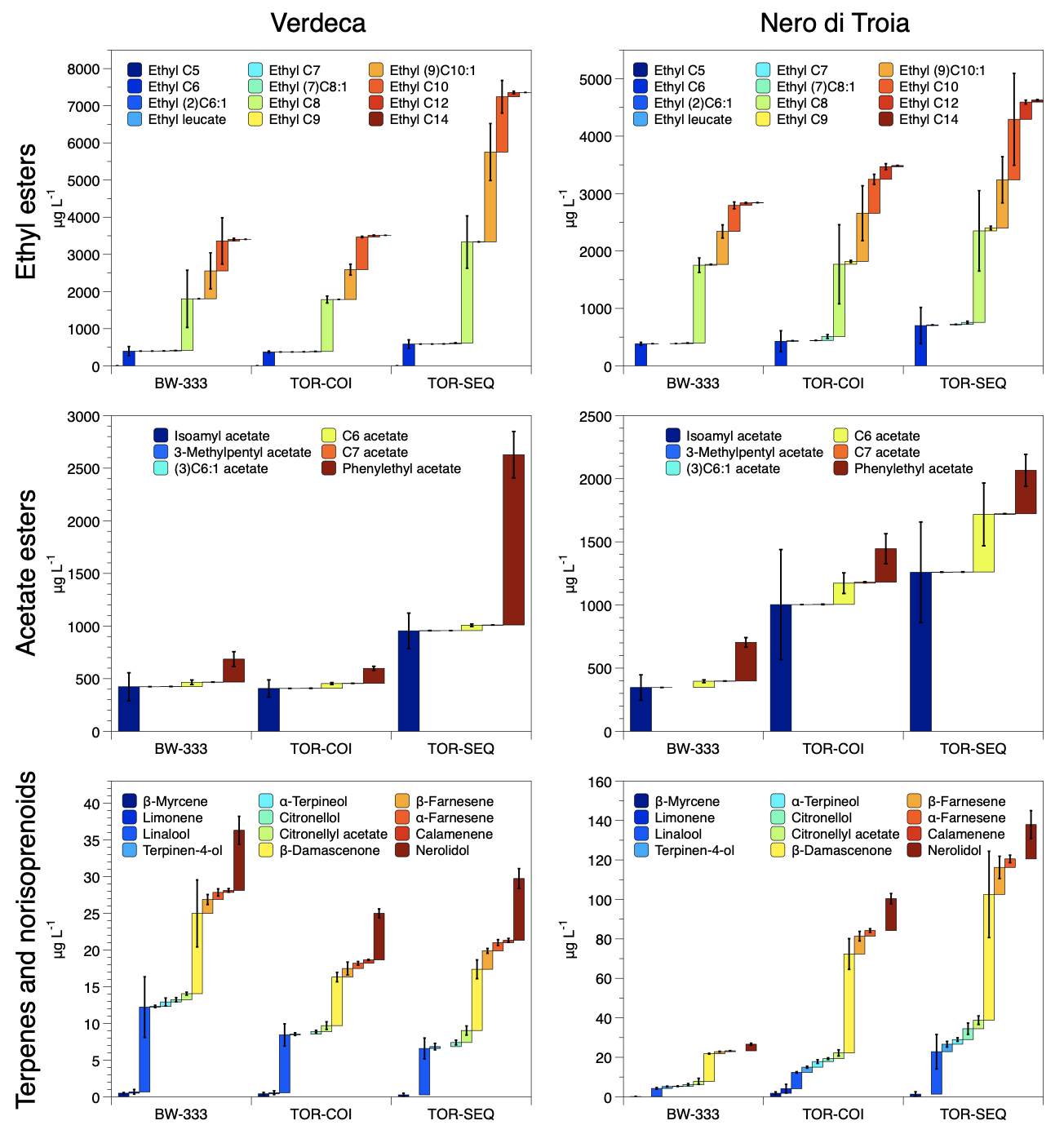
Figure 6. Waterfall chart of the semi-quantitative patterns of ethyl esters, acetate esters, and terpenes/norisoprenoids in Verdeca and Nero di Troia wines produced at 50 L fermentation pilot scale, with S. cerevisiae (BW333) and either co-inoculum (TOR-COI) or sequential inoculum (TOR-SEQ) of S. cerevisiae and T. delbrueckii. Full names corresponding to abbreviations are reported in the Table S3.
The increased amount of phenylethyl acetate in Verdeca TOR-SEQ compared to BW333 is quite evident. The impact of the inoculum appeared quite different in the case of grape-derived volatiles. Verdeca wines showed lower amounts of terpenes and norisoprenoids compared to Nero di Troia wines. T. delbrueckii did not improve their amount, leading instead to a decrease. On the contrary, Nero di Troia showed a marked increase in varietal compounds. BW333 wines showed lower amounts of terpenes and norisoprenoids compared to the corresponding Verdeca wines. When T. delbrueckii was used for fermentation, instead, these grape-derived compounds underwent a steep increase, particularly with the sequential inoculum. The pattern was enriched, including also citronellol and farnesene isomers, among others. Interestingly, citronellol and farnesyl alcohol were previously reported as key volatiles of wines fermented by this non-Saccharomyces yeast (Cheng et al., 2025).
In summary, while in Verdeca wines the primary effect observed was on esters synthesis, driven by T. delbrueckii producing metabolites that stimulate esters production in S. cerevisiae (Zhang et al., 2024), Nero di Troia rosé wines exhibited a more pronounced impact on primary aroma expression. This was attributed to the enzymatic profile of T. delbrueckii (Zhang et al., 2021), which facilitated the enhanced release of varietal terpenes and norisoprenoids.
2.4. RATA sensory analysis
The results of the RATA sensory analysis of Verdeca and Nero di Troia wines are reported in Figure 7. The spider plots separately report the mean values of the main aroma categories characterising the wines (i.e., fruity, floral and vegetal), of the individual aroma descriptors and of the taste descriptors. Regarding the individual aroma descriptors, only those with a mean greater than 1 for at least one inoculum or a p-value < 0.1 were plotted. ANOVA p-values are reported when they are below 0.1. In fact, although higher than the conventional 0.05 threshold, such results could provide cues for further sensory improvement of the aroma profile, either by upscaling the process or by tuning the vinification protocols. The Table S4 reports the results of the multiple comparisons.
As regards Verdeca wines, the fruity aroma prevailed over floral and vegetal notes. A significant difference was observed in the fruity aroma score, which was perceived as higher in TOR-SEQ wines than in TOR-COI wines, whereas BW333 showed no significant difference. The sensory descriptors emerging from the RATA analysis included tree-fruit notes (pear, apple, apricot, peach), citrus notes (orange, lemon, grapefruit) and a grass, vegetal note. Orange was the only aroma descriptor with a significant difference between the highest mean (TOR-SEQ) and the lowest one (TOR-COI). The peach descriptor showed a p-value of 0.075, while the pear and apple scores did not show consistent repeatability, though they showed higher means in TOR-SEQ wines. This suggests further trials on the management of sequential inoculation to fine-tune the ester biosynthesis related to the tree-fruit aroma expression. Two taste descriptors showed p-values slightly above the 0.05 threshold: body and astringency, which were reported to have the highest scores in BW333 wines.
Regarding Nero di Troia rosé wines, no significant differences were observed in the mean scores of the main aroma categories. The individual descriptors characterising the wines were of black/red fruits (strawberry, cherry, raspberry, pomegranate), citrus fruits (orange, grapefruit), floral notes (rose, violet), and vegetal notes, both grass and balsamic.
TOR-SEQ wines showed significantly higher scores for the cherry and orange descriptors, while the balsamic descriptor showed a p-value = 0.090. The improvement of aroma complexity was marked, therefore, in the sequential inoculation approach, consistent with previous findings by other authors (Belda et al., 2015; Benito, 2018; Renault et al., 2015). This reflects the observed impact of sequential inoculation on the volatile profile of Nero di Troia wines, involving both ester biosynthesis and release of grape-derived compounds. Interestingly, the perceived body of wines showed a p-value slightly above the significance threshold, confirming the results observed in Verdeca wines. Several reports indicate that T. delbrueckii is an interesting tool for improving mouthfeel, due to the release of mannoproteins (Benito, 2018; Oyón-Ardoiz et al., 2024a, Oyón-Ardoiz et al., 2024b; Snyman et al., 2023). The tested strain could therefore be further characterised in this respect, with a view to its exploitation through ageing on fine lees. The perceived acidity of the rosé wines differed significantly, with lower scores for TOR-COI wines. The use of Torulaspora delbrueckii could be an effective strategy to enhance the final product's aroma and sensory profile. This is particularly relevant, given that fruitier rosé wines are also more appreciated by younger audiences (Iazzi et al., 2019), making this approach a promising way to meet current market preferences.
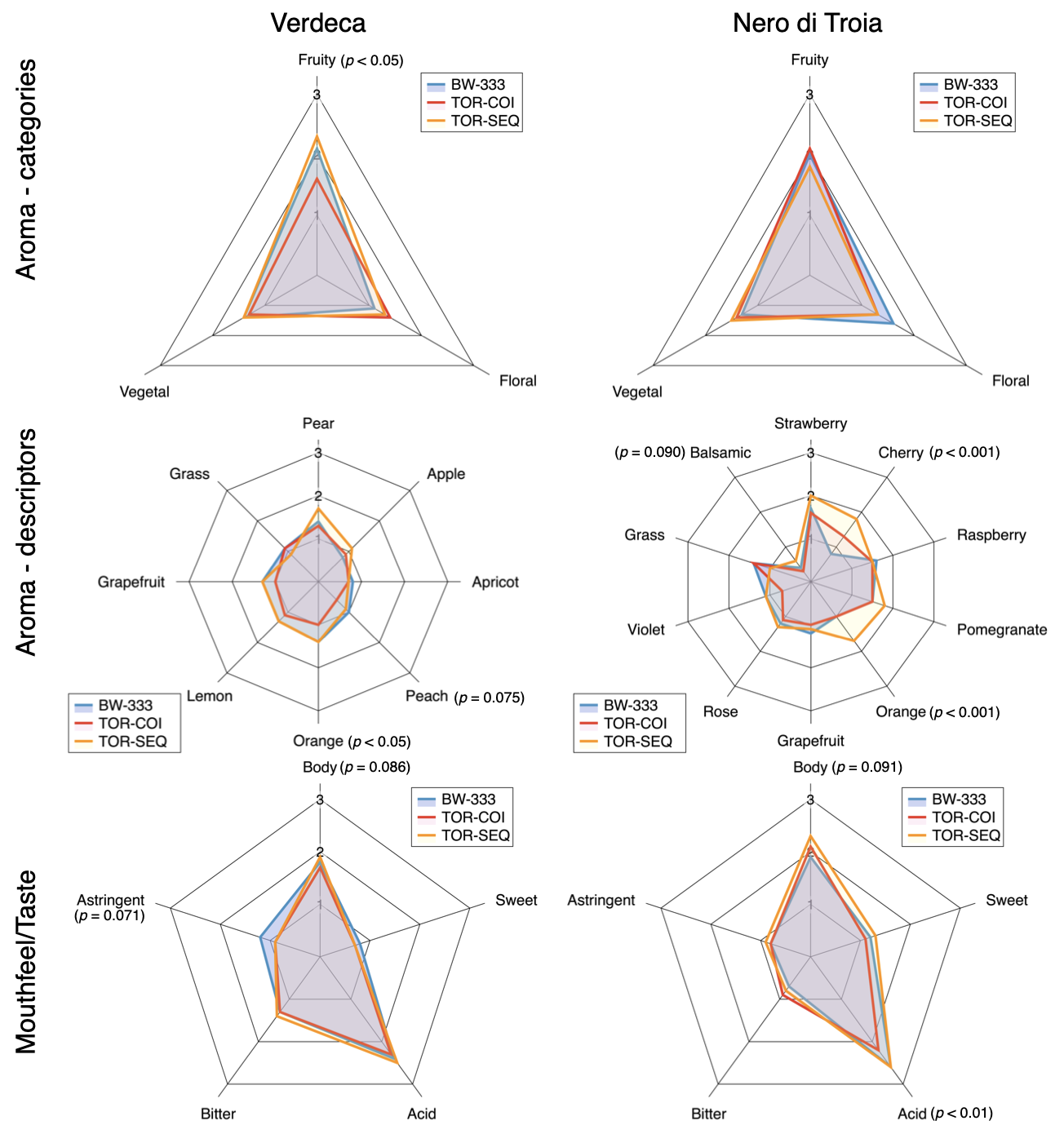
Figure 7. Spider plots of the sensory scores obtained from the RATA analysis carried out on Verdeca and Nero di Troia wines produced at 50 L fermentation pilot scale, with Saccharomyces cerevisiae (BW333) and either co-inoculum (TOR-COI) or sequential inoculum (TOR-SEQ) of S. cerevisiae and T. delbrueckii.
2.5. Analysis of correlation
In order to decipher the relationship between the chemical aroma profile and the perceived sensory characteristics of Verdeca and Nero di Troia rosé wines, hierarchical clustered correlation heatmaps were generated (Figures 8 and 9). This analysis correlated volatile compounds (both free and glycosidically bound) with Rate-All-That-Apply (RATA) sensory descriptors. The dataset filtered for strong relationships (|r| > 0.4) revealed for both wines four distinct volatile clusters (vol. cluster 1–4) and three major sensory descriptor clusters (RATA cluster 1–3).
A primary finding was the dominant role of cluster 3 shaping a first pattern of the sensory profile of Verdeca wines (Figure 8). This cluster, which consisted mostly of free volatile esters (e.g., ethyl hexanoate, ethyl octanoate, ethyl decanoate, isoamyl octanoate, and heptyl acetate), showed a widespread positive correlation across almost all sensory attributes. Indeed, displays its strongest and most uniform positive correlations (deep red cells, with r values frequently exceeding 0.70 and p < 0.05) with RATA cluster 2, which represents floral, pear, and apple notes. This indicates that the core aromatic profile of Verdeca wines was chemically driven by this pool of fermentation-derived esters. Beyond RATA cluster 2, the volatile cluster 3 maintained a robust, in some cases statistically significant positive correlation with RATA cluster 1 (fruity attributes and citrus notes, such as orange, lemon, grapefruit) and RATA cluster 3 (grass, apricot, vegetal, peach). This phenomenon highlights a pattern, where possible additive and synergistic activities could be exerted by groups of compounds. Even where individual correlations did not reach strict statistical significance, the broad, uniform positive trends underscore a strong collective relationship between these chemical families and positive fruity perception. In contrast, the volatile cluster 1 (including higher alcohols and some relevant terpenes) exhibited a complex, antagonistic pattern, characterised by a predominance of negative correlations, particularly with attributes of RATA clusters 2 and 3. The volatile cluster 2, including terpene hydrocarbons, seemed to contribute to a shift from citrus to vegetal and white/yellow fleshed fruits. Conversely, the volatile cluster 4 demonstrated a highly specific, positive, and significant correlation block, where key monoterpenes and hydrolysed glycosides directly drove the fresh lemon and grapefruit nuances.
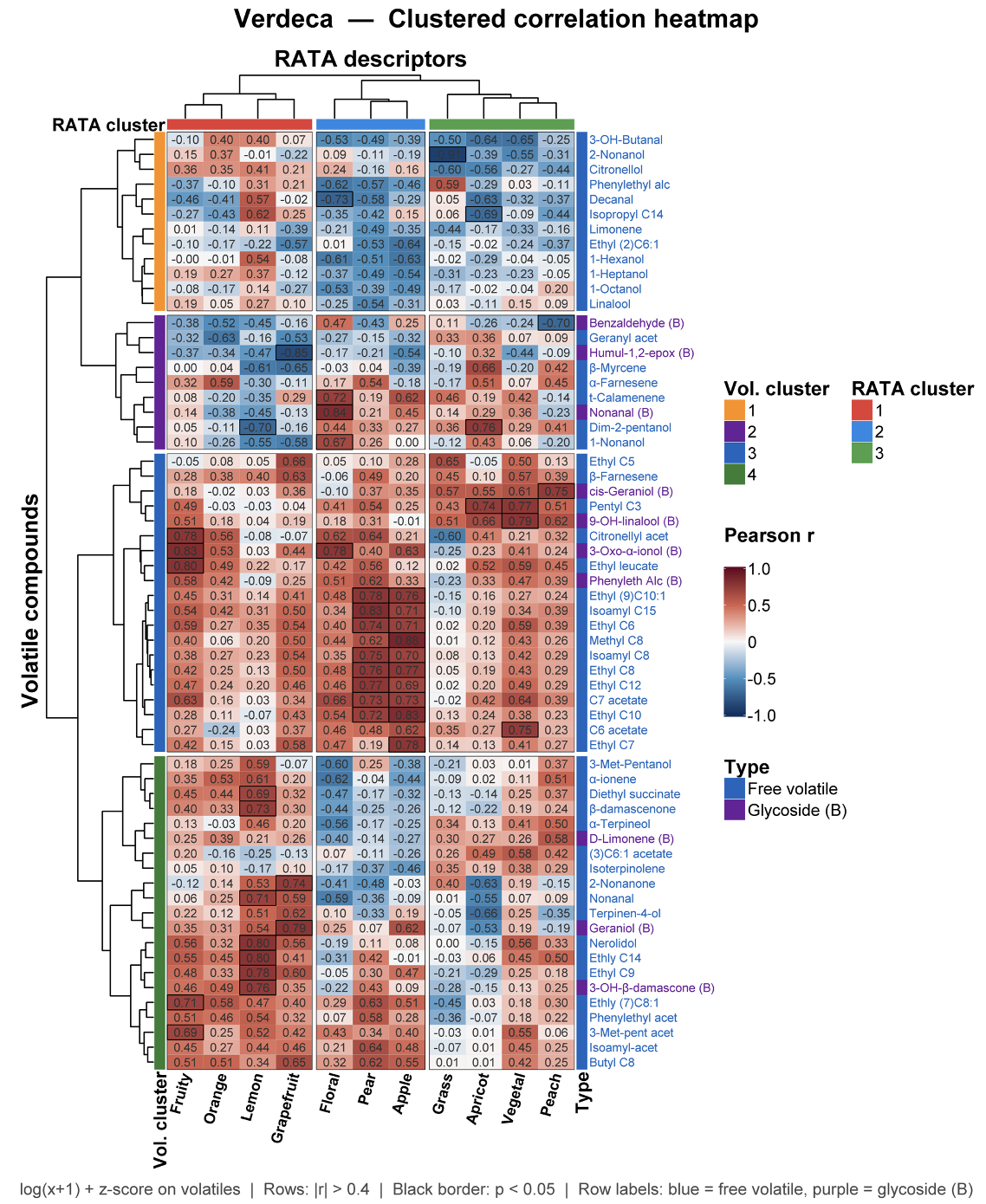
Figure 8. Correlation Heatmap of free and bound (B) volatile compounds in Verdeca wines produced at 50 L fermentation pilot scale, with S. cerevisiae (BW333) and either co-inoculum (TOR-COI) or sequential inoculum (TOR-SEQ) of S. cerevisiae and T. delbrueckii and RATA analysis sensory descriptors.
In Nero di Troia rosé wines (Figure 9), the central finding was the distinct role played by the volatile cluster 2 (comprising esters as well as terpenes and norisoprenoids) in driving the core "red fruit" sensory profile, exhibiting statistically significant positive correlations (deep red cells, r > 0.70, p < 0.05 indicated by black borders) with RATA cluster 1, particularly with cherry, orange, and strawberry notes. This cluster was highly enriched with key fermentation esters alongside varietal terpenes (linalool, citronellol, and nerolidol). Parallel to the trends observed in the Verdeca wines this behaviour implies that rather than a single impact compound, a robust and complex matrix of aliphatic esters and free monoterpenes acts synergistically to dictate the intense red-berry character of Nero di Troia rosé wine. Reflecting its specific sensory impact, the volatile cluster 1 displayed a stark, uniform negative correlation with RATA cluster 1 and high positive significant correlation with RATA cluster 2 especially for floral and fruity notes. The volatile clusters 3 and 4 showed similar patterns represented by a strongly positive correlation with RATA cluster 1 (cherry and vegetal notes) and an undefined complex pattern for RATA clusters 2 and 3.
For both wine styles, the systemic negative correlations observed between specific volatile blocks and sensory attributes can be attributed to complex matrix masking effects and varying degrees of glycosidic hydrolysation. High glycosidase activities during fermentation facilitated a greater release of volatile compounds, and this active enzymatic liberation allowed grape-derived compounds to express their distinct sensory contributions. Consequently, differing degrees of chemical or enzymatic hydrolysis over time fundamentally alter the final sensory profile of the wine, cover and mask subtler varietal nuances.
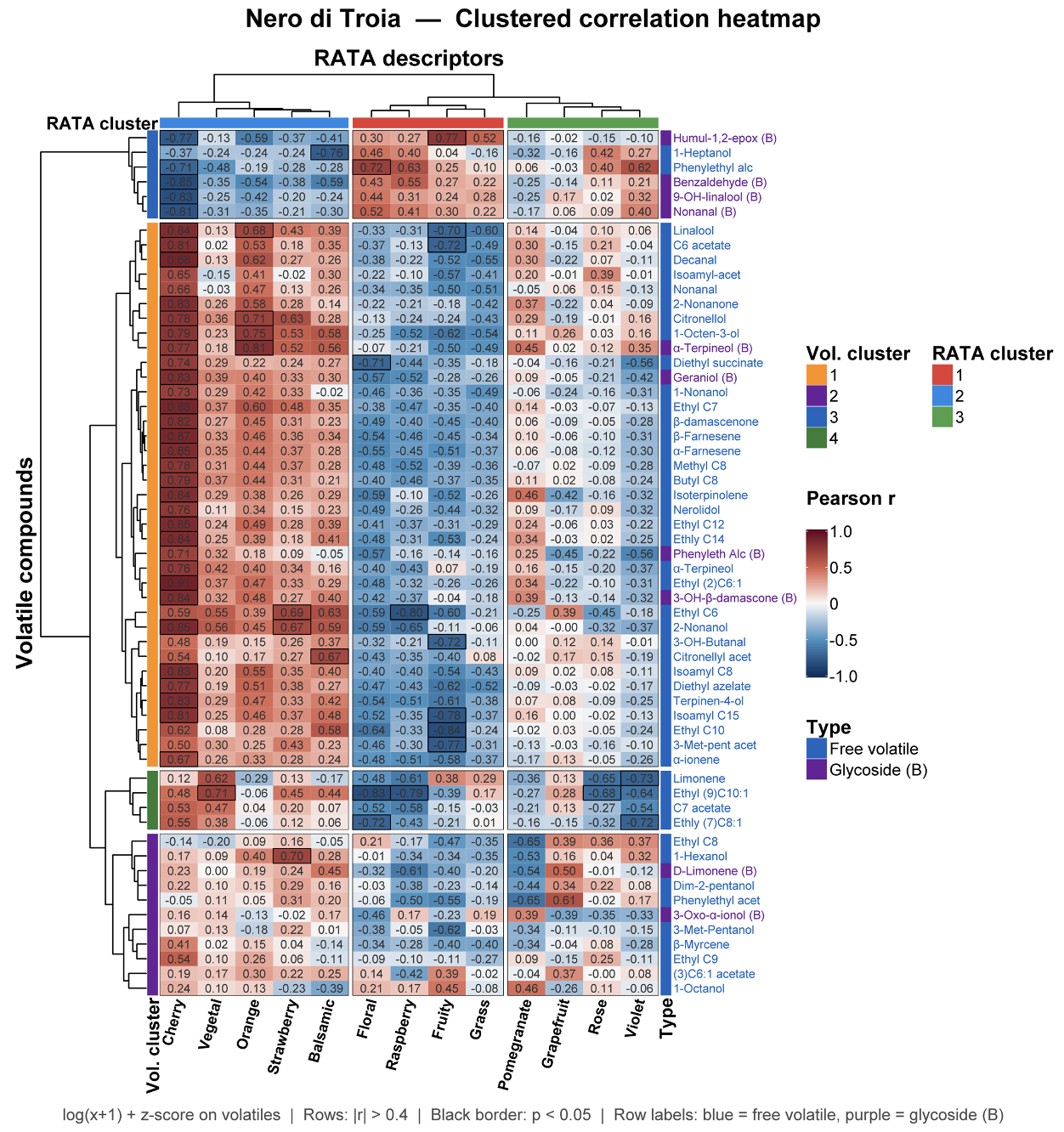
Figure 9. Correlation Heatmap of free and bound (B) volatile compounds in Nero di Troia wines produced at 50 L fermentation pilot scale, with S. cerevisiae (BW333) and either co-inoculum (TOR-COI) or sequential inoculum (TOR-SEQ) of S. cerevisiae and T. delbrueckii and RATA analysis sensory descriptors.
Conclusions
This study evaluated the impact of a newly isolated strain of Torulaspora delbrueckii (LC 2-1) on the fermentation kinetics, oenological parameters, and volatile profiles of wines from two iconic Apulian cultivars: Verdeca (white) and Nero di Troia (rosé). Our results demonstrate that the use of non-Saccharomyces yeasts, particularly in sequential inoculation (TOR-SEQ), represents a viable technological strategy to enhance the sensory complexity of these Apulian wines.
Sequential inoculation led to a more gradual sugar consumption, extending the fermentation period but maintaining high quality in Verdeca wines. Furthermore, the interaction between yeast species and cultivars significantly influenced pH and malic acid consumption, suggesting that the metabolic impact of T. delbrueckii is highly cultivar-dependent.
Comprehensive GC×GC-MS and RATA sensory analysis revealed that sequential inoculation with T. delbrueckii significantly enhanced wine complexity, though the impact was highly cultivar-dependent. In Verdeca white wines, sequential inoculation nearly doubled the total ethyl esters and quadrupled acetate esters. In Nero di Troia rosé wines, the strategy not only boosted ester biosynthesis but also triggered a steep increase in grape-derived terpenes and norisoprenoids, significantly improving cherry and citrus descriptors.
Correlation analysis between the volatilome and RATA sensory descriptors provided a chemical basis for the observed sensory differences. In Verdeca wines, a pool of fermentation-derived esters collectively drove the overall aromatic profile, exhibiting broad positive correlations across fruity, floral and citrus descriptors, with additive and synergistic contributions suggested by the data. In Nero di Troia rosé wines, a cluster comprising aliphatic esters and free monoterpenes – notably linalool, citronellol and nerolidol – showed strong positive correlations with red-berry and citrus sensory attributes, underpinning the cherry and orange notes enhanced by sequential inoculation. For both wine styles, the negative correlations observed between specific volatile blocks and sensory attributes suggest complex masking effects and cultivar-dependent patterns of glycosidic hydrolysis, highlighting the importance of considering the full volatile matrix rather than individual impact compounds when interpreting wine aroma.
Overall, the tested strain (LC 2-1) proved to be a powerful tool for modulating the aromatic signature and mouthfeel of Apulian wines to meet modern market preferences for fruitier, more complex profiles.
Acknowledgements
This work was funded under the National Recovery and Resilience Plan (NRRP), Mission 4 Component 2 Investment 1.3 – Call for tender No 341 of March 15, 2022 of Italian Ministry of University and Research funded by the European Union – NextGenerationEU; Project code PE00000003, Concession Decree No 1550 of October 11, 2022 adopted by the Italian Ministry of University and Research, CUP D93C22000890001, Project title “ON Foods – Research and Innovation network on food and nutrition Sustainability, Safety and Security –Working ON Foods”.
This study was supported by the PhD School in Agro-Food System (Agrisystem – Università Cattolica del Sacro Cuore), the Portus project funded by the Romeo and Enrica Invernizzi Foundation, the Associazione Eugenio e Germana Parizzi, and the Gabriele Corbelli in memoriam grant through Rotary District 2041.
Authors are grateful to Angelinda Griseta, manager of the school “I.I.S.S. Basile Caramia—Gigante” (Locorotondo, Apulia, Italy), and to the technical staff of the school for the facilities and equipment used in this research.
References
- Alberico, G., Pietrafesa, A., Capece, A., Pietrafesa, R., Siesto, G., & Romano, P. (2019). Exploitation of technological variability among wild non- Saccharomyces yeasts to select mixed starters for the production of low alcohol wines. BIO Web of Conferences, 15, 02031. https://doi.org/10.1051/bioconf/20191502031
- Ayala, F., Echávarri, J. F., & Negueruela, A. I. (2013). MSCVes.zip. [Software]. http://www.unirioja.es/color/descargas.shtml
- Azzolini, M., Tosi, E., Lorenzini, M., Finato, F., & Zapparoli, G. (2015). Contribution to the aroma of white wines by controlled Torulaspora delbrueckii cultures in association with Saccharomyces cerevisiae. World Journal of Microbiology and Biotechnology, 31(2), 277–293. https://doi.org/10.1007/s11274-014-1774-1
- Baiano, A., & Varva, G. (2019). Evolution of physico-chemical and sensory characteristics of Minutolo white wines during aging in amphorae: A comparison with stainless steel tanks. Lwt, 103(September 2018), 78–87. https://doi.org/10.1016/j.lwt.2018.12.065
- Balmaseda, A., Rozès, N., Bordons, A., & Reguant, C. (2024). The use of Torulaspora delbrueckii to improve malolactic fermentation. Microbial Biotechnology, 17(1), e14302. https://doi.org/10.1111/1751-7915.14302
- Beckner Whitener, M. E., Carlin, S., Jacobson, D., Weighill, D., Divol, B., Conterno, L., Du Toit, M., & Vrhovsek, U. (2015). Early fermentation volatile metabolite profile of non-Saccharomyces yeasts in red and white grape must: A targeted approach. LWT - Food Science and Technology, 64(1), 412–422. https://doi.org/10.1016/j.lwt.2015.05.018
- Beckner Whitener, M. E., Stanstrup, J., Panzeri, V., Carlin, S., Divol, B., Du Toit, M., & Vrhovsek, U. (2016). Untangling the wine metabolome by combining untargeted SPME–GCxGC-TOF-MS and sensory analysis to profile Sauvignon blanc co-fermented with seven different yeasts. Metabolomics, 12(3), 1–25. https://doi.org/10.1007/s11306-016-0962-4
- Belda, I., Navascués, E., Marquina, D., Santos, A., Calderon, F., & Benito, S. (2015). Dynamic analysis of physiological properties of Torulaspora delbrueckii in wine fermentations and its incidence on wine quality. Applied Microbiology and Biotechnology, 99(4), 1911–1922. https://doi.org/10.1007/s00253-014-6197-2
- Belda, I., Ruiz, J., Beisert, B., Navascués, E., Marquina, D., Calderón, F., Rauhut, D., Benito, S., & Santos, A. (2017). Influence of Torulaspora delbrueckii in varietal thiol (3-SH and 4-MSP) release in wine sequential fermentations. International Journal of Food Microbiology, 257, 183–191. https://doi.org/10.1016/j.ijfoodmicro.2017.06.028
- Bely, M., Stoeckle, P., Masneuf-Pomarède, I., & Dubourdieu, D. (2008). Impact of mixed Torulaspora delbrueckii-Saccharomyces cerevisiae culture on high-sugar fermentation. International Journal of Food Microbiology, 122(3), 312–320. https://doi.org/10.1016/j.ijfoodmicro.2007.12.023
- Benito, S. (2018). The impact of Torulaspora delbrueckii yeast in winemaking. Applied Microbiology and Biotechnology, 102(7), 3081–3094. https://doi.org/10.1007/s00253-018-8849-0
- Benucci, I., Lombardelli, C., Tamborra, P., Muganu, M., & Esti, M. (2024). Authenticity Markers of Aged Red Wines from Aglianico, Uva di Troia, Negroamaro and Primitivo Grapes. Foods, 13(12), 1866. https://doi.org/10.3390/foods13121866
- Blanco, P., Rabuñal, E., Neira, N., & Castrillo, D. (2020). Dynamic of Lachancea thermotolerans Population in Monoculture and Mixed Fermentations: Impact on Wine Characteristics. Beverages. https://doi.org/10.3390/beverages6020036
- Bonini, P., Gabrielli, M., D’Intino, L., Filippetti, I., Allegro, G., Sangiorgio, D., Magnanini, E., & Poni, S. (2025). Vine Performance, Single‐Leaf and Whole‐Canopy Gas Exchange Under Agrivoltaics Cover in Malvasia di Candia Aromatica and Cabernet Sauvignon Grapevines. Australian Journal of Grape and Wine Research, 2025(1), 8827979. https://doi.org/10.1155/ajgw/8827979
- Bonnardel, V., Pouzalgues, N., Chevallier, A., Lorey, T., & Masson, G. (2026). Toward a Standardized Color Assessment of Rosé Wines: Application of a Natural Color System Chart Across User Expertise. Color Research & Application, 51(1), e70026. https://doi.org/10.1002/col.70026
- Carlin, S., Lotti, C., Correggi, L., Mattivi, F., Arapitsas, P., & Vrhovšek, U. (2022). Measurement of the Effect of Accelerated Aging on the Aromatic Compounds of Gewürztraminer and Teroldego Wines, Using a SPE-GC-MS/MS Protocol. Metabolites, 12(2), 180. https://doi.org/10.3390/metabo12020180
- Castrillo, D., Rabuñal, E., Neira, N., & Blanco, P. (2019). Oenological potential of non-Saccharomyces yeasts to mitigate effects of climate change in winemaking: Impact on aroma and sensory profiles of Treixadura wines. FEMS Yeast Research, 19(7), 1–12. https://doi.org/10.1093/femsyr/foz065
- Chen, D., & Liu, S.-Q. (2016). Impact of simultaneous and sequential fermentation with Torulaspora delbrueckii and Saccharomyces cerevisiae on non-volatiles and volatiles of lychee wines. LWT, 65, 53–61. https://doi.org/10.1016/j.lwt.2015.07.050
- Cheng, Y., Geng, S., Zhang, J., Zhao, X., Jiang, J., Liang, Y., Mu, H., Li, W., Qin, Y., Liu, Y., & Song, Y. (2025). A comprehensive study on fermentation and aroma contributions of Torulaspora delbrueckii in diverse wine varieties: Insights from pure and co-fermentation studies. Food Research International, 199, 115340. https://doi.org/10.1016/j.foodres.2024.115340
- Ciani, M., & Maccarelli, F. (1997). Oenological properties of non-Saccharomyces yeasts associated with wine-making. World Journal of Microbiology and Biotechnology, 14(2), 199–203. https://doi.org/10.1023/A:1008825928354
- Ciani, M., & Picciotti, G. (1995). The growth kinetics and fermentation behaviour of some non-Saccharomyces yeasts associated with wine-making. Biotechnology Letters, 17(11), 1247–1250. https://doi.org/10.1007/BF00128395
- Escribano, R., González-Arenzana, L., Portu, J., Garijo, P., López-Alfaro, I., López, R., Santamaría, P., & Gutiérrez, A. R. (2018). Wine aromatic compound production and fermentative behaviour within different non- Saccharomyces species and clones. Journal of Applied Microbiology, 124(6), 1521–1531. https://doi.org/10.1111/jam.13735
- Giacalone, D., & Hedelund, P. I. (2016). Rate-all-that-apply (RATA) with semi-trained assessors: An investigation of the method reproducibility at assessor-, attribute- and panel-level. Food Quality and Preference, 51, 65–71. https://doi.org/10.1016/j.foodqual.2016.02.017
- Granchi, L., Patrignani, F., Bianco, A., Braschi, G., Budroni, M., Canonico, L., Capece, A., Cauzzi, A., Ciani, M., Chinnici, F., Civa, V., Cocolin, L., Domizio, P., Englezos, V., Francesca, N., Gerardi, C., Grieco, F., Lanciotti, R., Mangani, S., … Romano, P. (2025). Comparison between Metschnikowia pulcherrima and Torulaspora delbrueckii used in sequential wine fermentations with Saccharomyces cerevisiae. Frontiers in Microbiology, 16, 1590561. https://doi.org/10.3389/fmicb.2025.1590561
- Hu, K., Jin, G. J., Mei, W. C., Li, T., & Tao, Y. S. (2018). Increase of medium-chain fatty acid ethyl ester content in mixed H. uvarum/S. cerevisiae fermentation leads to wine fruity aroma enhancement. Food Chemistry, 239, 495–501. https://doi.org/10.1016/j.foodchem.2017.06.151
- Iazzi, A., Scorrano, P., Rosato, P., & Grandhi, B. (2019). Millennial generation preferences for rosé wine: An exploratory study of the Italian and French markets. British Food Journal, 122(8), 2443–2461. https://doi.org/10.1108/BFJ-07-2019-0478
- International Organisation of Vine and Wine. (2026). Compendium of International Methods of Wine and Must Analysis (2025a ed.).
- Ivić, S., Jeromel, A., Kozina, B., Prusina, T., Budić-Leto, I., Boban, A., Vasilj, V., & Korenika, A.-M. J. (2024). Sequential Fermentation in Red Wine cv. Babić Production: The Influence of Torulaspora delbrueckii and Lachancea thermotolerans Yeasts on the Aromatic and Sensory Profile. Foods, 13. https://doi.org/10.3390/foods13132000
- JASP Team. (2024). JASP (Version 0.18.3) [Computer software] [Software]. https://jasp-stats.org/
- Koenig, L., Symoneaux, R., Pouzalgues, N., Cariou, V., Vigneau, E., & Coulon-Leroy, C. (2023). Development of a Hierarchical Rate-All-That-Apply (HRATA) methodology for the aromatic characterisation of wine. OENO One, 57(1), 175–190. https://doi.org/10.20870/oeno-one.2023.57.1.5531
- Kong, C. L., Ma, N., Yin, J., Zhao, H. Y., & Tao, Y. S. (2021). Fine tuning of medium chain fatty acids levels increases fruity ester production during alcoholic fermentation. Food Chemistry, 346(July 2020). https://doi.org/10.1016/j.foodchem.2020.128897
- La Notte, P., Civita, F., Raimondi, S., & Schneider, A. (2012). Atlante dei vitigni tradizionali di Puglia. CRSFA Basile Caramia.
- Li, Z., Howell, K., Fang, Z., & Zhang, P. (2019). Sesquiterpenes in grapes and wines: Occurrence, biosynthesis, functionality, and influence of winemaking processes. Comprehensive Reviews in Food Science and Food Safety, (November), 1541-4337.12516. https://doi.org/10.1111/1541-4337.12516
- Llobell, F., Bonnet, L., & Giacalone, D. (2024). Assessment of panel performance in CATA and RATA experiment. Journal of Sensory Studies, 39(4), e12941. https://doi.org/10.1111/joss.12941
- Loira, I., Vejarano, R., Bañuelos, M. A., Morata, A., Tesfaye, W., Uthurry, C., Villa, A., Cintora, I., & Suárez-Lepe, J. A. (2014). Influence of sequential fermentation with Torulaspora delbrueckii and Saccharomyces cerevisiae on wine quality. LWT - Food Science and Technology, 59(2, Part 1), 915–922. https://doi.org/10.1016/j.lwt.2014.06.019
- Lukić, I., Carlin, S., & Vrhovsek, U. (2022). Utility of Comprehensive GC×GC Gas Chromatography in Finding Varietal Markers among Volatile Compounds in Non-Aromatic Red Wines. Agronomy, 12(10), 2512. https://doi.org/10.3390/agronomy12102512
- Lytra, G., Tempere, S., De Revel, G., & Barbe, J.-C. (2012). Distribution and Organoleptic Impact of Ethyl 2-Hydroxy-4-methylpentanoate Enantiomers in Wine. Journal of Agricultural and Food Chemistry, 60(6), 1503–1509. https://doi.org/10.1021/jf204378u
- Mercurio, M. D., Dambergs, R. G., Herderich, M. J., & Smith, P. A. (2007). High throughput analysis of red wine and grape phenolics—Adaptation and validation of methyl cellulose precipitable tannin assay and modified somers color assay to a rapid 96 well plate format. Journal of Agricultural and Food Chemistry, 55(12), 4651–4657. https://doi.org/10.1021/jf063674n
- Morata, A., Bañuelos, M. A., Loira, I., Raso, J., Álvarez, I., Garcíadeblas, B., González, C., & Suárez Lepe, J. A. (2020). Grape Must Processed by Pulsed Electric Fields: Effect on the Inoculation and Development of Non-Saccharomyces Yeasts. Food and Bioprocess Technology, 13(6), 1087–1094. https://doi.org/10.1007/s11947-020-02458-1
- Moreno, J. J., Millán, C., Ortega, J. M., & Medina, M. (1991). Analytical differentiation of wine fermentations using pure and mixed yeast cultures. Journal of Industrial Microbiology, 7(3), 181–189. https://doi.org/10.1007/BF01575881
- Muñoz-Redondo, J. M., Puertas, B., Cantos-Villar, E., Jiménez-Hierro, M. J., Carbú, M., Garrido, C., Ruiz-Moreno, M. J., & Moreno-Rojas, J. M. (2021). Impact of Sequential Inoculation with the Non- Saccharomyces T. delbrueckii and M. pulcherrima Combined with Saccharomyces cerevisiae Strains on Chemicals and Sensory Profile of Rosé Wines. Journal of Agricultural and Food Chemistry, 69(5), 1598–1609. https://doi.org/10.1021/acs.jafc.0c06970
- Natrella, G., Noviello, M., Trani, A., Faccia, M., & Gambacorta, G. (2023). The Effect of Ultrasound Treatment in Winemaking on the Volatile Compounds of Aglianico, Nero di Troia, and Primitivo Red Wines. Foods, 12(3), Articolo 3. https://doi.org/10.3390/foods12030648
- Noviello, M., Caponio, G. R., Corcione, G., Tarricone, L., Milella, R. A., Mazzone, F., Mescia, L., Lamacchia, C. M., Makhlouf, F. Z., Tripaldi, M., Paradiso, V. M., Fioschi, G., & Squeo, G. (2025). Beyond Color Extraction: How Pulsed Electric Fields and Sulfites Affect Phenolic and Volatile Compounds of Primitivo Red Wine. Foods, 14(10), 1792. https://doi.org/10.3390/foods14101792
- Oyón-Ardoiz, M., Manjón, E., Escribano-Bailón, M. T., & García-Estévez, I. (2024a). Potential Use of Torulaspora delbrueckii As a New Source of Mannoproteins of Oenological Interest. Journal of Agricultural and Food Chemistry, acs.jafc.4c01001. https://doi.org/10.1021/acs.jafc.4c01001
- Oyón-Ardoiz, M., Manjón, E., Escribano-Bailón, M. T., & García-Estévez, I. (2024b). Supramolecular study of the interaction between mannoproteins from Torulaspora delbrueckii and flavanols. Food Chemistry, 430, 137044. https://doi.org/10.1016/j.foodchem.2023.137044
- Paradiso, V. M., Fioschi, G., Tripaldi, M., Sanarica, L., Pisarra, C., Noviello, M., Prezioso, I., & Gambacorta, G. (2024). Low-pressure continuous dynamic extraction from oak chips combined with passive micro-oxygenation to tune red wine properties. Heliyon, 10(16), e36100. https://doi.org/10.1016/j.heliyon.2024.e36100
- Paradiso, V. M., Sanarica, L., Zara, I., Pisarra, C., Gambacorta, G., Natrella, G., & Cardinale, M. (2022). Cultivar-Dependent Effects of Non-Saccharomyces Yeast Starter on the Oenological Properties of Wines Produced from Two Autochthonous Grape Cultivars in Southern Italy. Foods, 11(21), 3373. https://doi.org/10.3390/foods11213373
- Pérez-Caballero, V., Ayala, F., Echavarri, J. F., & Negueruela, A. I.. (2003). Proposal for a New Standard OIV Method for Determination of Chromatic Characteristics of Wine. American Journal of Enology and Viticulture, 54(1). https://doi.org/10.5344/ajev.2003.54.1.59
- Prezioso, I., Corcione, G., Digiorgio, C., Fioschi, G., & Paradiso, V. M. (2025). Ageing of Red Wine (cv. Negroamaro) in Mediterranean Areas: Impact of Different Barrels and Apulian Traditional Amphorae on Phenolic Indices, Volatile Composition and Sensory Analysis. Foods, 14(4), Articolo 4. https://doi.org/10.3390/foods14040650
- Prezioso, I., Fioschi, G., Rustioni, L., Mascellani, M., Natrella, G., Venerito, P., Gambacorta, G., & Paradiso, V. M. (2024). Influence of prolonged maceration on phenolic compounds, volatile profile and sensory properties of wines from Minutolo and Verdeca, two Apulian white grape varieties. LWT, 192, 115698. https://doi.org/10.1016/j.lwt.2023.115698
- Puertas, B., Jimenez-Hierro, M. J., Cantos-Villar, E., Marrufo-Curtido, A., Carbú, M., Cuevas, F. J., Moreno-Rojas, J. M., González-Rodríguez, V. E., Cantoral, J. M., & Ruiz-Moreno, M. J. (2018). The influence of yeast on chemical composition and sensory properties of dry white wines. Food Chemistry, 253, 227–235. https://doi.org/10.1016/j.foodchem.2018.01.039
- Rabitti, N. S., Cattaneo, C., Appiani, M., Proserpio, C., & Laureati, M. (2022). Describing the Sensory Complexity of Italian Wines: Application of the Rate-All-That-Apply (RATA) Method. Foods, 11(16), 2417. https://doi.org/10.3390/foods11162417
- Ramírez, M., & Velázquez, R. (2018). The Yeast Torulaspora delbrueckii: An Interesting But Difficult-To-Use Tool for Winemaking. Fermentation, 4(4), 94. https://doi.org/10.3390/fermentation4040094
- Renault, P., Coulon, J., De Revel, G., Barbe, J.-C., & Bely, M. (2015). Increase of fruity aroma during mixed T. delbrueckii/S. cerevisiae wine fermentation is linked to specific esters enhancement. International Journal of Food Microbiology, 207, 40–48. https://doi.org/10.1016/j.ijfoodmicro.2015.04.037
- Renault, P., Coulon, J., Moine, V., Thibon, C., & Bely, M. (2016). Enhanced 3-Sulfanylhexan-1-ol Production in Sequential Mixed Fermentation with Torulaspora delbrueckii/Saccharomyces cerevisiae Reveals a Situation of Synergistic Interaction between Two Industrial Strains. Frontiers in Microbiology, 7. https://doi.org/10.3389/fmicb.2016.00293
- Renault, P., Miot-Sertier, C., Marullo, P., Hernández-Orte, P., Lagarrigue, L., Lonvaud-Funel, A., & Bely, M. (2009). Genetic characterization and phenotypic variability in Torulaspora delbrueckii species: Potential applications in the wine industry. International Journal of Food Microbiology, 134(3), 201–210. https://doi.org/10.1016/j.ijfoodmicro.2009.06.008
- Ritrovato, E. (2019). The Wines of Apulia: The Creation of a Regional Brand. In S. A. Conca Messina, S. Le Bras, P. Tedeschi, & M. Vaquero Piñeiro (A c. Di), A History of Wine in Europe, 19th to 20th Centuries, Volume II: Markets, Trade and Regulation of Quality (pp. 117–135). Springer International Publishing. https://doi.org/10.1007/978-3-030-27794-9_6
- Ruiz, J., De Celis, M., De Toro, M., Mendes-Ferreira, A., Rauhut, D., Santos, A., & Belda, I. (2020). Phenotypic and transcriptional analysis of Saccharomyces cerevisiae during wine fermentation in response to nitrogen nutrition and co-inoculation with Torulaspora delbrueckii. Food Research International, 137, 109663. https://doi.org/10.1016/j.foodres.2020.109663
- Ruiz-de-Villa, C., García-Viñola, V., Schorn-García, D., Poblet, M., Bordons, A., Reguant, C., & Rozès, N. (2025). Influence of skin maceration and Torulaspora delbrueckii inoculation on white wine production: Changes in fermentation dynamics and wine composition. LWT, 235, 118608. https://doi.org/10.1016/j.lwt.2025.118608
- Sadoudi, M., Tourdot-Maréchal, R., Rousseaux, S., Steyer, D., Gallardo-Chacón, J.-J., Ballester, J., Vichi, S., Guérin-Schneider, R., Caixach, J., & Alexandre, H. (2012). Yeast–yeast interactions revealed by aromatic profile analysis of Sauvignon Blanc wine fermented by single or co-culture of non-Saccharomyces and Saccharomyces yeasts. Food Microbiology, 32(2), 243–253. https://doi.org/10.1016/j.fm.2012.06.006
- Sefton, M. A. (1998). Hydrolytically-released volatile secondary metabolites from a juice sample of Vitis vinifera grape cvs Merlot and Cabernet Sauvignon. Australian Journal of Grape and Wine Research, 4(1), 30–38. https://doi.org/10.1111/j.1755-0238.1998.tb00132.x
- Sefton, M. A., Francis, I. L., & Williams, P. J. (1993). The Volatile Composition of Chardonnay Juices: A Study by Flavor Precursor Analysis. American Journal of Enology and Viticulture, 44(4), 359–370. https://doi.org/10.5344/ajev.1993.44.4.359
- Silva-Sousa, F., Oliveira, B., Franco-Duarte, R., Camarasa, C., & João Sousa, M. (2024). Bridging the gap: Linking Torulaspora delbrueckii genotypes to fermentation phenotypes and wine aroma. FEMS Yeast Research, 24, foae034. https://doi.org/10.1093/femsyr/foae034
- Simonin, S., Alexandre, H., Nikolantonaki, M., Coelho, C., & Tourdot-Maréchal, R. (2018). Inoculation of Torulaspora delbrueckii as a bio-protection agent in winemaking. Food Research International, 107, 451–461. https://doi.org/10.1016/j.foodres.2018.02.034
- Snyman, C., Mekoue Nguela, J., Sieczkowski, N., Marangon, M., & Divol, B. (2023). Impact of mannoproteins from different yeast species on wine properties. OENO One, 57(4). https://doi.org/10.20870/oeno-one.2023.57.4.7711
- Vaquero, C., Loira, I., Raso, J., Álvarez, I., Delso, C., & Morata, A. (2021). Pulsed electric fields to improve the use of non-saccharomyces starters in red wines. Foods, 10(7). https://doi.org/10.3390/foods10071472
- Vestner, J., Malherbe, S., Du Toit, M., Nieuwoudt, H. H., Mostafa, A., Górecki, T., Tredoux, A. G. J., & De Villiers, A. (2011). Investigation of the Volatile Composition of Pinotage Wines Fermented with Different Malolactic Starter Cultures Using Comprehensive Two-Dimensional Gas Chromatography Coupled to Time-of-Flight Mass Spectrometry (GC×GC-TOF-MS). Journal of Agricultural and Food Chemistry, 59(24), 12732–12744. https://doi.org/10.1021/jf2028208
- Vicente, J., Kiene, F., Fracassetti, D., De Noni, I., Shemehen, R., Tarasov, A., Dobrydnev, A. V., Marquina, D., Santos, A., Rauhut, D., Belda, I., & Ruiz, J. (2024). Precursors consumption preferences and thiol release capacity of the wine yeasts Saccharomyces cerevisiae, Torulaspora delbrueckii, and Lachancea thermotolerans. International Journal of Food Microbiology, 425, 110858. https://doi.org/10.1016/j.ijfoodmicro.2024.110858
- Villar, N., Pérez-Nevado, F., Andrés, A. I., García-Parra, J., Ramírez, M., Valdés, M. E., & Moreno, D. (2025). Influence of yeast inoculum (Saccharomyces cerevisiae and Torulaspora delbrueckii) on the production of rosé wines from high hydrostatic pressure-treated musts. European Food Research and Technology, 251(3), 467–482. https://doi.org/10.1007/s00217-024-04646-1
- Weldegergis, B. T., Villiers, A. D., McNeish, C., Seethapathy, S., Mostafa, A., Górecki, T., & Crouch, A. M. (2011). Characterisation of volatile components of Pinotage wines using comprehensive two-dimensional gas chromatography coupled to time-of-flight mass spectrometry (GC×GC–TOFMS). Food Chemistry, 129(1), 188–199. https://doi.org/10.1016/j.foodchem.2010.11.157
- Windholtz, S., Nioi, C., Coulon, J., & Masneuf-Pomarede, I. (2023). Bioprotection by non-Saccharomyces yeasts in oenology: Evaluation of O2 consumption and impact on acetic acid bacteria. International Journal of Food Microbiology, 405, 110338. https://doi.org/10.1016/j.ijfoodmicro.2023.110338
- Xia Lab. (2024). Metaboanalyst (Versione 6.0) [Software]. https://www.metaboanalyst.ca/MetaboAnalyst/home.xhtml
- Zhang, B., Yu, C., Wang, M., Zhao, X., Lin, L., Yan, G., & Zhang, C. (2024). Investigation of novel metabolites generated by Torulaspora delbrueckii to promote the aroma biosynthesis in Saccharomyces cerevisiae during wine fermentation. LWT, 211, 116816. https://doi.org/10.1016/j.lwt.2024.116816
- Zhang, P., Zhang, R., Sirisena, S., Gan, R., & Fang, Z. (2021). Beta-glucosidase activity of wine yeasts and its impacts on wine volatiles and phenolics: A mini-review. Food Microbiology, 100, 103859. https://doi.org/10.1016/j.fm.2021.103859
- Zhou, D., Zhang, Q., Wu, C., Li, T., & Tu, K. (2022). Change of soluble sugars, free and glycosidically bound volatile compounds in postharvest cantaloupe fruit response to cutting procedure and storage. Scientia Horticulturae, 295, 110863. https://doi.org/10.1016/j.scienta.2021.110863
 Views: 657
 XML: 52