

ENOLOGY / Original research article
Abstract
Studies on volatile composition consistently show that native and minority grape varieties often exhibit unique volatile profiles, supporting their use for wine differentiation, market diversification, and the valorisation of typicity. To advance knowledge of Portugal’s native grapevines, this study provides a comprehensive assessment of the volatile composition of three white (Encruzado, Malvasia Fina, and Terrantez) and red (Coração de Galo, Jaen, and Touriga Nacional) grape varieties over two consecutive years. This work helps us understand the aromatic potential of the varieties studied and the potential influence of annual climatic conditions on volatile composition. Results for the white varieties showed that the varietal aroma potential index (IPAv) was significantly modulated by year, depending on the variety, indicating differential accumulation of glycosylated aroma precursors. In contrast, for the red varieties studied, IPAv was unaffected by year, variety, or their interaction, suggesting a more stable precursor pool. Regarding individual volatile compounds, obtained by GC×GC-TOFMS, white varieties were mainly driven by varietal identity, particularly for terpenes and C13norisoprenoids, while year effects were stronger for C6 compounds and especially benzenoids. For the red varieties studied, volatile composition reflected combined genetic and year effects, with strong year × variety interactions for terpenes and C13 norisoprenoids, while C6 compounds were largely influenced by variety. Finally, benzenoids were mainly influenced by year. Overall, both variety and year influenced the volatile compounds and aromatic potential of the traditional Portuguese grape varieties studied. This work allowed for a first approach to the study of the aromatic potential of some traditional Portuguese grape varieties grown in northern Portugal, also contributing to a first approach to how the year, and particularly climatic conditions, may influence the main groups of volatile compounds.
Introduction
Minority and native grape varieties are increasingly recognised for their resilience to climate change, showing significant tolerance to drought and high temperatures (Serrano Parra et al., 2024; Espinosa-Roldán et al., 2024). Several studies suggest that many of these lesser-known grape varieties, often locally adapted varieties, can withstand severe water stress while maintaining quality, providing a crucial tool for adapting viticulture to warmer and drier conditions (Parker et al., 2020; Ramos & Martínez de Toda, 2021; Muñoz-Organero et al., 2022; Espinosa-Roldán et al., 2024; Portu et al., 2025). In addition, several of these grapevines are also characterized to have longer ripening cycles, preventing sugars from rising too high (Koufos et al., 2020; Jahnke et al., 2023; Espinosa-Roldán et al., 2024), as well as greater potential for resistance to local pests and diseases (Volynkin et al., 2019; Sargolzaei et al., 2020; Stanus et al., 2024) and also the ability to produce wines with potential distinctive sensory profiles (Bigard et al., 2022; Caldeira et al., 2025).
Regarding volatile composition, several studies reported that native and minority grape varieties frequently have a unique aromatic profile that differs significantly from widely used international varieties (e.g., Cabernet-Sauvignon and Chardonnay) (Vilanova et al., 2012; Cebrián-Tarancón et al., 2024). Several reports on native grape varieties and resulting wines, namely from Spain (García-Carpintero et al., 2011; Díaz-Fernández et al., 2022), Croatia (Šikuten et al., 2022; Plavša et al., 2025), Greece (Karimali et al., 2020), and Italy (Genovese et al., 2005), indicate that some of these varieties show significant differentiation in terms of their aromatic profile. These differences are often attributed to the high variability of grapevine germplasm and the unique genetic, geographic, and ecological factors associated with local lesser-known varieties (Šikuten et al., 2022). In addition, several authors also reported that the grape volatile composition can be strongly influenced by the year and particularly by the climatic conditions (Perestrelo et al., 2014; Asproudi et al., 2016; Asproudi et al., 2023; Lu et al., 2022).
Old world regions, such as Portugal, retain a high diversity of ancestral varieties in traditional local vineyards, despite a globalising wine market in which 70–90 % of the vineyard area is planted with only 12 varieties (Wolkovich et al., 2018). In fact, Portugal has a vast and unique genetic heritage, with approximately 230 grape varieties native to Portugal or the Iberian Peninsula. According to the national ordinance no. 380/2012 of 22 November, there are 343 different grapevine varieties suitable for wine production in Portugal. Therefore, the study of lesser-known varieties is an important priority, not only to diversify their offer and meet the needs of emerging markets, but also to identify the grape varieties best suited to withstand the abiotic stresses expected in the near future (Alifragkis et al., 2015). This varietal richness could also be useful to promote the regional wine typicity, leading to product diversification in the markets (Antolín et al., 2020). However, this should also be complemented with new vinification strategies that lead to the elaboration of wines with new sensory profiles to satisfy new consumer tendencies and market demands (Palliotti et al., 2014).
Only a few studies have been performed on the composition of the Portuguese grape varieties, and these studies were restricted to a very small number of varieties and focused particularly on the general physicochemical characteristics and phenolic composition (Jordão et al., 1998; Mateus et al., 2002; Cosme et al., 2009; Costa et al., 2015; Rouxinol et al., 2023). However, data on the varietal aromatic potential and the individual volatile composition are very scarce in the literature and are restricted to a very small number of native varieties (Rocha et al., 2000; Oliveira et al., 2004; Genisheva & Oliveira, 2009; Cabrita et al., 2006; Perestrelo et al., 2014; Jordão et al., 2024; Fonseca et al., 2024). This fact is even more striking in northern Portugal, where, in some wine-growing regions, such as the Dão wine region, despite the existence of a wide diversity of native varieties cultivated, there is very little knowledge of their aromatic profile. In addition, it is also important to study the potential relationship between volatile composition and the climatic conditions that occur each year.
In this context, the characterisation of varietal volatile composition in complex matrices such as grapes is essential to define the specific aromatic fingerprint of each variety. Given the chemical complexity of grape volatiles, advanced analytical methodologies are required to achieve a comprehensive and reliable characterisation. So, the present study employed comprehensive two-dimensional gas chromatography coupled with a time-of-flight mass spectrometry detector (GC×GC–TOFMS), a powerful approach that allows enhanced separation and identification of volatile compounds (Rocha et al., 2007; Perestrelo et al., 2010; Könen & Wüst, 2020; Fonseca et al., 2024; Fonseca et al., 2025).
Thus, this innovative study intends to achieve a deep knowledge of the volatile profile of several native Portuguese grape varieties (Encruzado, Malvasia Fina, Terrantez, Coração de Galo, Jaen, and Touriga Nacional) at harvest, during two consecutive years, taking advantage of advanced analytical techniques such as comprehensive gas chromatography. To the best of our knowledge, the study of the varietal volatile profile in these traditional grape varieties cultivated in the Dão wine region has never been explored. Thus, the present work expands the knowledge of these Portuguese grape varieties, giving more information about their aromatic potential and how the year’s climatic conditions could influence their aromatic profile.
Materials and methods
1. Plant material, vineyard location, and grape sampling
The study was conducted during the 2023 and 2024 growing seasons at the Dão Viticulture and Oenology Research Centre (40°31′ N, 7°51′ W, 440 m a.s.l.), located in the Dão Demarcated Region, Portugal. The experimental plots included three white varieties: Encruzado (VIVC: 3909), Malvasia Fina (VIVC: 715), and Terrantez (VIVC: 24589); and three red varieties: Coração de Galo (VIVC: 16954), Jaen (VIVC: 798), and Touriga Nacional (VIVC: 12594). All plots were trained to a vertical shoot positioning system and bilateral Royat cordon pruning. For each grape variety, three replicate plots were established, each consisting of eight to ten plants. The studied vineyard plots are planted on soils of granitic origin, characterised by a coarse texture, high porosity and permeability, low water-holding capacity, and low organic matter content (Rodrigues et al., 2012).
At harvest, grape samples of 250 berries were collected from each replicate at different positions within the clusters, ensuring that the berry skin and the pedicel attachment were not damaged.
2. Climatic conditions
Meteorological variables were measured at a weather station located at the centre of the vineyard, including air temperature and relative humidity, wind speed and direction, solar radiation, and precipitation. Daily reference evapotranspiration (ET0) was determined from the average daily values of the meteorological variables using the FAO-PM equation (Allen et al., 1998) with the values for the surface resistance (rc) and the coefficients Cn and Cd proposed by Allen et al. (2006). Based on daily records, several bioclimatic indices were calculated: the growing season average temperature (GST), the Huglin index (HI), the cool night index (CI), and the dryness index (DI). GST was calculated as the average air temperature from April to October of each year, representing the vegetative period. HI was calculated over the same period, accounting for daytime and night-time temperatures. CI was computed as the average minimum temperature during the ripening period (September), while DI was determined as a measure of water deficit during the growing season. All indices were calculated following standard viticultural procedures (Tonietto & Carbonneau, 2004; Hall & Jones, 2010). Based on HI, CI, and DI, the bioclimatic characterisation of each year was performed using the Multicriteria Climatic Classification System (MCCS) proposed by Tonietto and Carbonneau (2004). Additionally, the number of days with maximum temperatures exceeding 30, 35, and 40 °C, as well as total precipitation and reference evapotranspiration (ET0), were determined for the period from April to September (Table 1).
Year | GST (°C) | HI | CI (ºC) | DI (mm) | Number of days Tmax > 30 °C | Number of days Tmax > 35 °C | Number of days Tmax > 40 °C | Precipitation (mm) | ET0 (mm) | Classes of viticultural climate |
2023 | 19.5 | 2563 | 14.3 | –10.3 | 50 | 10 | 5 | 224 | 945.0 | HI+2, CI–1, DI+1 |
2024 | 19.1 | 2391 | 13.0 | –51.5 | 43 | 9 | 2 | 234 | 893.1 | HI+1, CI+1, DI+1 |
In 2023, the growing season showed high thermal accumulation (GST = 19.5 °C; HI = 2563), with frequent warm and hot days (50 days with Tmax > 30 °C, including 5 days > 40 °C) and relatively warm night-time conditions during ripening (CI = 14.3 °C). In 2024, thermal conditions were slightly lower (GST = 19.1 °C; HI = 2391), with fewer warm and extremely hot days and cooler night-time temperatures during ripening (CI = 13.0 °C). Although 2023 showed higher reference evapotranspiration (ET0 = 945 mm) and a total precipitation amount from April to September similar to that of 2024, the higher dryness index (DI = −10.3 mm) was mainly attributable to substantial rainfall occurring in September, which contributed significantly to soil water recharge at the end of the growing season. In fact, the seasonal dynamics of the potential soil water balance index (W), proposed by Riou et al. (1994), differed markedly between years. In 2023, despite higher ET0 and total precipitation from April to September comparable to 2024, a pronounced water deficit developed during mid to late summer (W = −45.3 mm at DOY 243). This deficit was followed by a clear recovery towards the end of the growing season (W = −10.3 mm at DOY 273), consistent with substantial rainfall occurring in September, resulting in a near-neutral dryness index (DI = −10.3 mm). In contrast, 2024 showed lower ET0 (893 mm) and higher soil water availability during most of the summer, but a continuous decline in soil water balance towards the end of the season, reaching −53.3 mm at DOY 273. This led to a more negative dryness index (DI = −51.5 mm), indicating a stronger cumulative water deficit despite similar total precipitation.
Finally, according to MCCS, 2023 was classified as warm, with temperate nights during the ripening period and moderately dry, whereas 2024 was classified as temperate warm, with cool nights and moderately dry.
3. General physicochemical grape analysis
At harvest, basic oenological parameters such as total soluble solids (ºBrix), pH, and titratable acidity were evaluated according to OIV methods (OIV, 2018). Malic acid and tartaric acid were determined by colorimetric analysis using a spectrophotometer model Genesys 50 UV-Vis (Thermo Scientific, Ilkirch-Graffenstaden, France) according to the methodology described by Zoecklein et al. (1995). All analyses were performed in triplicate on grape must samples.
4. Determination of varietal aroma potential index
For the determination of the grapes’ varietal aroma potential index (IPAv), a commercial IPAv kit (Teknokroma S.A., Barcelona, Spain) was used, following the procedure based on the method described by Salinas et al. (2012) and modified to enable the spectrophotometric determination of the glucose released from the glycosylated aroma precursors by acid hydrolysis. Thus, the glycosyl aroma precursor fraction was subjected to an acidic hydrolysis (pH 1, 100 °C, 1 h), where equimolar proportions of glucose (glucose GG) were released from their respective aglycones. For this, a spectrophotometer model Genesys 50 UV-Vis (Thermo Scientific, Ilkirch-Graffenstaden, France) was used. All measurements were performed in triplicate.
5. HS-SPME-GC×GC-TOFMS analysis
The methodology, HS-SPME-GC×GC-TOFMS, was carried out according to the method proposed by Fonseca et al. (2024). Each grape sample consisted of 250 berries, randomly collected from different positions within the grape clusters. The berries were subsequently homogenised using an Ultra Turrax T25 basic homogeniser (IKA Labortechnik, Germany). Then, 4 g of grapes, 2 g of sodium chloride, and 2 mL of ultrapure water were transferred into a 20.0 mL SPME vial. The vial was sealed with a Teflon-lined rubber septum and a magnetic screw cap. Before extraction, the sample was equilibrated at 60 °C for 5 minutes, followed by fibre exposure for 40 minutes under the same temperature conditions. Desorption of analytes was achieved thermally by inserting the fibre into the injector at 260 °C for 3 minutes in splitless mode. A carboxen/divinylbenzene/polydimethylsiloxane (CAR/DVB/PDMS) fibre (1 cm length, 50/30 µm film thickness; Supelco, Bellefonte, PA, USA) was employed. Blank fibre runs were periodically conducted to verify the absence of contamination or carryover, one before the first grape sample and then after every three subsequent injections.
A GC×GC-TOFMS system composed of an Agilent 8890 GC (Shanghai, China) coupled with a BenchTOF-Select detector (Markes International, Bridgend, UK) and a CTC PAL-System autosampler (SepSolve Analytical, Zwingen, Switzerland) for automatic sample injection was used. Data acquisition and processing were completed using ChromSpace software (Markes International, Bridgend, UK). Chromatographic separation was achieved using an INSIGHTM flow modulator (SepSolve Analytical, Waterloo, Canada) equipped with a 50 µL loop. The system employed a BPX5 column (20 m × 0.18 mm i.d., 0.18 µm film thickness; SGE GC Column, Trajan, Australia) for the first dimension (1D) and a BPX50 column (5 m × 0.25 mm i.d., 0.1 µm film thickness; SepSolve Analytical, Australia) for the second dimension (2D). The modulation period was set to 5 s, with a flush time of 200 ms (Fonseca et al., 2026). The oven temperature program began at 40 °C (held for 3 min), then increased at 3 °C/min to 150 °C, followed by 4 °C/min to 200 °C, and finally 10 °C/min to 260 °C, where it was held for 5 min. Helium served as the carrier gas, flowing at 0.5 mL/min in the first dimension and 20 mL/min in the second. The MS transfer line and ion source were both maintained at 270 °C. Mass spectra were acquired under electron ionisation (EI, 70 eV) in full-scan mode (m/z 30–400), with a data acquisition rate of 50 Hz. Linear retention indices (LRIs) were determined using a commercial C8–C20 n-alkane mixture (Supelco, Bellefonte, PA, USA) under identical chromatographic conditions. To assist in terpene identification, a terpene standard mixture (MegaMix #1, Restek, Bellefonte, PA, USA) was also analysed. Volatile compounds were identified by comparing their mass spectra with reference spectra from the NIST Mass Spectral Library (NIST MS Search Program, Version 2020), considering molecular structure and weight, and by comparing calculated LRI values with literature data. The relative peak area of each compound was expressed as the percentage of its peak area relative to the total chromatographic peak area. All analyses were performed in triplicate.
6. Statistical analysis
Statistical analyses were performed using NCSS 11 Statistical Software (2016) (NCSS, LLC, Kaysville, Utah, USA). A one-way analysis of variance (ANOVA) was performed to assess differences among grape varieties within each studied year. A multivariate analysis of variance (MANOVA) was conducted to determine the statistical significance of the factors “year”, “variety”, and their interaction (“year × variety”). Group differences were assessed using the Tukey–Kramer test at significance levels of p < 0.05, p < 0.01, and p < 0.001. The polar heatmaps were carried out using OriginPro 2023b SR1 (OriginLab, Northampton, MA, USA).
Results and Discussion
1. General grape must physicochemical characteristics
Despite the influence of annual climatic variability, differences among varieties for some parameters appear to reflect their intrinsic oenological characteristics. Among the white grape varieties and during the two years considered, Terrantez consistently showed lower sugar concentration, higher total acidity, lower pH, and higher malic acid concentration (Table 2). For the red grape varieties, total acidity was consistently higher in Coração de Galo in both years, while Jaen grape variety systematically exhibited lower acidity and higher pH values. In addition, Touriga Nacional consistently showed the lowest sugar concentration for both years studied (Table 3).
Basic oenological parameters | 2023 | 2024 | ||||
Encruzado | Malvasia Fina | Terrantez | Encruzado | Malvasia Fina | Terrantez | |
Total soluble solids (°Brix) | 22.2 ± 0.53a | 25.2 ± 0.96b | 21.3 ± 1.20a | 24.5 ± 0.83b | 24.2 ± 0.54b | 20.7 ± 0.57a |
Total acidity (g L–1 tartaric acid) | 4.8 ± 0.32a | 5.0 ± 0.25a | 6.6 ± 0.21b | 5.4 ± 0.31b | 4.3 ± 0.26a | 7.7 ± 0.74c |
pH | 3.5 ± 0.03b | 3.5 ± 0.09ab | 3.3 ± 0.03a | 3.2 ± 0.04ab | 3.4 ± 0.09b | 2.9 ± 0.12a |
Malic acid (g L–1) | 1.5 ± 0.10b | 0.9 ± 0.10a | 2.7 ± 0.30c | 0.9 ± 0.15a | 0.8 ±0.14a | 1.5 ± 0.11b |
Tartaric acid (g L–1) | 3.3 ± 0.20a | 4.6 ± 0.40b | 4.9 ± 0.70b | 3.9 ± 0.72a | 3.7 ± 0.28a | 3.4 ± 0.39a |
The mean values (n = 3) are presented along with their standard deviation. One-way analysis of variance (ANOVA) was performed for the basic oenological parameters for each variety for each year under study. Different letters represent statistically significant differences among different varieties for each year according to the Tukey–Kramer multiple comparison test.
Basic oenological parameters | 2023 | 2024 | ||||
Coração de Galo | Jaen | Touriga Nacional | Coração de Galo | Jaen | Touriga Nacional | |
Total soluble solids (ºBrix) | 22.5 ± 0.19b | 22.3 ± 0.31b | 21.6 ± 0.06a | 25.0 ± 0.16b | 25.3 ± 0.25b | 22.7 ± 0.27a |
Total acidity (g L–1 tartaric acid) | 6.7 ± 0.36c | 3.9 ± 0.13a | 5.5 ± 0.16b | 7.5 ± 0.10c | 3.4 ± 0.08a | 5.4 ± 0.17b |
pH | 3.3 ± 0.03a | 3.7 ± 0.01b | 3.2 ± 0.01a | 3.2 ± 0.03b | 3.7 ± 0.02c | 3.2 ± 0.01a |
Malic acid (g L–1) | 1.6 ± 0.37a | 2.5 ± 0.47b | 1.1 ± 0.05a | 1.2 ± 0.19a | 0.80± 0.14a | 1.3 ± 0.23a |
Tartaric acid (g L–1) | 3.1 ± 0.22b | 3.2 ± 0.10b | 2.1 ± 0.15a | 3.3 ± 0.04a | 3.3 ± 0.24a | 3.4 ± 0.35a |
The mean values (n = 3) are presented along with their standard deviation. One-way analysis of variance (ANOVA) was performed for the basic oenological parameters for each variety for each year under study. Different letters represent statistically significant differences among different varieties for each year according to the Tukey–Kramer multiple comparison test.
Although the analysis of variance presented in Table 4 indicates that year, variety, and their interaction affected the oenological parameters analysed, some common trends can nevertheless be identified. In both white and red varieties studied, the effect of variety on sugar concentration, total acidity, and pH was highly significant (p < 0.001), suggesting that these parameters are at least partly associated with genetic characteristics of the grape varieties studied. This interpretation is supported by previous studies indicating that several ripening- and acidity-related traits are strongly variety-dependent. In particular, varietal differences have been reported in malic acid degradation, tartaric acid balance, pH dynamics, sugar concentration, and total acidity during ripening. In addition, studies on minority Portuguese varieties have shown clear differences in the chemical, volatile, and sensory profiles of the wines produced, further highlighting the importance of varietal identity in shaping oenological typicity (Piras et al., 2020; Rodrigues et al., 2021; Brazão et al., 2023). In contrast, year did not show a significant effect on total acidity in either group, despite both years studied being considered warm and moderately dry according to the bioclimatic indices obtained for the vineyard where the grapes were collected (Table 1). For all parameters analysed, the significance of the interaction between factors indicates that the effect of variety may be modulated by interannual environmental variability.
Basic oenological parameters | White | Red | ||||
Year | Variety | Year × Variety | Year | Variety | Year × Variety | |
Total soluble solids | NS | *** | * | *** | *** | *** |
Total acidity | NS | *** | ** | NS | *** | ** |
pH | *** | *** | * | ** | *** | ** |
Malic acid | *** | *** | *** | *** | * | *** |
Tartaric acid | NS | * | * | *** | ** | *** |
A multivariate analysis of variance (MANOVA) was conducted to determine the statistical significance of the factors “year”, “variety”, and their interaction (“year × variety”), as this approach allows the simultaneous assessment of multiple correlated response variables. Statistical significance levels: * p < 0.05, ** p < 0.01, *** p < 0.001, and NS, not significant.
2. Varietal aroma potential index
The IPAv parameter estimates the total content of glycosylated aroma precursors in grapes, primarily linked to volatile aglycones including phenols, terpenes, C13 norisoprenoids, and alcohols. Consequently, high IPAv values indicate a larger pool of bound precursors that can be hydrolysed during winemaking, potentially increasing the aromatic complexity of wines produced (Pardo-García et al., 2014; Campayo et al., 2020; Cebrián-Tarancón et al., 2024; Jordão et al., 2024). The data in Figure 1 show the IPAv values for white and red grape varieties studied in 2023 and 2024, with red varieties showing higher values (IPAv values between 13.17 and 18.28) than white varieties (IPAv values between 4.59 and 6.77).
One-way analysis of variance (ANOVA) was performed for the IPAv for each variety for each year under study. When significant effects were detected, means were compared using the Tukey–Kramer multiple comparison test. Different letters indicate statistically significant differences among varieties within the same year. A multivariate analysis of variance (MANOVA) was conducted to determine the statistical significance of the factors “year”, “variety”, and their interaction (“year × variety”), as this approach allows the simultaneous assessment of multiple correlated response variables. Statistical significance levels: * p < 0.05, ** p < 0.01, *** p < 0.001, and NS, not significant.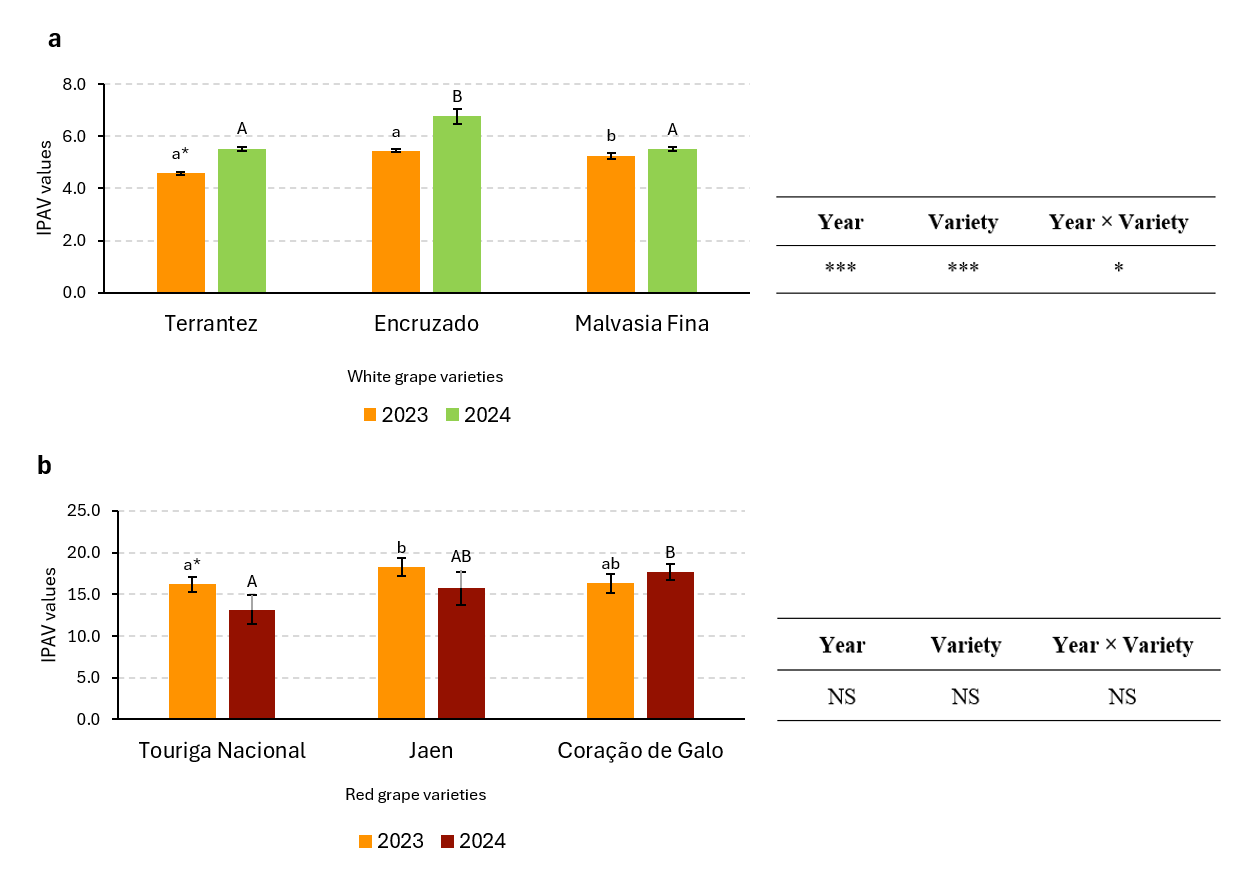
Figure 1. Varietal aroma potential index values for the white (a) and red (b) grape varieties studied in 2023 and 2024.
For the white grape varieties (Figure 1a), IPAv increased in 2024 relative to 2023 among all varieties. On the other hand, among the white varieties studied, Encruzado showed the highest IPAv values (from 5.44 to 6.77) in both years, showing the greatest annual increase, indicating that this variety contained higher levels of glycosylated aroma precursors. Red varieties (Figure 1b) showed some numerical variation between years; however, no statistically significant differences were observed in IPAv values.
The significant effects observed in the white varieties indicate that climatic conditions influence the accumulation of glycosylated aroma precursors, and that this response differs among varieties, reflecting varietal characteristics. In contrast, for the red varieties, IPAv values were not significantly affected by year, variety, or their interaction, indicating greater stability across years and varieties. Jordão et al. (2024) reported lower aromatic potential index values for three red varieties grown on Pico Island (Azores), namely Merlot (IPAv = 9.99), Syrah (IPAv = 10.93), and Saborinho (IPAv = 7.90), which are markedly below the range observed for the red varieties analysed. Cebrián-Tarancón et al. (2024) showed that IPAv varies substantially among varieties in both white and red recovered minority grape varieties from Spain, and that the water regime can modulate aromatic potential, with a clearer increase under irrigation conditions in the white varieties. These authors reported IPAv values ranging from 4.38 to 18.37 for red grape varieties and from 5.76 to 17.61 for white grape varieties, both under a rainfed regime.
3. Individual volatile composition
A total of fifty-seven free volatile compounds were identified in the white grape varieties under study. The volatile compounds were grouped into families, including four C6 compounds, three benzenoids, five C13 norisoprenoids, and forty-five terpenes. The compounds were classified according to their biosynthetic origin. C6 compounds are primarily formed through the lipoxygenase (LOX) pathway, whereas benzenoids are derived mainly from the shikimate pathway. C13 norisoprenoids result from the oxidative degradation of carotenoids, while terpenes are biosynthesised through the mevalonate (MVA) and methylerythritol phosphate (MEP) pathways. All free volatile compounds found in white varieties are shown in Table 5. The distribution of these volatile families revealed marked effects of both variety and year, highlighting the strong influence of genetic and environmental factors on grape secondary metabolism during the two years considered.
Compounds | 1LRI calc | 2LRI lit | 2023 | 2024 | ||||
Terrantez | Encruzado | Malvasia Fina | Terrantez | Encruzado | Malvasia Fina | |||
C6 Compounds | ||||||||
5-Hexen-2-ol | -- | 732 | 0.55 ± 0.04 | nd | 0.32 ± 0.02 | 0.15 ± 0.01 | 0.16 ± 0.01 | 0.11 ± 0.01 |
Hexanal | -- | 801 | 27.96 ± 1.63 | 34.40 ± 0.94 | 48.97 ± 1.01 | 75.17 ± 0.26 | 54.61 ± 1.21 | 70.97 ± 0.30 |
2-Hexenal isomer | -- | 846 | 15.79 ± 1.01 | 31.45 ± 0.81 | 38.17 ± 0.61 | 12.51 ± 0.18 | 14.26 ± 0.37 | 10.46 ± 0.48 |
Hexanol | -- | 863 | 36.93 ± 2.60 | 19.05 ± 1.31 | 6.64 ± 0.50 | 6.45 ± 0.28 | 19.07 ± 0.52 | 12.27 ± 0.36 |
Total | 81.23 ± 5.28a | 84.90 ± 3.06b | 94.10 ± 2.14c | 94.28 ± 0.73b | 88.11 ± 2.11a | 93.80 ± 1.15b | ||
Benzenoids | ||||||||
Benzaldehyde | -- | 952 | 6.09 ± 0.31 | 4.83 ± 0.29 | 2.30 ± 0.08 | 1.08 ± 0.03 | 2.05 ± 0.11 | 1.10 ± 0.07 |
Benzene methanol | 1030 | 1026 | 2.07 ± 0.18 | 1.31 ± 0.13 | 1.10 ± 0.11 | 0.21 ± 0.01 | 0.26 ± 0.01 | 0.58 ± 0.06 |
Benzene ethanol | 1119 | 1107 | 1.50 ± 0.13 | 1.43 ± 0.13 | 0.27 ± 0.01 | 0.29 ± 0.02 | 0.72 ± 0.02 | 0.20 ± 0.02 |
Total | 9.65 ± 0.62c | 7.58 ± 0.55b | 3.67 ± 0.20a | 1.57 ± 0.06a | 3.03 ± 0.14c | 1.88 ± 0.15b | ||
C13 Norisoprenoids | ||||||||
β-Cyclocitral | 1233 | 1217 | 0.37 ± 0.03 | 0.58 ± 0.02 | 0.23 ± 0.01 | 0.51 ± 0.02 | 0.39 ± 0.02 | 0.24 ± 0.01 |
Vitispirane | 1293 | 1286 | 0.33 ± 0.02 | 0.17 ± 0.01 | 0.15 ± 0.01 | 0.01 ± 0 | 0.04 ± 0 | 0.01 ± 0 |
TDN | 1372 | 1354 | 0.02 ± 0 | 0.01 ± 0 | 0.01 ± 0 | 0.02 ± 0 | 0.01 ± 0 | 0.01 ± 0 |
β-Damascenone | 1390 | 1383 | 0.09 ± 0.01 | 0.02 ± 0 | 0.02 ± 0 | 0.05 ± 0.01 | 0.07 ± 0 | 0.05 ± 0 |
β-Ionone | 1490 | 1487 | 0.10 ± 0.01 | 0.05 ± 0 | 0.02 ± 0 | 0.18 ± 0.01 | 0.09 ± 0.01 | 0.09 ± 0.01 |
Total | 0.92 ± 0.07c | 0.83 ± 0.03b | 0.42 ± 0.02a | 0.77 ± 0.04c | 0.61 ± 0.03b | 0.39 ± 0.02a | ||
Terpenes | ||||||||
β-Myrcene* | -- | 988 | 0.20 ± 0.01 | 0.23 ± 0.02 | 0.08 ± 0.01 | nd | nd | nd |
α-Terpinene* | 998 | 1014 | 0.13 ± 0 | 0.07 ± 0 | 0.02 ± 0 | 0.02 ± 0 | 0.06 ± 0 | 0.07 ± 0.01 |
p-Cymene* | 1009 | 1022 | 0.48 ± 0.04 | 0.19 ± 0.01 | 0.10 ± 0 | 0.19 ± 0.01 | 0.22 ± 0.01 | 0.14 ± 0.01 |
Limonene | 1013 | 1024 | 1.20 ± 0.07 | 0.68 ± 0.03 | 0.33 ± 0.01 | 0.50 ± 0.01 | 1.12 ± 0.05 | 0.75 ± 0.04 |
Eucalyptol* | 1018 | 1026 | 0.24 ± 0.02 | 0.07 ± 0 | 0.08 ± 0.01 | 0.33 ± 0.02 | 0.38 ± 0.03 | 0.34 ± 0.01 |
β-Ocimene isomer | 1030 | 1032 | 0.08 ± 0.01 | 0.13 ± 0.01 | 0.03 ± 0 | 0.07 ± 0 | 0.09 ± 0 | 0.13 ± 0.01 |
α-Terpinolene* | 1078 | 1086 | 0.05 ± 0 | 0.06 ± 0 | 0.01 ± 0 | 0.06 ± 0 | 0.03 ± 0 | 0.05 ± 0 |
p-Cymenene | 1089 | 1089 | 0.29 ± 0.02 | 0.18 ± 0.01 | 0.08 ± 0 | 0.06 ± 0 | 0.15 ± 0 | 0.10 ± 0.01 |
Linalool* | 1093 | 1095 | 0.49 ± 0.02 | 0.78 ± 0.04 | 0.23 ± 0.02 | 0.28 ± 0.03 | 1.74 ± 0.05 | 0.52 ± 0.01 |
Hotrienol | 1098 | 1101 | 0.14 ± 0 | 0.06 ± 0 | 0.08 ± 0.01 | nd | nd | nd |
Allocimene | 1124 | 1128 | 0.05 ± 0 | 0.09 ± 0.01 | 0.01 ± 0 | 0.10 ± 0.01 | 0.10 ± 0.01 | 0.09 ± 0.01 |
Nerol oxide | 1153 | 1154 | 0.07 ± 0 | 0.15 ± 0.01 | 0.02 ± 0 | nd | 0.09 ± 0.01 | nd |
Linalool oxide isomer | 1176 | 1170 | 0.05 ± 0.01 | 0.03 ± 0 | 0.01± 0 | nd | nd | nd |
Borneol isomer | 1184 | 1165 | 0.02 ± 0 | 0.01 ± 0 | nd | 0.02 ± 0 | 0.07 ± 0 | nd |
Menthol* | 1186 | 1167 | 0.08 ± 0 | 0.05 ± 0 | 0.02 ± 0 | 0.09 ± 0.01 | 0.08 ± 0 | 0.07 ± 0 |
4-Terpineol* | 1189 | 1174 | 0.16 ± 0.02 | 0.11 ± 0.01 | 0.01 ± 0 | 0.06 ± 0 | 0.12 ± 0.01 | 0.05 ± 0 |
α-Terpineol* | 1207 | 1186 | 0.62 ± 0.05 | 0.24 ± 0 | 0.08 ± 0 | 0.04 ± 0 | 0.21 ± 0.01 | 0.05 ± 0 |
Myrtenol | 1209 | 1194 | 0.03 ± 0 | 0.02 ± 0 | 0.01 ± 0 | 0.02 ± 0 | 0.04 ± 0 | nd |
Nerol* | 1231 | 1227 | 0.34 ± 0.01 | 0.48 ± 0.01 | 0.14 ± 0 | 0.07 ± 0 | 0.53 ± 0.01 | 0.30 ± 0.02 |
Z-Citral | 1249 | 1235 | 0.03 ± 0 | 0.07 ± 0 | 0.01 ± 0 | 0.02 ± 0 | 0.02 ± 0 | 0.07 ± 0 |
Geraniol* | 1258 | 1249 | 0.44 ± 0.03 | 0.86 ± 0.04 | 0.20 ± 0 | 0.14 ± 0.01 | 1.19 ± 0.06 | 0.34 ± 0.01 |
δ-Elemene | 1342 | 1335 | 0.16 ± 0.01 | 0.10 ± 0 | nd | 0.03 ± 0 | 0.05 ± 0 | nd |
α-Cubebene | 1354 | 1345 | 0.06 ± 0.01 | 0.04 ± 0 | nd | 0.02 ± 0 | 0.01 ± 0 | 0.02 ± 0 |
α-Ylangene | 1379 | 1373 | 0.07 ± 0 | 0.04 ± 0 | 0.02 ± 0 | 0.06 ± 0.01 | 0.02 ± 0 | 0.07 ± 0 |
α-Copaene | 1386 | 1374 | 0.14 ± 0 | 0.11 ± 0 | 0.03 ± 0 | 0.07 ± 0.01 | 0.13 ± 0 | 0.06 ± 0.01 |
α-Gurjunene | 1418 | 1409 | 0.02 ± 0 | 0.02 ± 0 | 0.01 ± 0 | 0.01 ± 0 | 0.02 ± 0 | nd |
Cedrene* | 1432 | 1410 | 0.06 ± 0 | 0.04 ± 0 | nd | 0.01 ± 0 | 0.06 ± 0 | 0.01 ± 0 |
β-Caryophyllene* | 1434 | 1417 | 0.16 ± 0.01 | 0.18 ± 0 | 0.02 ± 0 | 0.08 ± 0 | 0.14 ± 0 | 0.05 ± 0 |
Thujopsene isomer | 1438 | 1429 | 0.11 ± 0.01 | 0.09 ± 0 | nd | 0.06 ± 0 | nd | 0.03 ± 0 |
β-Copaene | 1441 | 1430 | nd | 0.04 ± 0 | nd | 0.03 ± 0 | 0.08 ± 0 | 0.01 ± 0 |
α-Guaiene | 1443 | 1437 | 0.11 ± 0 | 0.02 ± 0 | nd | 0.02 ± 0 | 0.02 ± 0 | 0.03 ± 0 |
Aromadendrene | 1462 | 1439 | 0.05 ± 0 | 0.04 ± 0 | 0.01 ± 0 | 0.04 ± 0 | 0.04 ± 0 | 0.04 ± 0 |
α-Humulene* | 1470 | 1452 | 0.23 ± 0.01 | 0.18 ± 0.01 | 0.01 ± 0 | 0.10 ± 0.01 | 0.16 ± 0.01 | 0.03 ± 0 |
Alloaromadendrene | 1487 | 1458 | 0.18 ± 0.01 | 0.11 ± 0.01 | 0.01 ± 0 | 0.07 ± 0 | 0.06 ± 0 | 0.03 ± 0 |
α-Amorphene | 1490 | 1483 | 0.15 ± 0.01 | 0.06 ± 0 | 0.01 ± 0 | 0.04 ± 0 | 0.04 ± 0 | 0.01 ± 0 |
δ-Selinene | 1497 | 1492 | 0.03 ± 0 | 0.03 ± 0 | nd | 0.02 ± 0 | 0.03 ± 0 | 0.03 ± 0 |
Valencene* | 1505 | 1496 | 0.11 ± 0.01 | 0.11 ± 0.01 | 0.02 ± 0 | 0.03 ± 0 | 0.20 ± 0.01 | 0.08 ± 0.01 |
α-Muurolene | 1515 | 1500 | 0.15 ± 0.01 | 0.05 ± 0 | nd | 0.01 ± 0 | 0.03 ± 0 | nd |
δ-Cadinene | 1528 | 1522 | 0.40 ± 0.03 | 0.33 ± 0.01 | 0.06 ± 0 | 0.25 ± 0.02 | 0.50 ± 0.02 | 0.16 ± 0.01 |
Calamenene isomer | 1535 | 1528 | 0.51 ± 0.03 | 0.36 ± 0.02 | 0.06 ± 0 | 0.22 ± 0.02 | 0.28 ± 0.01 | 0.13 ± 0.01 |
α-Cadinene | 1549 | 1537 | 0.08 ± 0 | 0.04 ± 0 | nd | 0.02 ± 0 | 0.01 ± 0 | nd |
α-Calacorene | 1558 | 1544 | 0.06 ± 0 | 0.04 ± 0 | 0.01 ± 0 | 0.04 ± 0 | 0.04 ± 0 | 0.03 ± 0 |
α-Corocalene | 1633 | 1622 | 0.03 ± 0 | 0.02 ± 0 | nd | 0.01 ± 0 | 0.02 ± 0 | 0.02 ± 0 |
Cubenol | 1646 | 1645 | 0.01 ± 0 | 0.01 ± 0 | nd | 0.01 ± 0 | nd | 0.01 ± 0 |
Cadalene | 1693 | 1675 | 0.10 ± 0.01 | 0.07 ± 0 | 0.01 ± 0 | 0.04 ± 0 | 0.05 ± 0 | 0.03 ± 0 |
Total | 8.20 ± 0.51c | 6.70 ± 0.32b | 1.81 ± 0.09a | 3.38 ± 0.19a | 8.25 ± 0.35c | 3.92 ± 0.22b | ||
The mean values (n = 3) are presented along with their standard deviation. One-way analysis of variance (ANOVA) was performed for the total of each family of compounds. When significant effects were detected, means were compared using the Tukey–Kramer multiple comparison test. Different letters indicate statistically significant differences among varieties within the same year. nd: not detected; TDN: 1,1,6-trimethyl-1,2-dihydronaphthalene; * Compounds confirmed by MegaMix #1. 1 LRI calc: The linear retention index values were calculated through analysis of the commercial hydrocarbon mixture (C8–C20); 2 LRI lit: The linear retention index values from the literature for a 5 % phenyl polysilphenylene-siloxane column.
In 2023, 5-hexen-2-ol was detected in all white grape varieties studied, except for Encruzado. The compounds β-myrcene, hotrienol, and linalool oxide isomer were detected exclusively in 2023 and, as expected, interannual differences were evident. The compounds borneol isomer, myrtenol, δ-elemene, and α-gurjunene were present in all varieties in 2023 but were detected only in the Terrantez and Encruzado varieties in 2024. Conversely, α-guaiene and δ-selinene appeared in all varieties in 2024, while in 2023 they were only found in Terrantez and Encruzado varieties. In addition, nerol oxide was only found in the Encruzado variety in 2024. The compounds α-muurolene and α-cadinene were absent from the Malvasia Fina variety in both years, which may eventually be a specific characteristic of this variety. The repeated absence of α-muurolene and α-cadinene in Malvasia Fina across both vintages suggests that this pattern may reflect a variety-related volatile trait rather than a purely seasonal effect. Similar cases have been reported in other grape studies, where certain volatile compounds were found exclusively in some cultivars and consistently absent in others, supporting the idea that presence/absence patterns may contribute to varietal discrimination (Fonseca et al., 2024; Zhan et al., 2025). Thujopsene isomer and cubenol were not found in Malvasia Fina in 2023 and in Encruzado in 2024, while β-copaene was detected only in the Encruzado variety in 2023.
For the C6 compound family, considering the relative area, it was observed that in 2023, the Malvasia Fina variety showed the highest total relative area, while the Terrantez variety showed the lowest values. However, in 2024, Encruzado exhibited the lowest total relative area. C6 compounds are associated with green aromas typically found in grapes with lower °Brix values (Kalua & Boss, 2010; Robinson et al., 2014). However, this was not observed in the present study, as the Malvasia Fina variety showed the highest °Brix values while exhibiting the greatest abundance of C6 compounds in 2023. According to the literature, changes in the microclimate can inhibit or stimulate the activity of the lipoxygenase/hydroperoxide lyase pathway, thereby affecting the enzymatic activity involved in the synthesis of C6 compounds. It is also important to note that the abundance of C6 compounds in grapes is affected by grape germplasm, variety, climatic conditions, and viticultural practices (Deluc et al., 2009; Kalua & Boss, 2010; Qian et al., 2017). Šikuten et al. (2022) studied 50 red wine varieties and found that aldehydes and alcohols were the most abundant volatile compounds, including hexanal, (E)-2-hexenal, (E)-2-hexen-1-ol, and 1-hexanol, which vary markedly among varieties and can contribute to varietal discrimination. Their accumulation is also climate-sensitive, since several C6 compounds have been reported to respond to temperature, humidity, and seasonal conditions during ripening (Xie et al., 2018).
For the benzenoid and terpene families, in 2023, the Terrantez variety displayed the highest total relative area, while Malvasia Fina showed the lowest values. This greater contribution of volatile compounds in Terrantez was mainly driven by the high abundance of benzaldehyde, the most predominant benzenoid, typically associated with almond and sweet notes. Several dominant terpenes such as p-cymene (citrus and herbaceous), limonene (fresh citrus), α-terpineol (floral and lilac), and calamenene (woody and spicy) were also present in higher levels in other grape varieties, such as Castelão, Tinta Barroca, Trincadeira, and Moscatel (Fenoll et al., 2012; Wu et al., 2019; Fonseca et al., 2024; Hutchings et al., 2025). However, in 2024, the Encruzado variety had the highest total relative area, and Terrantez had the lowest. This is due to the high abundance of volatile compounds such as benzenoid, benzaldehyde, and terpenes, including limonene, linalool (citrus and flowery), α-terpineol, nerol (sweet and citrus), geraniol (fruity and rose), valencene (citrus), and δ-cadinene (woody and resinous), collectively contributing to the aromatic richness of Encruzado variety (Vilanova et al., 2010; Hutchings et al., 2025), with several of these compounds being commonly reported as influential to the aroma of white wines (Vilanova et al., 2013; Luo et al., 2019; Chigo-Hernandez & Tomasino, 2023). According to Rocha et al. (2021), in a white wine made from the Encruzado grape variety, contact with chitosan–genipin films during storage modulated the volatile profile by promoting the retention of some long-chain compounds and the formation of compounds such as furfural, 3-methylbutanal and phenylacetaldehyde, without compromising the wine’s varietal notes.
Regarding the C13 norisoprenoid family, both in 2023 and 2024, the Terrantez variety showed the highest total relative area, whereas Malvasia Fina exhibited the lowest. This enhanced contribution in the Terrantez variety was mainly associated with the higher abundance of key C13 norisoprenoids, particularly β-cyclocitral and β-ionone, contributing smoky and fruity nuances as well as floral notes reminiscent of rose and violet, respectively (Mosaferi et al., 2020). Perestrelo et al. (2014) investigated the varietal volatile profile of grape varieties traditionally used in Madeira wine production, including Terrantez, and reported that this variety exhibited a varietal profile similar to that of Sercial, a noble grape variety widely recognised for its use in high-quality Madeira wines. In contrast, Rocha et al. (2007) investigated the monoterpene composition of Vitis vinifera L. cv. Fernão Pires, a Portuguese white variety, and reported that this variety was characterised by a high content of several monoterpenes, particularly from the main families (monoterpene hydrocarbons, monoterpene oxides, monoterpenols, and monoterpene aldehydes).
The results of the analysis of variance presented in Table 6 show that the effects of year, variety, and their interaction varied among the different families of free volatile compounds for the white varieties studied. For C6 compounds, both the effect of year (p < 0.05) and variety (p < 0.01) were significant, indicating that these compounds are influenced by climatic or environmental differences between years, as well as by genetic differences among grape varieties. However, the year × variety interaction was not significant, suggesting that the behaviour of each variety remained consistent across the two years studied. This result is particularly interesting because, according to the bioclimatic data obtained for 2023, where there were more days with very high maximum temperatures and low precipitation compared to 2024 (Table 1), these differences do not seem to have influenced the biosynthesis of C6 compounds.
Family’s | Year | Variety | Year × Variety |
C6 Compounds | * | ** | NS |
Benzenoids | ** | NS | NS |
C13 Norisoprenoids | *** | *** | * |
Terpenes | NS | *** | ** |
A multivariate analysis of variance (MANOVA) was conducted to determine the statistical significance of the factors “year”, “variety”, and their interaction (“year × variety”), as this approach allows the simultaneous assessment of multiple correlated response variables. Statistical significance levels: * p < 0.05, ** p < 0.01, *** p < 0.001, and NS, not significant.
For benzenoids, the effect of year was significant (p < 0.01), indicating a strong influence of seasonal factors on their formation, whereas the effects of variety and the year × variety interaction were not significant. This implies that the observed differences in benzenoid concentrations are mainly due to year conditions rather than varietal differences. For this group of compounds, it appears that the climatic conditions, and particularly the high temperatures experienced in 2023 and the lower rainfall, did not affect the biosynthesis of these compounds, since that was the year in which the values were highest for the three white grape varieties studied.
Regarding the C13 norisoprenoids, both year and variety effects were highly significant (p < 0.001), and the interaction was also significant (p < 0.05). This pattern indicates that the concentration of these compounds varies with year, grape variety, and the specific response of each variety to annual conditions, which is expected since C13 norisoprenoids are varietal volatile compounds. Lastly, within the terpene family, the variety effect was statistically significant (p < 0.001), and the interaction was also significant (p < 0.01), while the year effect was not. This demonstrates that terpenes are primarily determined by varietal characteristics, showing lower sensitivity to year effects. These results highlight the strong influence of grape variety on the aromatic potential of white varieties, particularly in the case of terpenes and C13 norisoprenoids, whereas year, affected by climatic conditions, appears to play a more important role in shaping the composition of C6 compounds and benzenoids.
The differences observed between white varieties and years were further explored using multivariate analysis to assess overall similarities among volatile compounds (Figure 2). Thus, the polar heatmap combined with cluster analysis confirmed the strong year modulation previously discussed, while also revealing a consistent grouping of Encruzado and Terrantez varieties across both years, indicating a closer global similarity in their volatile composition independent of the climatic conditions of the year. In both years, C6 compounds formed a distinct cluster (green), highlighting their common metabolic origin and their strong association with ripening-related processes, in agreement with the trends observed in their relative abundance across varieties. For the remaining volatile groups, no clear differentiation was detected.
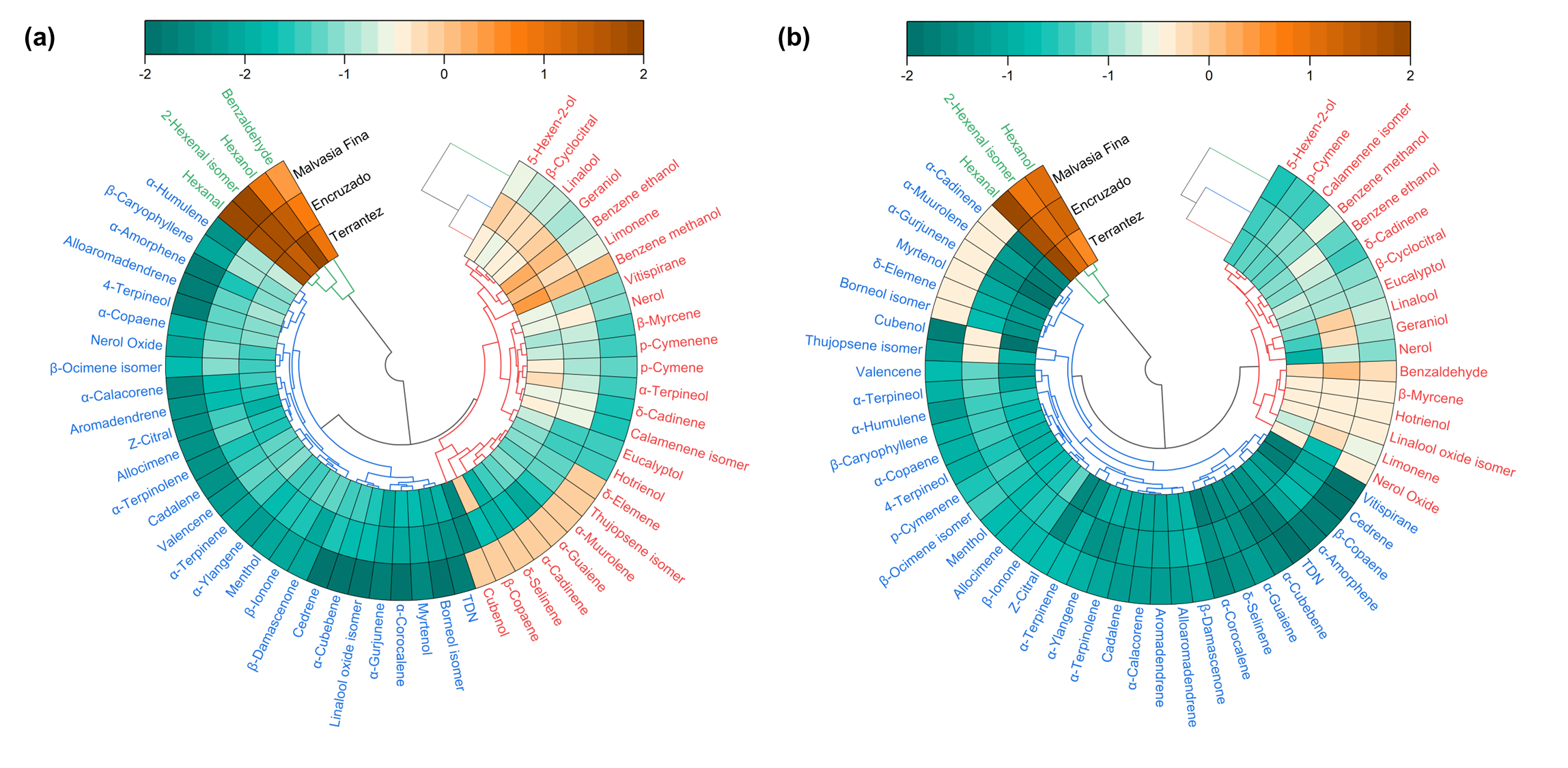
Figure 2. Polar heatmaps of the white varieties studied for 2023 (a) and 2024 (b).
As far as red varieties, a total of forty-eight free volatile compounds were detected in the analysed samples and were also grouped into different families, including C6 compounds, benzenoids, C13 norisoprenoids, and terpenes (Table 7).
Compounds | 1LRI calc | 2LRI lit | 2023 | 2024 | ||||
Touriga Nacional | Jean | Coração de Galo | Touriga Nacional | Jean | Coração de Galo | |||
C6 compounds | ||||||||
Hexanal | -- | 801 | 12.43 ± 0.61 | 39.81 ± 3.12 | 27.84 ± 1.32 | 33.55 ± 1.58 | 20.45 ± 0.49 | 37.69 ± 0.75 |
2-Hexenal isomer | -- | 846 | 11.73 ± 0.65 | 16.25 ± 1.01 | 15.09 ± 0.45 | 7.09 ± 0.71 | 5.85 ± 0.45 | 4.13 ± 0.27 |
Hexanol | -- | 863 | 54.66 ± 0.80 | 34.74 ± 2.23 | 36.99 ± 0.88 | 46.51 ± 2.23 | 55.58 ± 0.48 | 43.65 ± 0.35 |
Total | 78.82 ± 2.06a | 90.80 ± 6.36b | 79.92 ± 2.65a | 87.15 ± 4.52c | 81.88 ± 1.42a | 85.47 ± 1.37b | ||
Benzenoids | ||||||||
Benzaldehyde | -- | 952 | 3.82 ± 0.16 | 2.14 ± 0.19 | 3.11 ± 0.27 | 1.06 ± 0.08 | 1.68 ± 0.01 | 1.26 ± 0.02 |
Benzene methanol | 1030 | 1026 | 3.07 ± 0.06 | 1.51 ± 0.09 | 3.84 ± 0.38 | 0.25 ± 0.02 | 1.67 ± 0.04 | 0.30 ± 0.01 |
Benzene ethanol | 1119 | 1107 | 1.83 ± 0.05 | 1.01 ± 0.04 | 1.63 ± 0.10 | 0.26 ± 0.01 | 0.95 ± 0.02 | 1.34 ± 0.05 |
Total | 8.72 ± 0.27b | 4.65 ± 0.32a | 8.58 ± 0.75b | 1.57 ± 0.11a | 4.30 ± 0.07c | 2.90 ± 0.08b | ||
C13 Norisoprenoids | ||||||||
β-Cyclocitral | 1233 | 1217 | 0.45 ± 0.04 | 0.27 ± 0.02 | 0.60 ± 0.06 | 0.26 ± 0.02 | 0.42 ± 0.02 | 0.27 ± 0.01 |
Vitispirane | 1293 | 1286 | 0.10 ± 0.01 | 0.07 ± 0.01 | 0.40 ± 0.02 | nd | nd | nd |
TDN | 1372 | 1354 | 0.01 ± 0 | 0.02 ± 0 | 0.01 ± 0 | nd | nd | nd |
β-Damascenone | 1390 | 1383 | 0.05 ± 0 | 0.04 ± 0 | 0.08 ± 0.01 | 0.07 ± 0.01 | 0.09 ± 0.01 | 0.12 ± 0 |
β-Ionone | 1490 | 1487 | 0.03 ± 0 | 0.05 ± 0 | 0.04 ± 0 | 0.06 ± 0 | 0.17 ± 0.01 | 0.07 ± 0 |
Total | 0.65 ± 0.05b | 0.45 ± 0.03a | 1.13 ± 0.09c | 0.39 ± 0.03a | 0.68 ± 0.04c | 0.46 ± 0.01b | ||
Terpenes | ||||||||
β-Myrcene* | -- | 988 | 1.51 ± 0.07 | 1.14 ± 0.08 | 0.40 ± 0.03 | 0.34 ± 0.03 | nd | nd |
α-Terpinene* | 998 | 1014 | 0.24 ± 0.02 | 0.04 ± 0 | 0.17 ± 0.01 | nd | nd | nd |
p-Cymene* | 1009 | 1022 | 0.50 ± 0.03 | 0.05 ± 0 | 0.48 ± 0.01 | 0.23 ± 0.01 | 0.42 ± 0.02 | 1.49 ± 0.07 |
Limonene | 1013 | 1024 | 1.31 ± 0.09 | 0.66 ± 0.02 | 1.61 ± 0.04 | 1.46 ± 0.05 | 3.23 ± 0.19 | 1.74 ± 0.01 |
Eucalyptol* | 1018 | 1026 | 0.27 ± 0.02 | nd | 0.37 ± 0.02 | 0.53 ± 0.02 | 0.87 ± 0.04 | 0.58 ± 0.04 |
β-Ocimene isomer | 1030 | 1032 | 0.28 ± 0.01 | 0.08 ± 0 | 0.26 ± 0.01 | 0.21 ± 0.02 | 0.20 ± 0 | 0.21 ± 0 |
α-Terpinolene* | 1078 | 1086 | 0.14 ± 0.01 | 0.02 ± 0 | 0.13 ± 0 | 0.14 ± 0.01 | 0.15 ± 0.01 | 0.24 ± 0.02 |
p-Cymenene | 1089 | 1089 | 0.25 ± 0.02 | 0.11 ± 0.01 | 0.29 ± 0.01 | 0.16 ± 0.01 | 0.40 ± 0.03 | 0.21 ± 0 |
Linalool* | 1093 | 1095 | 1.79 ± 0.13 | 0.31 ± 0.02 | 2.39 ± 0.12 | 3.24 ± 0.15 | 0.62 ± 0.06 | 3.44 ± 0.06 |
Hotrienol | 1098 | 1101 | 0.37 ± 0.02 | 0.05 ± 0 | 0.45 ± 0.01 | nd | nd | 0.17 ± 0 |
Allocimene | 1124 | 1128 | 0.14 ± 0.01 | 0.05 ± 0 | 0.15 ± 0.01 | 0.15 ± 0.01 | 0.15 ± 0.01 | 0.17 ± 0.01 |
Nerol Oxide | 1153 | 1154 | 0.11 ± 0.01 | 0.04 ± 0 | 0.12 ± 0 | 0.06 ± 0 | nd | 0.05 ± 0 |
Linalool oxide isomer | 1176 | 1170 | 0.10 ± 0.01 | 0.09 ± 0.01 | 0.07 ± 0.01 | nd | 0.04 ± 0 | nd |
Borneol isomer | 1184 | 1165 | 0.03 ± 0 | 0.02 ± 0 | 0.02 ± 0 | nd | nd | nd |
Menthol* | 1186 | 1167 | 0.07 ± 0 | 0.05 ± 0 | 0.08 ± 0 | 0.07 ± 0.01 | 0.16 ± 0.01 | 0.08 ± 0 |
4-Terpineol* | 1189 | 1174 | 0.17 ± 0.02 | 0.03 ± 0 | 0.07 ± 0 | 0.15 ± 0 | 0.13 ± 0 | 0.71 ± 0 |
α-Terpineol* | 1207 | 1186 | 0.82 ± 0.07 | 0.08 ± 0 | 0.99 ± 0.02 | 0.46 ± 0.02 | 0.09 ± 0 | 0.51 ± 0.01 |
Nerol* | 1231 | 1227 | 0.72 ± 0.05 | 0.27 ± 0.01 | 0.55 ± 0.03 | 0.36 ± 0.01 | 0.90 ± 0.02 | 0.19 ± 0.01 |
Z-Citral | 1249 | 1235 | 0.09 ± 0.01 | 0.04 ± 0 | 0.05 ± 0 | 0.05 ± 0 | 0.11 ± 0 | 0.05 ± 0 |
Geraniol* | 1258 | 1249 | 1.36 ± 0.10 | 0.44 ± 0.03 | 1.28 ± 0.04 | 1.48 ± 0.02 | 1.28 ± 0.02 | 0.64 ± 0.01 |
α-Cubebene | 1354 | 1345 | 0.02 ± 0 | nd | 0.03 ± 0 | 0.02 ± 0 | 0.03 ± 0 | 0.05 ± 0 |
α-Ylangene | 1379 | 1373 | 0.04 ± 0 | 0.05 ± 0 | 0.01 ± 0 | 0.07 ± 0 | 0.51 ± 0.02 | 0.05 ± 0 |
α-Copaene | 1386 | 1374 | 0.15 ± 0.01 | 0.04 ± 0 | 0.09 ± 0.01 | 0.09 ± 0.01 | 0.13 ± 0 | 0.13 ± 0 |
β-Caryophyllene* | 1434 | 1417 | 0.21 ± 0.01 | 0.04 ± 0 | 0.02 ± 0 | 0.38 ± 0.01 | 0.19 ± 0.01 | 0.06 ± 0 |
β-Copaene | 1441 | 1430 | nd | nd | nd | 0.13 ± 0.01 | 0.14 ± 0.01 | 0.02 ± 0 |
α-Guaiene | 1443 | 1437 | 0.01 ± 0 | 0.01 ± 0 | nd | 0.04 ± 0 | 0.24 ± 0.01 | 0.02 ± 0 |
Aromadendrene | 1462 | 1439 | 0.02 ± 0 | 0.03 ± 0 | nd | 0.04 ± 0 | 0.31 ± 0.02 | 0.02 ± 0 |
α-Humulene* | 1470 | 1452 | 0.33 ± 0.03 | 0.02 ± 0 | 0.03 ± 0 | 0.24 ± 0.02 | 0.11 ± 0 | 0.09 ± 0 |
Alloaromadendrene | 1487 | 1458 | 0.02 ± 0 | nd | nd | 0.05 ± 0 | 0.14 ± 0.01 | nd |
α-Amorphene | 1490 | 1483 | 0.03 ± 0 | 0.02 ± 0 | nd | 0.06 ± 0 | 0.10 ± 0 | nd |
δ-Selinene | 1497 | 1492 | 0.02 ± 0 | 0.01 ± 0 | nd | 0.05 ± 0 | 0.20 ± 0.01 | nd |
Valencene* | 1505 | 1496 | 0.02 ± 0 | 0.07 ± 0.01 | 0.01 ± 0 | 0.09 ± 0 | 0.47 ± 0.02 | 0.02 ± 0 |
δ-Cadinene | 1528 | 1522 | 0.22 ± 0.02 | 0.10 ± 0.01 | 0.06 ± 0.01 | 0.20 ± 0 | 0.73 ± 0.02 | 0.12 ± 0 |
Calamenene isomer | 1535 | 1528 | 0.31 ± 0.01 | 0.09 ± 0 | 0.10 ± 0.01 | 0.19 ± 0.01 | 0.40 ± 0.03 | 0.12 ± 0 |
α-Calacorene | 1558 | 1544 | 0.04 ± 0 | 0.02 ± 0 | 0.02 ± 0 | 0.04 ± 0 | 0.11 ± 0.01 | 0.02 ± 0 |
α-Corocalene | 1633 | 1622 | 0.02 ± 0 | 0.01 ± 0 | nd | nd | 0.04 ± 0 | nd |
Cadalene | 1693 | 1675 | 0.04 ± 0 | 0.03 ± 0 | 0.02 ± 0 | 0.02 ± 0 | 0.07 ± 0 | nd |
Total | 11.76 ± 0.77c | 4.09 ± 0.23a | 10.32 ± 0.40b | 10.80 ± 0.45a | 12.67 ± 0.59b | 11.17 ± 0.27a | ||
The mean values (n = 3) are presented along with their standard deviation. One-way analysis of variance (ANOVA) was performed for the total of each family of compounds. When significant effects were detected, means were compared using the Tukey–Kramer multiple comparison test. Different letters indicate statistically significant differences among varieties within the same year. nd: not detected; TDN: 1,1,6-trimethyl-1,2-dihydronaphthalene; * Compounds confirmed by MegaMix #1. 1 LRI calc: The linear retention index values were calculated through analysis of the commercial hydrocarbon mixture (C8–C20); 2 LRI lit: The linear retention index values from the literature for a 5 % phenyl polysilphenylene-siloxane column.
The compounds vitispirane, TDN, α-terpinene, and borneol isomer were found in all varieties exclusively in 2023. The compounds α-guaiene and aromadendrene were detected in all varieties in 2024, while in 2023 they were detected only in the Jaen and Touriga Nacional varieties. The compounds α-amorphene and δ-selinene were not found in the Coração de Galo variety in both years. In addition, β-copaene was detected in all the varieties studied only in 2024, while eucalyptol and α-cubebene were found in all varieties in 2024, but in 2023 they were absent from Jaen variety. Cadalene was detected in all varieties in 2023, while in 2024 it was found only in Jaen and Touriga Nacional varieties. β-Myrcene was found in all varieties in 2023, but in 2024 only in Touriga Nacional. Similarly, hotrienol was present in all varieties in 2023, but in 2024 only in the Coração de Galo variety. In addition, nerol oxide was detected in all varieties in 2023, but in 2024 it was absent from Jaen variety. The compound linalool oxide isomer was found in all varieties in 2023, but in 2024 it was detected only in Jaen variety. Alloaromadendrene was found exclusively in Touriga Nacional in 2023, while in 2024 it was detected in both Jaen and Touriga Nacional varieties. Finally, α-corocalene was found only in Touriga Nacional and Jaen varieties in 2023, but in 2024 it was detected exclusively in Jaen.
For the C6 compound family, based on relative area, it was observed that in 2023, Jaen recorded the highest total relative area. In 2024, the Touriga Nacional variety exhibited the highest total relative area, while the Jaen variety showed the lowest. Regarding the benzenoid and terpene families, in 2023, the Touriga Nacional variety displayed the highest total relative area, whereas Jaen showed the lowest. However, in 2024, this trend was reversed: the Jaen variety had the highest total relative area, while Touriga Nacional showed the lowest. For the C13 norisoprenoid family, in 2023, the Coração de Galo variety exhibited the highest total relative area, while Jaen showed the lowest. Meanwhile, in 2024, Jaen recorded the highest total relative area for the terpene family, and the Touriga Nacional variety showed the lowest. This trend therefore demonstrates a high interannual variability of this group of volatile compounds among the grape varieties studied. In addition, it is important to note that terpenes and C13 norisoprenoids are the main families of compounds responsible for the volatile composition of each variety. This composition is strongly influenced by basic oenological parameters, among which the balance between sugars and total acidity plays a decisive role (van Leeuwen et al., 2023).
In general, the volatile varietal composition of the varieties under study is defined mainly by the compounds β-cyclocitral, vitispirane, β-myrcene, p-cymene, limonene, eucalyptol, linalool, α-terpineol, nerol, geraniol, α-ylangene, and δ-cadinene, identified as the major constituents. Interestingly, these compounds are predominantly associated with floral and fruity aromatic descriptors (Coelho et al., 2006; González-Barreiro et al., 2015; D’Onofrio et al., 2017; Ferreira & Lopez, 2019; Rubio-Bretón et al., 2019). In the literature, these varietal compounds have previously been identified in other Vitis vinifera varieties such as Trincadeira, Cabernet-Sauvignon, Syrah, Castelão, and Tinta Barroca (Fonseca et al., 2024). Könen and Wüst (2019) investigated the sesquiterpene profile of red grape berries from the Lemberger variety and identified several sesquiterpene hydrocarbons (including α-cubebene, α-ylangene, α-copaene, β-caryophyllene, β-copaene, α-guaiene, α-humulene, δ-selinene, valencene, δ-cadinene, calamenene isomer, α-calacorene, α-corocalene, and cadalene), some of them also detected in the three Portuguese red grape varieties studied. Slaghenaufi et al. (2022) investigated monoterpenoids and norisoprenoids in red wines and also found marked varietal differences. For example, Montepulciano and Cannonau wines exhibited the highest concentrations of nerol, terpinolene, β-damascenone, and α-ionone, whereas Aglianico, Corvina, Nebbiolo, and Primitivo were characterised by comparatively high levels of linear monoterpene alcohols, such as linalool and geraniol.
Table 8 summarises the significance of the effects of year, variety, and their interaction on the main families of volatile compounds found in the red grapes studied. For C6 compounds, the effect of year was not significant, suggesting that their formation remained relatively stable across years and independently of the climatic conditions that occurred during the two years analysed. However, the effect of variety was significant (p < 0.05), indicating that the concentration of these compounds depends on varietal factors. Šikuten et al. (2022) demonstrated that red grapevine varieties can be discriminated according to their volatile composition, with (E)-2-hexenal, hexenal, (E)-2-hexen-1-ol, and 1-hexanol identified among the main compounds responsible for this differentiation. In addition, the year × variety interaction was highly significant (p < 0.001), implying that the varietal response in terms of C6 compound production varied according to the conditions of each year. In the benzenoid family, a significant effect of year (p < 0.05) was observed, reflecting the influence of climatic conditions on their biosynthesis. Asproudi et al. (2023), in Grignolino, a red grape variety, showed that meteorological differences over four years significantly influenced the concentration of aroma precursors and reported that high temperatures (> 30 °C) and low rainfall before veraison led to higher benzenoid levels.
Family’s | Year | Variety | Year × Variety |
C6 Compounds | NS | * | *** |
Benzenoids | * | NS | * |
C13 Norisoprenoids | *** | *** | *** |
Terpenes | *** | *** | *** |
A multivariate analysis of variance (MANOVA) was conducted to determine the statistical significance of the factors “year”, “variety”, and their interaction (“year × variety”), as this approach allows the simultaneous assessment of multiple correlated response variables. Statistical significance levels: * p < 0.05, ** p < 0.01, *** p < 0.001, and NS, not significant.
The effect of variety was not significant, indicating that benzenoid production was relatively similar among cultivars. However, the year × variety interaction was significant (p < 0.05), showing that the impact of year differed depending on the year and the grape variety. For the C13 norisoprenoid and terpene families, the effects of year, variety, and their interaction were all highly significant (p < 0.001). These results demonstrate that genetic, environmental, and interactive factors strongly influence the accumulation of these aromatic compounds, indicating that each cultivar responds differently to the environmental conditions of each year. Šikuten et al. (2025) indicated that grape volatile compounds are influenced by variety, climate, and viticultural practices, while Deis et al. (2024) reported that in Cabernet-Sauvignon, contrasting climatic conditions associated with vineyard location significantly altered several volatile families, including C6 compounds, aldehydes, esters, and terpenes.
To assess the similarity and correlation between the aromatic profiles of the grape varieties under study, a polar heatmap with cluster analysis was performed for the red varieties studied (Figure 3). The shorter the distance between two clusters in the dendrogram, the more similar the varieties belonging to these groups are, indicating a greater proximity in terms of volatile composition.
For the red varieties studied, regardless of the year, the clustering of Jaen and Touriga Nacional varieties can be distinguished, as well as three clearly defined clusters. In 2023 (Figure 3a), the first cluster (red) includes the C6 volatile compounds. The second cluster (blue) comprises the benzenoid compounds and several terpenes, including limonene, geraniol, β-copaene, linalool, β-myrcene, and eucalyptol. Finally, a third cluster (green) contains the remaining volatile compounds. According to Figure 3b, the results obtained for 2024 demonstrated that the first cluster (red) includes hexanal and hexanol, while the second cluster (blue) comprises volatile compounds such as 2-hexenal isomer, linalool, benzaldehyde, vitispirane, TDN, α-terpinene, borneol isomer, geraniol, eucalyptol, benzene ethanol, β-myrcene, p-cymene, limonene, benzene methanol, hotrienol, and nerol. Finally, the third cluster (green) includes the remaining volatile compounds.
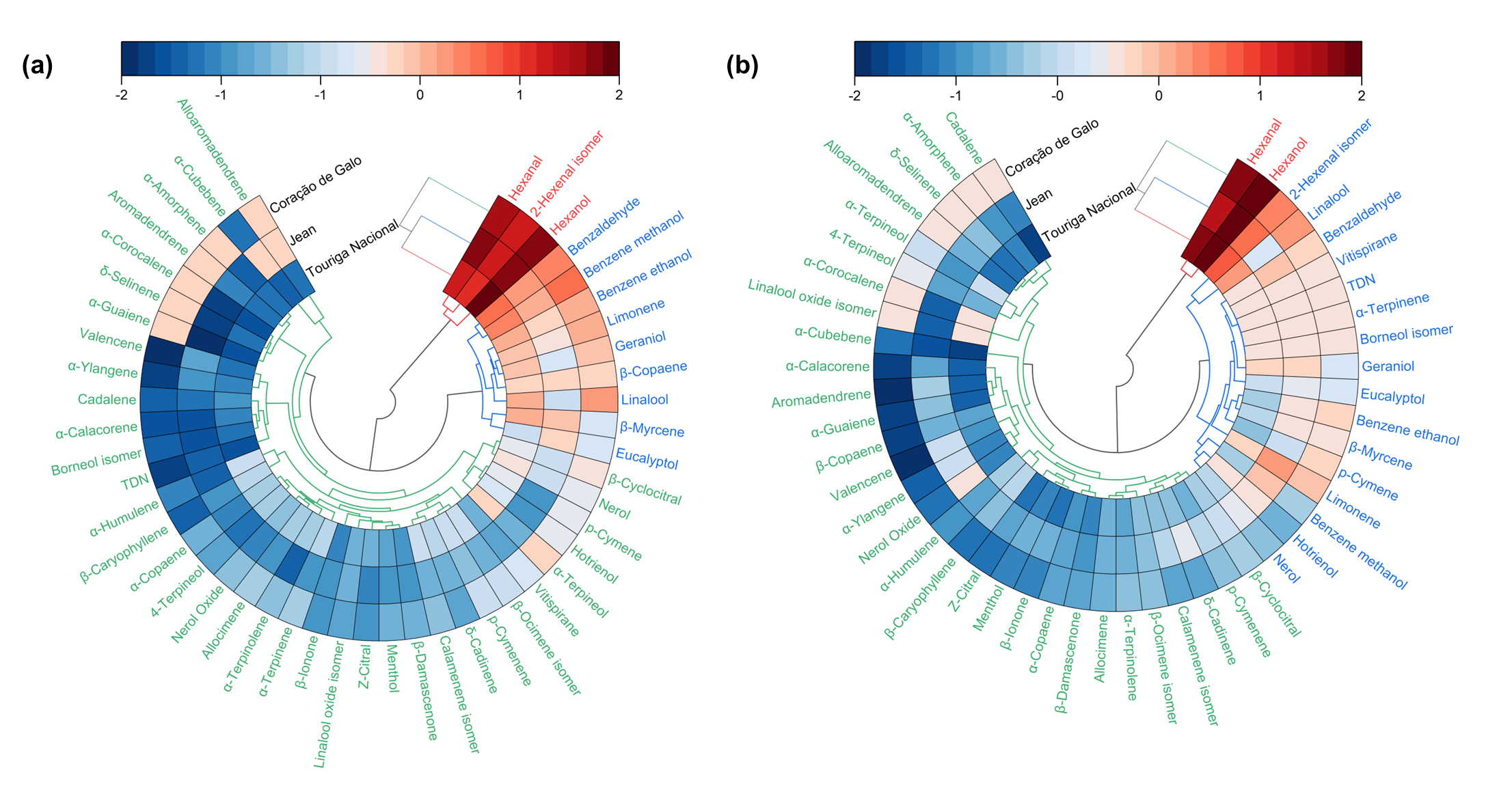
Figure 3. Polar heatmaps of red grape varieties studied for 2023 (a) and 2024 (b).
Conclusions
The volatile composition of the Portuguese Vitis vinifera varieties studied was predominantly associated with grape variety, with year contributing to variations in specific volatile families depending on the variety. White varieties demonstrated notable inter‑annual variability in their varietal aroma potential index, reflecting differential accumulation of glycosylated precursors under contrasting climatic conditions. In contrast, red varieties displayed a more stable precursor pool across years.
Individual volatile composition in white varieties was mainly driven by inherent varietal traits, particularly for terpenes and C13 norisoprenoids, while year effects were more evident for C6 compounds and benzenoids. However, for the red grape varieties studied, the interplay between genetics and climate was more pronounced, with strong year × variety interactions shaping terpenes and C13 norisoprenoids. Distinctive varietal signatures were observed for C6 compounds, and benzenoids displayed changes predominantly linked to year.
All these findings reinforce the distinctive aromatic potential of Portuguese traditional grape varieties and highlight their potential value as genetic resources for viticulture in the context of future climatic challenges. The differential sensitivity of volatile families and precursor pools to year conditions underscores the need to consider both genetic identity and inter‑annual climatic variability when optimising vineyard management and valorising typicity in wines produced, particularly in the Dão wine region.
Acknowledgements
This research received support from the project "Vine&Wine – Driving Sustainable Growth Through Smart Innovation" (no. C644866286-011, sub-project BioGrapeSustain), within the scope of the Mobilising Agendas for Business Innovation program under the Recovery and Resilience Plan. The authors acknowledge the R&D unit MED – Mediterranean Institute for Agriculture, Environment and Development (https://doi.org/10.54499/UID/05183/2025) and the Associate Laboratory CHANGE – Global Change and Sustainability Institute (https://doi.org/10.54499/LA/P/0121/2020). Furthermore, we would like to thank the CERNAS Research Centre and the Polytechnic Institute of Viseu for their support.
References
- Alifragkis, A., Cunha, J., Pereira, J., Fevereiro, P., & Eiras Dias, J. E. J. (2015). Identity, synonymies and homonymies of minor grapevine cultivars maintained in the Portuguese ampelographic collection. Ciência e Técnica Vitivinícola, 30(1), 43–52. https://doi.org/10.1051/ctv/20153001043
- Allen, R. G., Pereira, L., Raes, D., & Smith, M. (Eds.). (1998). Crop evapotranspiration: Guidelines for computing crop water requirements (repr). Food and Agriculture Organization of the United Nations.
- Allen, R. G., Pruitt, W. O., Wright, J. L., Howell, T. A., Ventura, F., Snyder, R., Itenfisu, D., Steduto, P., Berengena, J., Yrisarry, J. B., Smith, M., Pereira, L. S., Raes, D., Perrier, A., Alves, I., Walter, I., & Elliott, R. (2006). A recommendation on standardized surface resistance for hourly calculation of reference ETo by the FAO56 Penman-Monteith method. Agricultural Water Management, 81(1), 1–22. https://doi.org/10.1016/j.agwat.2005.03.007
- Antolín, M. C., Toledo, M., Pascual, I., Irigoyen, J. J., & Goicoechea, N. (2020). The Exploitation of Local Vitis vinifera L. Biodiversity as a Valuable Tool to Cope with Climate Change Maintaining Berry Quality. Plants, 10(1). https://doi.org/10.3390/plants10010071
- Asproudi, A., Bonello, F., Ragkousi, V., Gianotti, S., & Petrozziello, M. (2023). Aroma precursors of Grignolino grapes (Vitis vinifera L.) and their modulation by vintage in a climate change scenario. Frontiers in Plant Science, 14, 1179111. https://doi.org/10.3389/fpls.2023.1179111
- Asproudi, A., Petrozziello, M., Cavalletto, S., & Guidoni, S. (2016). Grape aroma precursors in cv. Nebbiolo as affected by vine microclimate. Food Chemistry, 211, 947–956. https://doi.org/10.1016/j.foodchem.2016.05.070
- Bigard, A., Romieu, C., Ojeda, H., & Torregrosa, L. J.-M. (2022). The sugarless grape trait characterised by single berry phenotyping. OENO One, 56(3), 89–102. https://doi.org/10.20870/oeno-one.2022.56.3.5495
- Brazão, J., Sun, B., Caldeira, I., Baeta, F., Amaral, J., & Eiras-Dias, J. (2023). WINES CARACTERISATION OF EIGHT MINORITY PORTUGUESE GRAPEVINE VARIETIES. Ciencia e Tecnica Vitivinicola, 38(1), 21–34. Scopus. https://doi.org/10.1051/ctv/ctv20233801021
- Cabrita, M. J., Costa Freitas, A. M., Laureano, O., & Di Stefano, R. (2006). Glycosidic aroma compounds of some Portuguese grape cultivars. Journal of the Science of Food and Agriculture, 86(6), 922–931. https://doi.org/10.1002/jsfa.2439
- Caldeira, I., Roque, R., Anjos, O., Lourenço, S., De Deus, J., Damásio, M., & Silvestre, J. (2025). Potential of Different Eighteen Grapevine Genotypes to Produce Wines in a Hot Region: First Insights into Volatile and Sensory Profiles. Beverages, 11(3), 68. https://doi.org/10.3390/beverages11030068
- Campayo, A., Hoz, K. S. de la, García-Martínez, M. M., Salinas, M. R., & Alonso, G. L. (2020). Spraying Ozonated Water on Bobal Grapevines: Effect on Wine Quality. Biomolecules, 10(2), 213. https://doi.org/10.3390/biom10020213
- Cebrián-Tarancón, C., Serrano, A. S., Chacón-Vozmediano, J. L., Martínez-Gascueña, J., & Alonso, G. (2024). Volatile Characterization of Recovery Minority Grape Varieties from Castilla-La Mancha Region (Spain). Plants, 13(11), Article 11. https://doi.org/10.3390/plants13111507
- Chigo-Hernandez, M. M., & Tomasino, E. (2023). Aroma Perception of Limonene, Linalool and α-Terpineol Combinations in Pinot Gris Wine. Foods, 12(12), 2389. https://doi.org/10.3390/foods12122389
- Coelho, E., Rocha, S. M., Delgadillo, I., & Coimbra, M. A. (2006). Headspace-SPME applied to varietal volatile components evolution during Vitis vinifera L. cv. ‘Baga’ ripening. Analytica Chimica Acta, 563(1–2), 204–214. https://doi.org/10.1016/j.aca.2005.11.018
- Cosme, F., Ricardo-da-Silva, J., & Laureano, O. (2009). Effect of Various Proteins on Different Molecular Weight Proanthocyanidin Fractions of Red Wine during Wine Fining. American Journal of Enology and Viticulture, 60, 74–81. https://doi.org/10.5344/ajev.2009.60.1.74
- Costa, E., da Silva, J. F., Cosme, F., & Jordão, A. M. (2015). Adaptability of some French red grape varieties cultivated at two different Portuguese terroirs: Comparative analysis with two Portuguese red grape varieties using physicochemical and phenolic parameters. Food Research International, 78, 302–312. https://doi.org/10.1016/j.foodres.2015.09.029
- Deis, L., Martínez, L., Costa, B. S. da, & Vilanova, M. (2024). The Influence of Climatic Conditions Associated with Altitude on the Volatile Composition of Cabernet Sauvignon Wines from Argentina, Spain and Portugal. Horticulturae, 10(8), 870. https://doi.org/10.3390/horticulturae10080870
- Deluc, L. G., Quilici, D. R., Decendit, A., Grimplet, J., Wheatley, M. D., Schlauch, K. A., Mérillon, J.-M., Cushman, J. C., & Cramer, G. R. (2009). Water deficit alters differentially metabolic pathways affecting important flavor and quality traits in grape berries of Cabernet Sauvignon and Chardonnay. BMC Genomics, 10, 212. https://doi.org/10.1186/1471-2164-10-212
- Díaz-Fernández, Á., Díaz-Losada, E., & Cortés-Diéguez, S. (2022). Diversity among Traditional Minority Red Grape Varieties According to Their Aromatic Profile. Agronomy, 12(8), 1799. https://doi.org/10.3390/agronomy12081799
- D’Onofrio, C., Matarese, F., & Cuzzola, A. (2017). Study of the terpene profile at harvest and during berry development of Vitis vinifera L. aromatic varieties Aleatico, Brachetto, Malvasia di Candia aromatica and Moscato bianco. Journal of the Science of Food and Agriculture, 97(9), 2898–2907. https://doi.org/10.1002/jsfa.8126
- Espinosa-Roldán, F. E., García-Díaz, A., Raboso, E., Crespo, J., Cabello, F., Toda, F. M. de, & Muñoz-Organero, G. (2024). Phenological Evaluation of Minority Grape Varieties in the Wine Region of Madrid as a Strategy for Adaptation to Climate Change. Horticulturae, 10(4), 353. https://doi.org/10.3390/horticulturae10040353
- Fenoll, J., Martínez, M.-C., Hellín, P., & Flores, P. (2012). Changes of free and glycosidically bound monoterpenes and aromatic alcohols in Moscatuel and Ruby Seedless table grapes during development. OENO One, 46(1), 41. https://doi.org/10.20870/oeno-one.2012.46.1.1505
- Ferreira, V., & Lopez, R. (2019). The Actual and Potential Aroma of Winemaking Grapes. Biomolecules, 9(12), 818. https://doi.org/10.3390/biom9120818
- Fonseca, D., Martins, N., Garcia, R., & Cabrita, M. J. (2024). Comprehensive Two-Dimensional Gas Chromatography with a TOF MS Detector—An Effective Tool to Trace the Signature of Grape Varieties. Molecules, 29(9), 1989. https://doi.org/10.3390/molecules29091989
- Fonseca, D., Martins, N., Garcia, R., & Cabrita, M. J. (2025). The potential of enzymatic hydrolysis with HS-SPME-GC×GC-ToFMS for the study of volatile signature of grapes. LWT, 215, 117314. https://doi.org/10.1016/j.lwt.2024.117314
- Fonseca, D., Martins, N., Garcia, R., & Cabrita, M. J. (2026). GC×GC–TOFMS with flow modulation for fingerprinting volatile compounds in Portuguese grape varieties. Microchemical Journal, 227, 118754. https://doi.org/10.1016/j.microc.2026.118754
- García-Carpintero, E. G., Sánchez-Palomo, E., Gallego, M. A. G., & González-Viñas, M. A. (2011). Volatile and sensory characterization of red wines from cv. Moravia Agria minority grape variety cultivated in La Mancha region over five consecutive vintages. Food Research International, 44(5), 1549–1560. https://doi.org/10.1016/j.foodres.2011.04.022
- Genisheva, Z., & Oliveira, J. M. (2009). Monoterpenic Characterization of White Cultivars from Vinhos Verdes Appellation of Origin (North Portugal). Journal of the Institute of Brewing, 115(4), 308–317. https://doi.org/10.1002/j.2050-0416.2009.tb00386.x
- Genovese, A., Piombino, P., Lisanti, M. T., & Moio, L. (2005). Occurrence of Furaneol (4-Hydroxy-2,5-Dimethyl-3(2H)-Furanone) in Some Wines from Italian Native Grapes. Annali Di Chimica, 95, 415–419. https://doi.org/10.1002/adic.200590048
- González-Barreiro, C., Rial-Otero, R., Cancho-Grande, B., & Simal-Gándara, J. (2015). Wine aroma compounds in grapes: A critical review. Critical Reviews in Food Science and Nutrition, 55(2), 202–218. https://doi.org/10.1080/10408398.2011.650336
- Hall, A., & Jones, G. V. (2010). Spatial analysis of climate in winegrape-growing regions in Australia: Climate in winegrape growing regions in Australia. Australian Journal of Grape and Wine Research, 16(3), 389–404. https://doi.org/10.1111/j.1755-0238.2010.00100.x
- Hutchings, S. C., Deb‐Choudhury, S., Subbaraj, A. K., Guerrero, L., Torrico, D. D., Ham, E. E., & Realini, C. E. (2025). Characterizing the odor of New Zealand native plants using sensory analysis and gas chromatography–mass spectrometry. Journal of Food Science, 90(2), e70050. https://doi.org/10.1111/1750-3841.70050
- Jahnke, G., Szőke, B. Á., Steckl, S., Szövényi, Á. P., Szigeti, G. K., Németh, C., Jenei, B. G., & Sárdy, D. Á. N. (2023). Delay in the Ripening of Wine Grapes: Effects of Specific Phytotechnical Methods on Harvest Parameters. Agronomy, 13(8), 1963. https://doi.org/10.3390/agronomy13081963
- Jordão, A., Ricardo, J., Ricardo-da-Silva, J., & Laureano, O. (1998). Evolution of anthocyanins during grape maturation of two varieties (Vitis vinifera L.), Castelão Frances and Touriga Francesa. Vitis, 37(2), 93–94. http://www.scopus.com/inward/record.url?eid=2-s2.0-0031850211&partnerID=MN8TOARS
- Jordão, A. M., Correia, A. C., Martins, B., Romão, A., & Oliveira, B. (2024). General Physicochemical Parameters, Phenolic Composition, and Varietal Aromatic Potential of Three Red Vitis vinifera Varieties (“Merlot”, Syrah”, and “Saborinho”) Cultivated on Pico Island—Azores Archipelago. International Journal of Plant Biology, 15(4), 1369–1390. https://doi.org/10.3390/ijpb15040095
- Kalua, C. M., & Boss, P. K. (2010). Comparison of major volatile compounds from Riesling and Cabernet Sauvignon grapes (Vitis vinifera L.) from fruitset to harvest: Volatile compounds cultivar comparison. Australian Journal of Grape and Wine Research, 16(2), 337–348. https://doi.org/10.1111/j.1755-0238.2010.00096.x
- Karimali, D., Kosma, I., & Badeka, A. (2020). Varietal classification of red wine samples from four native Greek grape varieties based on volatile compound analysis, color parameters and phenolic composition. European Food Research and Technology, 246(1), 41–53. https://doi.org/10.1007/s00217-019-03398-7
- Könen, P. P., & Wüst, M. (2019). Analysis of sesquiterpene hydrocarbons in grape berry exocarp (Vitis vinifera L.) using in vivo-labeling and comprehensive two-dimensional gas chromatography–mass spectrometry (GC×GC–MS). Beilstein Journal of Organic Chemistry, 15, 1945–1961. https://doi.org/10.3762/bjoc.15.190
- Könen, P. P., & Wüst, M. (2020). Dissecting Sesquiterpene Profiles of Lemberger Red Wines Using Ex Vivo Tissue Deuterium-Labeling and Comprehensive Two-Dimensional Gas Chromatography–Time-of-Flight–Mass Spectrometry. Journal of Agricultural and Food Chemistry, 68(33), 8936–8941. https://doi.org/10.1021/acs.jafc.0c03273
- Koufos, G. C., Mavromatis, T., Koundouras, S., & Jones, G. V. (2020). Adaptive capacity of winegrape varieties cultivated in Greece to climate change: Current trends and future projections. OENO One, 54(4), 1201–1219. https://doi.org/10.20870/oeno-one.2020.54.4.3129
- Lu, H.-C., Chen, W.-K., Wang, Y., Bai, X.-J., Cheng, G., Duan, C.-Q., Wang, J., & He, F. (2022). Effect of the Seasonal Climatic Variations on the Accumulation of Fruit Volatiles in Four Grape Varieties Under the Double Cropping System. Frontiers in Plant Science, 12. https://doi.org/10.3389/fpls.2021.809558
- Luo, J., Brotchie, J., Pang, M., Marriott, P. J., Howell, K., & Zhang, P. (2019). Dataset of concentrations of free terpenes at different phenological stages in Vitis vinifera L. Shiraz, Cabernet Sauvignon, Riesling, Chardonnay and Pinot Gris. Data in Brief, 27, 104595. https://doi.org/10.1016/j.dib.2019.104595
- Mateus, N., Machado, J. M., & de Freitas, V. (2002). Development changes of anthocyanins in Vitis vinifera grapes grown in the Douro Valley and concentration in respective wines. Journal of the Science of Food and Agriculture, 82(14), 1689–1695. https://doi.org/10.1002/jsfa.1237
- Mosaferi, S., Jelley, R. E., Fedrizzi, B., & Barker, D. (2020). Scalable synthesis of the aroma compounds d6-β-ionone and d6-β-cyclocitral for use as internal standards in stable isotope dilution assays. Tetrahedron Letters, 61(51), 152642. https://doi.org/10.1016/j.tetlet.2020.152642
- Muñoz-Organero, G., Espinosa, F. E., Cabello, F., Zamorano, J. P., Urbanos, M. A., Puertas, B., Lara, M., Domingo, C., Puig-Pujol, A., Valdés, M. E., Moreno, D., Diaz-Losada, E., Martínez, M. C., Santiago, J. L., Cibriain, J. F., Raboso, E., & Fernández-Pastor, M. (2022). Phenological Study of 53 Spanish Minority Grape Varieties to Search for Adaptation of Vitiviniculture to Climate Change Conditions. Horticulturae, 8(11), 984. https://doi.org/10.3390/horticulturae8110984
- OIV. (2018). Compendium of International Methods of Analysis of Wines and Musts. OIV. http://www.oiv.int/en/normes-etdocumentstechniques/methodes-danalyse/recueil-des-methodesinternationales-danalyse-des-vins-et-des-mouts-2-vol
- Oliveira, J. M., Araújo, I. M., Pereira, Ó. M., Maia, J. S., Amaral, A. J., & Odete Maia, M. (2004). Characterization and differentiation of five “Vinhos Verdes" grape varieties on the basis of monoterpenic compounds. Analytica Chimica Acta, Papers Presented at the 3rd Symposium In Vino Analytica Scientia Aveiro, Portugal, 10-12 July 2003, 513(1), 269–275. https://doi.org/10.1016/j.aca.2003.10.020
- Palliotti, A., Tombesi, S., Silvestroni, O., Lanari, V., Gatti, M., & Poni, S. (2014). Changes in vineyard establishment and canopy management urged by earlier climate-related grape ripening: A review. Scientia Horticulturae, 178, 43–54. https://doi.org/10.1016/j.scienta.2014.07.039
- Pardo-García, A. I., de la Hoz, K. S., Zalacain, A., Alonso, G. L., & Salinas, M. R. (2014). Effect of vine foliar treatments on the varietal aroma of Monastrell wines. Food Chemistry, 163, 258–266. https://doi.org/10.1016/j.foodchem.2014.04.100
- Parker, A. K., Cortázar-Atauri, I. G. de, Trought, M. C. T., Destrac, A., Agnew, R., Sturman, A., & Leeuwen, C. van. (2020). Adaptation to climate change by determining grapevine cultivar differences using temperature-based phenology models: This article is published in cooperation with the XIIIth International Terroir Congress November 17-18 2020, Adelaide, Australia. Guest editors: Cassandra Collins and Roberta De Bei. OENO One, 54(4), 955–974. https://doi.org/10.20870/oeno-one.2020.54.4.3861
- Perestrelo, R., Barros, A. S., Rocha, S. M., & Câmara, J. S. (2014). Establishment of the varietal profile of Vitis vinifera L. grape varieties from different geographical regions based on HS-SPME/GC–qMS combined with chemometric tools. Microchemical Journal, 116, 107–117. https://doi.org/10.1016/j.microc.2014.04.010
- Perestrelo, R., Petronilho, S., Câmara, J. S., & Rocha, S. M. (2010). Comprehensive two-dimensional gas chromatography with time-of-flight mass spectrometry combined with solid phase microextraction as a powerful tool for quantification of ethyl carbamate in fortified wines. The case study of Madeira wine. Journal of Chromatography. A, 1217(20), 3441–3445. https://doi.org/10.1016/j.chroma.2010.03.027
- Piras, S., Brazão, J., Ricardo-da-Silva, J. M., Anjos, O., & Caldeira, I. (2020). Volatile and sensory characterization of white wines from three minority Portuguese grapevine varieties. Ciência e Técnica Vitivinícola, 35(1), 49–62. https://doi.org/10.1051/ctv/20203501049
- Plavša, T., Bubola, M., Jeromel, A., Tomaz, I., & Krapac, M. (2025). Exploring the Potential of Indigenous Grape Varieties for Sparkling Wine Production in the Hrvatska Istra Subregion (Croatia). Beverages, 11(3), 78. https://doi.org/10.3390/beverages11030078
- Portu, J., Baroja, E., Rivacoba, L., Ibáñez, S., & Tello, J. (2025). Exploring the intra-varietal diversity in ‘Graciano’, a minority grapevine cultivar with adaptive capacity to climate change. Journal of Agriculture and Food Research, 22, 102147. https://doi.org/10.1016/j.jafr.2025.102147
- Qian, X., Sun, L., Xu, X.-Q., Zhu, B.-Q., & Xu, H.-Y. (2017). Differential Expression of VvLOXA Diversifies C6 Volatile Profiles in Some Vitis vinifera Table Grape Cultivars. International Journal of Molecular Sciences, 18(12), 2705. https://doi.org/10.3390/ijms18122705
- Ramos, M. C., & Martínez de Toda, F. (2021). Interannual and spatial variability of grape composition in the Rioja DOCa show better resilience of cv. Graciano than cv. Tempranillo under a warming scenario. OENO One, 55(3), 85–100. https://doi.org/10.20870/oeno-one.2021.55.3.4695
- Riou, Ch., Becker, N., Sotes Ruiz, V., Gomez Miguel, V., Carbonneau, A., Panagiotou, M., Calo, A., Costacurta, A., Castro de, R., Pinto, A., Lopes, C., Carneiro, L., & Climaco, P. (1994). Le déterminisme climatique de la maturation du raisin: Application au zonage de la teneur em sucre dans la communauté européenne (p. 322). Office des Publications Officielles des Communautés Européennes.
- Robinson, A. L., Boss, P. K., Solomon, P. S., Trengove, R. D., Heymann, H., & Ebeler, S. E. (2014). Origins of Grape and Wine Aroma. Part 1. Chemical Components and Viticultural Impacts. American Journal of Enology and Viticulture, 65(1), 1–24. https://doi.org/10.5344/ajev.2013.12070
- Rocha, M. A. M., Coimbra, M. A., Rocha, S. M., & Nunes, C. (2021). Impact of Chitosan-Genipin Films on Volatile Profile of Wine along Storage. Applied Sciences, 11(14), 6294. https://doi.org/10.3390/app11146294
- Rocha, S., Coutinho, P., Barros, A., Coimbra, M. A., Delgadillo, I., & Dias Cardoso, A. (2000). Aroma Potential of Two Bairrada White Grape Varieties: Maria Gomes and Bical. Journal of Agricultural and Food Chemistry, 48(10), 4802–4807. https://doi.org/10.1021/jf000175s
- Rocha, S. M., Coelho, E., Zrostlíková, J., Delgadillo, I., & Coimbra, M. A. (2007). Comprehensive two-dimensional gas chromatography with time-of-flight mass spectrometry of monoterpenoids as a powerful tool for grape origin traceability. Journal of Chromatography. A, 1161(1–2), 292–299. https://doi.org/10.1016/j.chroma.2007.05.093
- Rodrigues, P., Pedroso, V., Gonçalves, F., Reis, S., & Santos, J. A. (2021). Temperature-Based Grapevine Ripeness Modeling for cv. Touriga Nacional and Encruzado in the Dão Wine Region, Portugal. Agronomy, 11(9), 1777. https://doi.org/10.3390/agronomy11091777
- Rodrigues, P., Pedroso, V., Gouveia, J. P., Martins, S., Lopes, C., & Alves, I. (2012). Influence of soil water content and atmospheric conditions on leaf water potential in cv. “Touriga Nacional” deep-rooted vineyards. Irrigation Science, 30(5), 407–417. https://doi.org/10.1007/s00271-012-0350-4
- Rouxinol, M. I., Martins, M. R., Salgueiro, V., Costa, M. J., Barroso, J. M., & Rato, A. E. (2023). Climate Effect on Morphological Traits and Polyphenolic Composition of Red Wine Grapes of Vitis vinifera. Beverages, 9(1), Article 1. https://doi.org/10.3390/beverages9010008
- Rubio-Bretón, P., Salinas, M. R., Nevares, I., Pérez-Álvarez, E. P., Álamo-Sanza, M. D., Marín-San Román, S., Alonso, G. L., & Garde-Cerdán, T. (2019). Recent Advances in the Study of Grape and Wine Volatile Composition: Varietal, Fermentative, and Aging Aroma Compounds. In M. Bordiga & L. M. L. Nollet, Food Aroma Evolution (1st ed., pp. 439–463). CRC Press. https://doi.org/10.1201/9780429441837-22
- Salinas, M. R., de la Hoz, K. S., Zalacain, A., Lara, J. F., & Garde-Cerdán, T. (2012). Analysis of red grape glycosidic aroma precursors by glycosyl glucose quantification. Talanta, 89, 396–400. https://doi.org/10.1016/j.talanta.2011.12.050
- Sargolzaei, M., Maddalena, G., Bitsadze, N., Maghradze, D., Bianco, P. A., Failla, O., Toffolatti, S. L., & De Lorenzis, G. (2020). Rpv29, Rpv30 and Rpv31: Three Novel Genomic Loci Associated With Resistance to Plasmopara viticola in Vitis vinifera. Frontiers in Plant Science, 11, 562432. https://doi.org/10.3389/fpls.2020.562432
- Serrano Parra, A. S., Gascueña, J. M., Alonso, G. L., Tarancón, C. C., Morales, A. M., & Vozmediano, J. L. C. (2024). Exploring intra-specific variability as an adaptive strategy to climate change: Response of 21 grapevine cultivars grown under drought conditions. OENO One, 58(3), 8123. https://doi.org/10.20870/oeno-one.2024.58.3.8123
- Šikuten, I., Štambuk, P., Marković, Z., Tomaz, I., & Preiner, D. (2025). Grape volatile organic compounds: Analysis, biosynthesis, and profiling. Journal of Experimental Botany, 76(11), 3016–3037. https://doi.org/10.1093/jxb/eraf082
- Šikuten, I., Štambuk, P., Tomaz, I., Marchal, C., Kontić, J. K., Lacombe, T., Maletić, E., & Preiner, D. (2022). Discrimination of genetic and geographical groups of grape varieties (Vitis vinifera L.) based on their volatile organic compounds. Frontiers in Plant Science, 13. https://doi.org/10.3389/fpls.2022.942148
- Slaghenaufi, D., Vanzo, L., Luzzini, G., Arapitsas, P., Marangon, M., Curioni, A., Mattivi, F., Piombino, P., Moio, L., Versari, A., Ricci, A., Rio Segade, S., Rolle, L., & Ugliano, M. (2022). Monoterpenoids and norisoprenoids in Italian red wines: This article is published in cooperation with Macrowine 2021, 23-30 June 2021. OENO One, 56(3), 185–193. https://doi.org/10.20870/oeno-one.2022.56.3.5387
- Stanus, M., Dobrei, A. G., Nistor, E., Cristea, T., Tac, A. I., & Dobrei, A. (2024). The local grapevine varieties – a source of typicity, authenticity, and adaptability, within the framework of sustainable viticultural technologies. Scientific Papers. Series B, Horticulture, LXVIII(2), 361–372.
- Tonietto, J., & Carbonneau, A. (2004). A multicriteria climatic classification system for grape-growing regions worldwide. Agricultural and Forest Meteorology, 124(1–2), 81–97. https://doi.org/10.1016/j.agrformet.2003.06.001
- van Leeuwen, C. van, Destrac-Irvine, A., Gowdy, M., Farris, L., Pieri, P., Marolleau, L., & Gambetta, G. A. (2023). An operational model for capturing grape ripening dynamics to support harvest decisions: This article is published in cooperation with the 22nd GiESCO International Meeting, hosted by Cornell University in Ithaca, NY, July 17-21, 2023. OENO One, 57(2), 505–522. https://doi.org/10.20870/oeno-one.2023.57.2.7399
- Vilanova, M., Campo, E., Escudero, A., Graña, M., Masa, A., & Cacho, J. (2012). Volatile composition and sensory properties of Vitis vinifera red cultivars from North West Spain: Correlation between sensory and instrumental analysis. Analytica Chimica Acta, 720, 104–111. https://doi.org/10.1016/j.aca.2012.01.026
- Vilanova, M., Genisheva, Z., Masa, A., & Oliveira, J. M. (2010). Correlation between volatile composition and sensory properties in Spanish Albariño wines. Microchemical Journal, 95(2), 240–246. https://doi.org/10.1016/j.microc.2009.12.007
- Vilanova, M., Genisheva, Z. A., Graña, M., & Oliveira, J. M. (2013). Determination of odorants in varietal wines from international grape cultivars (Vitis vinifera) grown in NW Spain. https://hdl.handle.net/1822/32118
- Volynkin, V., Polulyakh, A., Levchenko, S., Vasylyk, I., & Likhovskoi, V. (2019). Autochthonous grape species, varieties and cultivars of Crimea. Acta Horticulturae, 91–98. https://doi.org/10.17660/ActaHortic.2019.1259.16
- Wolkovich, E. M., García De Cortázar-Atauri, I., Morales-Castilla, I., Nicholas, K. A., & Lacombe, T. (2018). From Pinot to Xinomavro in the world’s future wine-growing regions. Nature Climate Change, 8(1), 29–37. https://doi.org/10.1038/s41558-017-0016-6
- Wu, Y., Zhang, W., Yu, W., Zhao, L., Song, S., Xu, W., Zhang, C., Ma, C., Wang, L., & Wang, S. (2019). Study on the volatile composition of table grapes of three aroma types. LWT, 115, 108450. https://doi.org/10.1016/j.lwt.2019.108450
- Xie, S., Tang, Y., Wang, P., Song, C., Duan, B., Zhang, Z., & Meng, J. (2018). Influence of natural variation in berry size on the volatile profiles of Vitis vinifera L. cv. Merlot and Cabernet Gernischt grapes. PLOS ONE, 13(9), e0201374. https://doi.org/10.1371/journal.pone.0201374
- Zhan, Z., Gao, Y., Chen, Y., Xu, M., Wang, H., Cheng, J., & Zhang, B. (2025). Comprehensive metabolomic profiling of aroma-related volatiles in table grape cultivars across developmental stages. Food Quality and Safety, 9, fyaf013. https://doi.org/10.1093/fqsafe/fyaf013
- Zoecklein, W. B., Fugelsang, K. C., Gump, H. B., & Nury, S. F. (Eds.). (1995). Wine analysis and production. The Chapman & Hall. https://doi.org/10.1007/978-1-4757-6978-4
 Views: 389
 XML: 44