

VITICULTURE / Original research article
Abstract
The training system plays a key role in viticulture, influencing canopy structure, yield, grape and wine composition. This study evaluated the impact of vertical shoot positioning-VSP and foldable lyre training systems set at 20°, 30°, and 40° angles, on the production and biochemical profiles of ‘Merlot’ grapes at Serra Gaúcha, southern Brazil. The experiment was conducted in an experimental vineyard planted in 2018, using cv. Merlot clone 181 grafted onto ‘Paulsen 1103’ rootstock, spaced 3.2 m between rows and 1.5 m between plants, trained in a double spur-pruned cordon system. A randomised complete block design was adopted, evaluating four training systems and two consecutive seasons. The variables analysed included number of shoots and bunches, percentage of budburst and production per vine, leaf area, leaf area-to-production ratio, accumulated photosynthetic photon flux density in the bunch zone, pH, soluble solids, titratable acidity, and phenolic composition of grapes determined by UPLC/MS. In general, the foldable lyre system increased vine leaf area, and production up to 50% as compared to Vertical Shoot Positioning-VSP, without significant changes in pH, soluble solids, or titratable acidity. Shoot and bunch number, sunlight exposure, and phenolic content were impacted, increasing the amounts of some anthocyanins, flavonols, flavononols, stilbenes, and flavanols and procyanidins on grapes. Overall, the foldable lyre system outperformed VSP, enhancing production and some important phenolic composition in grapes. PCA applied on phenolic compound data showed that vintage was the main factor influencing grape composition, as compared to training system. But when phenolic profiles were evaluated in individual vintages, grapes were strongly impacted by training system, showing different profiles. Therefore, foldable lyre system can be recommended as alternative for ‘Merlot’ grape production in the Serra Gaúcha region, thinking in a sustainable viticulture.
Introduction
The grapevine (Vitis vinifera L.) is one of the most important fruit crops globally, with Europe playing a central role in global viticulture and wine production (Alston & Sambucci, 2019; OIV, 2024). In Brazil, the State of Rio Grande do Sul stands out as the principal region for grape cultivation and wine production. The Serra Gaúcha is the most traditional and representative wine-producing region in Rio Grande do Sul, and ‘Merlot’ stands out as the main cultivar in the Denomination of Origin “Vale dos Vinhedos” (Ibravin, 2016; Mattos Rocha et al., 2022; Susin et al., 2022; Protas et al., 2026).
The expression of a cultivar’s potential is, however, intrinsically linked to vineyard management across all viticultural regions (Reynolds & Vanden Heuvel, 2009; van Leeuwen et al., 2024). In this context, the choice of a specific training system is essential for successful viticulture, particularly in the context of climate change. A training system influences vine productivity and alters the canopy microclimate, so it is a key factor in determining the suitability of grape varieties in a specific growing region (van Leeuwen et al., 2004; Yu et al., 2022; Han et al., 2022; Zohar et al., 2024). Such structural modifications have been shown to impact grape composition and directly influence the biosynthesis of phenolic compounds in grapes (Reynolds & Vanden Heuvel, 2009; González-Neves et al., 2008; Ferrer et al., 2008; Kyraleou et al., 2015; Domingues Neto et al., 2024).
These compounds are key to grape and wine quality, providing health benefits due to their antioxidant and anti-inflammatory properties, in addition to protecting plant tissues from damage caused by abiotic and biotic stresses, such as drought and temperature extremes, and acting as phytoalexins, which are synthesised in response to a pathogen attack (Teissedre et al., 2018; Viret et al., 2018; Hornedo-Ortega et al., 2021; Rao et al., 2025).
The development and adaptation of training systems have led to major advances in viticulture worldwide. Among these, vertical shoot positioning (VSP) is the most widely adopted training system worldwide; however, it typically shows lower productivity than divided canopy systems (Kyraleou et al., 2015; Marcon et al., 2020; Zohar et al., 2024; Campos et al., 2026). Studies demonstrate that divided canopy systems improve fruit composition and subsequent wine quality (Zoecklein et al., 2008; Vilanova et al., 2017).
The traditional lyre training system has been shown to enhance vine productivity while preserving oenological potential and improving vineyard management; however, this system features a fixed canopy opening angle (Carbonneau et al., 2004; Carbonneau et al., 2007; Ferrer et al., 2008; Palliotti, 2011; Filho et al., 2017). Based on these benefits, the foldable lyre concept is being developed in Brazil. This allows the canopy angle to be dynamically adjusted to suit specific vine management and regional conditions.
In terms of canopy architecture, it is hypothesised that choosing the foldable lyre training system, shifting from the fixed aperture of traditional systems to a dynamic adjustment, rather than the traditional vertical shoot positioning system, would effectively improve vine performance while maintaining fruit quality at the same plant density. In this context, this study aimed to evaluate the effects of the training system, among VSP and foldable lyre set at different angles (20°, 30°, and 40°), on vine productivity and biochemical profile of ‘Merlot’ grapes at Serra Gaúcha, Southern Brazil.
Materials and methods
1. Location of the experimental area and meteorological data
The experiment was conducted in an experimental vineyard located at Embrapa Grape and Wine, in Bento Gonçalves, Rio Grande do Sul State, southern Brazil (29°09’53” S, 51°31’43” W and an altitude of 630 m). The vineyard was established in 2018, using cv. Merlot clone 181, grafted onto ‘Paulsen 1103’ rootstock, spaced 3.2 m between rows and 1.5 m between plants, following a North-South row orientation, in a planting density of 2083 vines per hectare.
The region is mountainous, climatically characterised as Cfb (humid temperate), according to the Köppen classification, without a dry season and an annual average temperature of 17.6 °C (Tonietto & Carbonneau, 2004; Junges & Tonietto, 2022).
The experimental vineyard was established on a homogeneous site with a clay loam soil, composed of 36.3 % clay, 30.0 % sand, and 33.7 % silt (w/w). Soil water availability was uniform at 1.23 mm cm–1, soil pH was 6.5, and organic matter was 5 %.
Meteorological data were collected from an automatic weather station, situated 542 m from the vineyard (Figure 1).
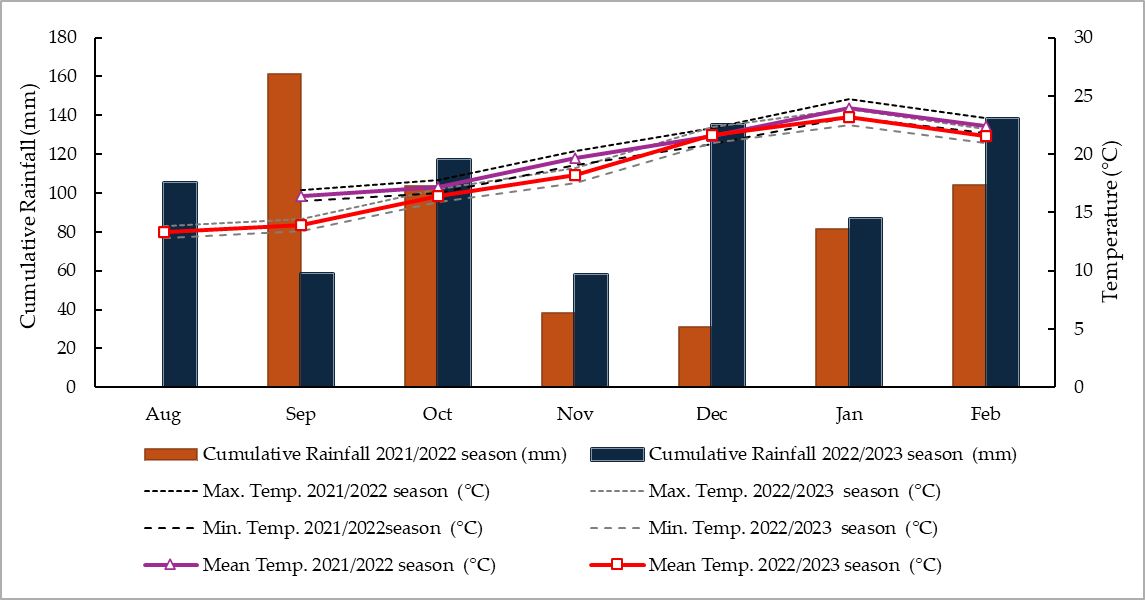
Figure 1. Weather conditions from pruning to harvest during the 2021/2022 and 2022/2023 cycle production of ‘Merlot’ in Serra Gaúcha, Bento Gonçalves, RS, Brazil.
The season 2021/2022 exhibited a higher average temperature (20.2 °C) and lower accumulated rainfall (520.2 mm), characterising a dry cycle, with reduced water availability in the summer due to below-average precipitation in January and February, due to a weak La Niña. In contrast, the 2022/2023 season had a lower average temperature (18.3 °C) and higher rainfall (700.0 mm) but was unevenly distributed. The data correspond to the period from pruning to harvest.
2. Experimental design and treatments
The experiment followed a Randomised Complete Block Design with four replications. In the vineyard layout, each training system was distributed across two non-adjacent 45-metre rows. To eliminate potential interference between rows, such as shading or canopy overlap from the lyre systems, a guard row trained in a VSP system was maintained as a buffer between every treatment row.
Each experimental plot (the experimental unit) consisted of five vines, amounting to 20 vines per training system. Within each plot, the vines located at the boundaries of each replication were treated as border plants to minimise edge effects.
Treatments consisted of four training systems (Figure 2A): Vertical Shoot Positioning (VSP), foldable lyre at 20°, foldable lyre at 30°, and foldable lyre at 40°.
The experiment was carried out during two consecutive vintages, 2021/2022 and 2022/2023 vine growing seasons, in a non-irrigated vineyard, with vines pruned in double spur cordon in all training systems (Figure 2B).
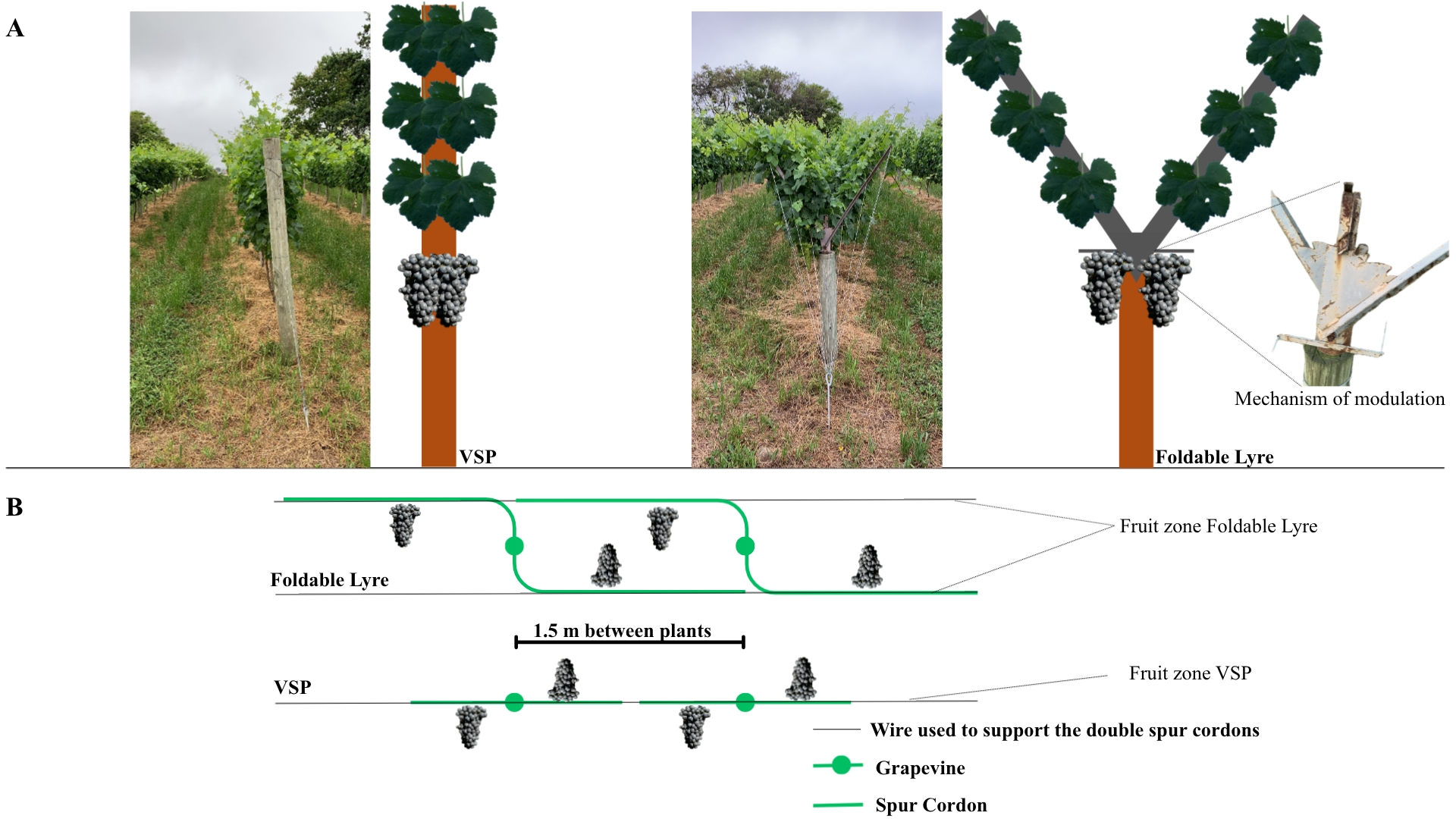
Figure 2. (A) Training Systems: VSP and foldable lyres; (B) Comparison of the spatial configuration of the canopy and cordons of VSP and Foldable Lyres.
The foldable lyre consists of two opposite and oblique canopies through a mechanism of modulation that can adjust the angles (Figure 2A), transforming these systems into a VSP (5º angle). In this study, the foldable lyre remained open throughout the seasons, maintaining the angles defined above. The spatial architecture of the foldable lyre enables a spurred cordon length of 1.5 metres, which is double that of the VSP system (Figure 2B). This is due to the use of two support wires for the spurred cordons, which also permit the establishment of two fruiting zones. At the same planting density, the Lyre system can support a greater bud load (48 buds per m2) than the VSP system (28 buds per m2).
3. Vineyard management
The pruning dates were September 9th, 2021, and August 19th, 2022. Short pruning with 3 buds per spur was adopted in both seasons, with 14 spurs per plant (42 buds) in the VSP system and 24 spurs per plant (72 buds) in the lyres system, evenly distributed along the bilateral cordons. Pruning was followed by the application of 4 % hydrogen cyanamide (Dormex®, BASF, Ludwigshafen am Rhein, Germany) on the same day. The same cultural management was adopted in all the training systems and cycle production.
4. Evaluations
4.1. Determination of photosynthetic photon flux density (PPFD) in the cluster zone
PPFD was measured close to the fruit zone (above, below, east, and west sides), positioning the sensors at a perpendicular angle to the length of the cluster during the ripening period, in January 2021 and 2022. Measurements were performed in two vines per training system, in triplicate, with a line quantum sensor (Apogee SQ-311-SS, Logan, USA; 10 sensors) at 8:00, 10:00, 13:00, 15:00, and 17:00 h. PPFD values were obtained by multiplying the signal (mV–1) by the calibration factor (5 µmol m–2 s–1 mV–1), and the daily mean PPFD was calculated from the instantaneous measurements. Representative vines were selected and marked to ensure measurement consistency and spatial reproducibility, allowing for precise and consistent positioning of the equipment throughout the season.
4.2. Characterisation of the agronomic performance
During the growing season, the budburst percentage was calculated as the ratio of budburst to the number of buds retained at pruning. Leaf area was determined by sampling 75 leaves per training system with a Leaf Area Meter (LI-COR 3100, Lincoln, USA). Canopy leaf area was estimated from the number of shoots per vine, leaves per shoot, and mean leaf area. The leaf area-to-yield ratio was obtained by dividing total leaf area by vine production weight. At harvest, the following variables were assessed: the number of shoots, clusters and production per vine (kg vine–1).
4.3. Grape must composition at harvest
The grapes were harvested according to weather conditions and the evolution of ripening, monitored weekly by measuring soluble solids content, titratable acidity, and pH, as well as tasting skins and seeds.
The samples were collected from both sides of the plant and from different positions in each third, apical, medium, and basal of the cluster to ensure the fruit was sampled at all stages of ripeness and to capture variability within each treatment. Two samples of 50 berries were collected per plot, 10 berries per marked vine. The berries were crushed to extract the must and analysed in duplicate according to the methodology described by OIV (2021). The harvest dates were February 17th, 2022, and February 28th, 2023.
4.4. Determination of phenolic compounds
At harvest, for phenolic composition analysis by UPLC/MS, two samples of 30 berries were collected per plot, 6 berries per marked vine. Extraction of skin + pulp compounds was performed according to the methodology validated in previous studies (Pereira et al., 2005; Pereira et al., 2020; Pereira et al., 2021). Extractions were carried out using 96 % ethanol under cold conditions (5 °C) for 1 hour. The extracts were centrifuged for 15 minutes, and 1.5 mL of samples were dried using a concentrator at 30 °C for 3 hours. The samples were then resuspended using 5 mL of mobile phase, filtered through a 0.45 µm filter and stored in vials.
Analyses were carried out in triplicate per sample, according to the methodology described by Canedo-Reis et al. (2020) with adaptations described in Campos et al. (2024), using a Waters Acquity UPLC system (Milford, MA, USA), equipped with a single quadrupole mass detector (MS), Waters QDa (Milford, MA, USA), with an electrospray ionisation (ESI) source.
The following phenolics compounds were analysed individually: cyanidin 3-O-glucoside, delphinidin 3-O-glucoside, peonidin 3-O-glucoside, petunidin 3-O-glucoside, malvidin 3-O-glucoside, cyanidin 3.5-O-diglucoside, malvidin 3.5-O-diglucoside, catechin, epicatechin, epicatechin gallate, epigallocatechin, epigallocatechin gallate, procyanidin B1, and procyanidin B2, rutin (quercetin-3-O-rutinoside), kaempferol 3-O-glucoside, isoquercetin (quercetin-3-O- glucoside), myricetin 3-O-glucoside, taxifolin, and resveratrol. Quantification was carried out using the standard curve for each individual compound, and the concentration of individual and total phenolic compounds was determined and expressed in mg Kg–1.
5. Statistical analysis
Data were analysed using a two-way ANOVA in a 4 × 2 factorial scheme (training systems × harvest years). As the same vines were evaluated over two consecutive seasons, Levene’s test was used to confirm the homogeneity of variances and validate the subsequent pooled analysis. The statistical model included the fixed effects of training systems (TS), harvest (H), and their interaction (TS × H). The block effect was included to ensure local control and isolate spatial variability from the residual error. This approach enabled a robust evaluation of the stability of the training systems against inter-annual climatic variability. All analyses were performed using Sisvar 6.0 (Ferreira, 2011), and means were compared using a Tukey’s HSD test (p < 0.05). The results are presented as means, and the data dispersion is expressed as standard deviation (SD), which is derived from the model’s residual variance.
Multivariate statistical analysis was performed using principal component analysis (PCA) with Minitab® 19.01 Software (2019), as an exploratory synthesis to characterise the correlations between the variables.
Results and Discussion
1. PPFD in the cluster’s region
No significant interaction (p > 0.05) was detected between training systems and seasons for PPFD in the cluster zone of ‘Merlot’. Thus, comparisons of the main effects were based on the marginal means of each factor (Table 1).
Training system | |||||
VSP | Foldable lyre 20° | Foldable lyre 30° | Foldable lyre 40° | ||
Daily average PPFD (µmol m–2 s–1) | p-value | ||||
§ | 1224.19 ± 86.67 a | 1104.90 ± 78.23 b | 808.26 ± 57.22 c | 821.85 ± 58.19 c | |
TS × H | 0.1536 | ||||
TS | <0.0001 | ||||
H | <0.0001 | ||||
Means followed by different letters indicate a significant difference according to Tukey’s test at 5 % probability. Data are expressed as mean ± standard deviation (n = 4). § No significant interaction (p > 0.05); the main effects were assessed using marginal means of both seasons. PPFD: photosynthetic photon flux density.
Notably, the 30° and 40° lyre training systems provided higher shading in the bunch zone and lower light interception, while the 20° lyre and VSP systems allowed greater solar interception, providing greater cluster exposure. Compared to the VSP system, the Foldable Lyre system showed a 9.74 % reduction in solar interception at 20°, and 33.98 % and 32.87 % reductions in solar interception were observed at 30° and 40°, respectively. These variations are directly attributable to canopy architecture (Campos et al., 2026).
2. Agronomic performance
A significant interaction (p < 0.05) between training systems and seasons was detected for the following characteristics of ‘Merlot’ vines: shoots and clusters per vine, budburst percentage, leaf area, and yield (Table 2). This indicates the combined influence of both factors. The effects of bud load and canopy architecture were evaluated collectively within an integrated framework that considered the influence of training systems.
Training system | |||||
VSP | Foldable lyre 20° | Foldable lyre 30° | Foldable lyre 40° | ||
Harvest | Number of shoots per vine | p-value | |||
2022 | 26.00 ± 3.19 Bb | 38.60 ± 4.74 Ba | 37.60 ± 4.61 Ba | 35.65 ± 4.37 Ba | |
2023 | 34.50 ± 4.23 Ab | 44.80 ± 5.50 Aa | 47.35 ± 5.81 Aa | 48.50 ± 5.95 Aa | |
TS × H | 0.0211 | ||||
TS | <0.0001 | ||||
H | <0.0001 | ||||
Percentage of budburst (%) | |||||
2022 | 61.91 ± 8.05 Ba | 53.62 ± 6.97 Bb | 52.21 ± 6.79 Bb | 49.52 ± 6.44 Bb | |
2023 | 82.14 ± 10.68 Aa | 62.23 ± 8.09 Ab | 65.77 ± 8.55 Ab | 67.38 ± 8.76 Ab | |
TS × H | 0.0085 | ||||
TS | <0.0001 | ||||
H | <0.0001 | ||||
Number of clusters per vine | |||||
2022 | 32.85 ± 5.95 Bb | 52.95 ± 9.59 Ba | 56.05 ± 10.15 Ba | 52.85 ± 9.57 Ba | |
2023 | 58.60 ± 10.61 Ac | 70.25 ± 12.72 Ab | 88.40 ± 16.00 Aa | 89.70 ± 16.24 Aa | |
TS × H | 0.0011 | ||||
TS | <0.0001 | ||||
H | <0.0001 | ||||
Leaf area (m2) | |||||
2022 | 5.12 ± 0.63 Bb | 7.60 ± 0.93 Ba | 6.40 ± 0.79 Ba | 7.02 ± 0.86 Ba | |
2023 | 6.79 ± 0.83 Ab | 8.82 ± 1.08 Aa | 9.32 ± 1.14 Aa | 9.55 ± 1.17 Aa | |
TS × H | 0.0211 | ||||
TS | <0.0001 | ||||
H | <0.0001 | ||||
Production per vine (kg vine–1) | |||||
2022 | 6.37 ± 1.68 Ab | 9.67 ± 2.55 Aa | 9.58 ± 2.53 Aa | 10.00 ± 2.36 Ba | |
2023 | 7.17 ± 1.89 Ab | 8.51 ± 2.24 Ab | 10.69 ± 2.82 Aa | 11.90 ± 3.14 Aa | |
TS × H | 0.0402 | ||||
TS | 0.0849 | ||||
H | <0.0001 | ||||
Leaf area-to-production ratio (m2 kg–1) | |||||
§ | 0.94 ± 0.57 ab | 1.27 ± 0.77 a | 0.94 ± 0.57 ab | 1.27 ± 0.77 a | |
TS × H | 0.6968 | ||||
TS | 0.0017 | ||||
H | 0.5472 | ||||
Means followed by different letters, lowercase in the rows and uppercase in the columns, indicate a significant difference according to Tukey’s test at 5 % probability. Data are expressed as mean ± standard deviation (n = 4). § No significant interaction (p > 0.05); the main effects were assessed using marginal means of both seasons.
The percentage of budburst indicates that the VSP system promotes more uniform and efficient budburst, while the foldable lyre systems exhibited a reduced budburst percentage; this was offset by the higher bud load, leading to a net increase in the number of shoots per plant. Several studies with Vitis vinifera L. cultivars have demonstrated that increasing the bud load results in a lower bud burst percentage (Bonin et al., 2024; Farias Bonin et al., 2025). Nevertheless, while burst rates may decline, a higher bud load effectively increases the number of clusters per vine, thereby enhancing overall yield. The higher total number of productive buds compensates for lower burst percentages by increasing cluster count per vine. According to Al-Saif et al. (2023), this reduction can be explained by limited nutrient availability per bud, despite the general increase in budburst being linked to the release of stored nutrients in the vines.
In terms of leaf area, vines trained on lyre systems at 20°, 30°, and 40° achieved a level about 36.40 % higher than that observed in the VSP system.
The foldable lyre systems also significantly increased vine production. Firstly, the increased production can be attributed to the higher bud density of lyre systems. 20°, 30°, and 40° foldable lyre systems increased yield per vine by 51.81 %, 50.39 %, and 56.99 %, respectively, in 2022 and by 18.65 %, 49.09 %, and 65.97 %, respectively, in 2023 compared to VSP. These gains, particularly for the 30° and 40° systems, are consistent with reported increases of 36.4–66.3 % for ‘Merlot’ under the lyre system by González-Neves et al. (2008) and Ferrer et al. (2008).
The evaluation of leaf area-to-production ratio revealed no significant interaction, so the main effects were based on marginal means between seasons; the foldable lyre at 20° presented 1.27 m2 kg–1, reflecting a high leaf area to fruit load, reducing canopy/production efficiency. By contrast, the 30° and 40° lyres showed a more favourable balance. Bud load management optimises the vigour-to-production ratio by regulating vegetative growth and canopy efficiency (Farias Bonin et al., 2025). Balanced vine ratios are typically in the range of 0.80–1.20 m2 kg–1 for single canopies and 0.50–0.80 m2 kg–1 for divided canopies in warm climates. However, colder regions require slightly higher ratios due to thermal and light limitations on photosynthesis (Kliewer & Dokoozlian, 2005).
3. Grape must composition at harvest
No significant interaction (p > 0.05) was observed between seasons and training systems for SS, TA, and pH in both seasons. Thus, comparisons of the main chemical parameters of ‘Merlot’ grape must were based on the marginal means of each factor (Table 3).
Training system | |||||
VSP | Foldable lyre 20° | Foldable lyre 30° | Foldable lyre 40° | ||
Soluble solids (°Brix) | p-value | ||||
§ | 21.78 ± 0.65 | 21.99 ± 0.66 | 21.96 ± 0.66 | 22.08 ± 0.66 | |
TS × H | 0.5125 | ||||
TS | 0.6204 | ||||
H | 0.7194 | ||||
Titratable acidity (g L–1) | |||||
§ | 4.31 ± 0.36 | 4.46 ± 0.37 | 4.53 ± 0.38 | 4.30 ± 0.36 | |
TS × H | 0.0893 | ||||
TS | 0.1968 | ||||
H | 0.0806 | ||||
pH | |||||
§ | 3.52 ± 0.06 | 3.47 ± 0.06 | 3.52 ± 0.06 | 3.49 ± 0.06 | |
TS × H | 0.2413 | ||||
TS | 0.0719 | ||||
H | <0.0001 | ||||
Means followed by different letters indicate a significant difference according to Tukey’s test at 5 % probability. Data are expressed as mean ± standard deviation (n = 4). § No significant interaction between training systems and harvest (p > 0.05); the main effects were assessed using marginal means of both seasons.
The soluble solids content, TA, and pH in the grape must had an average of 21.95 °Brix, 4.40 g L–1, and 3.50, respectively. Implementing the optimal training system can increase yield without compromising fruit quality (Reynolds & Vanden Heuvel, 2009; Filho et al., 2017). Despite the higher production per vine, bud load and leaf area of the foldable lyre systems, the values of SS, TA, and pH remained similar between the training systems. As suggested by Orlandini et al. (2015), the improved shoot distribution enhanced light penetration and canopy ventilation, ensuring proper cluster maturation and a higher yield.
Balance was also preserved between vegetative growth and fruit load, which had a positive effect on grape ripeness and quality at harvest. Furthermore, maintenance or degradation of TA and the dynamics of pH stability in grape berries are influenced by multiple interacting factors, such as concentration of inorganic cations, acid-ion interactions, cultivar and environmental conditions (Zohar et al., 2024; Ramos, 2025; Plantevin et al., 2024).
4. Phenolic compounds of grapes
Significant differences and interactions (p < 0.05) between seasons and training systems were observed for phenolic compounds in the skin + pulp of ‘Merlot’ grapes.
4.1. Anthocyanins
The malvidin 3-O-glucoside concentrations in grapes produced in VSP, 20°, 30°, and 40° treatments represented 54.14 %, 52.54 %, 34.75 %, and 56.31 % of the total anthocyanin content in 2022 and 25.33 %, 27.74 %, 25.18 %, and 41.56 % in 2023 harvests, respectively (Table 4).
Training system | |||||
VSP | Foldable lyre 20° | Foldable lyre 30° | Foldable lyre 40° | ||
Harvest | Cyanidin 3-O-glucoside | p-value | |||
2022 | 41.40 ± 6.97 Bc | 42.95 ± 7.23 Bc | 55.19 ± 9.29 Bb | 66.45 ± 11.19 Ba | |
2023 | 61.30 ± 10.32 Abc | 99.37 ± 16.73 Aa | 65.89 ± 11.10 Ab | 54.04 ± 9.10 Ac | |
TS × H | <0.0001 | ||||
TS | <0.0001 | ||||
H | <0.0001 | ||||
Delphinidin 3-O-glucoside | |||||
2022 | 42.72 ± 11.24 Bb | 80.72 ± 21.23 Ba | 57.22 ± 15.04 Bab | 53.82 ± 14.15 Bb | |
2023 | 140.14 ± 36.86 Aab | 158.69 ± 41.74 Aa | 119.48 ± 31.42 Ab | 90.36 ± 23.76 Ac | |
TS × H | 0.0004 | ||||
TS | <0.0001 | ||||
H | <0.0001 | ||||
Peonidin 3-O-glucoside | |||||
2022 | 72.30 ± 13.01 Bb | 63.62 ± 11.29 Bb | 109.57 ± 19.45 Aa | 29.99 ± 5.32 Bc | |
2023 | 106.12 ± 18.84 Aa | 115.14 ± 20.44 Aa | 116.92 ± 20.75 Aa | 83.97 ± 14.90 Ab | |
TS × H | <0.0001 | ||||
TS | <0.0001 | ||||
H | <0.0001 | ||||
Petunidin 3-O-glucoside | |||||
2022 | 50.53 ± 7.34 Ba | 50.81 ± 0.84 Ba | 52.87 ± 7.68 Ba | 53.55 ± 7.78 Ba | |
2023 | 120.39 ± 1.80 Aab | 131.16 ± 19.06 Aa | 110.39 ± 16.04 Ab | 76.55 ± 11.12 Ac | |
TS × H | <0.0001 | ||||
TS | <0.0001 | ||||
H | <0.0001 | ||||
Malvidin 3-O-glucoside | |||||
2022 | 245.78 ± 50.29 Aa | 263.74 ± 53.96 Aa | 146.43 ± 29.96 Ab | 262.84 ± 53.78 Aa | |
2023 | 145.33 ± 29.73 Bb | 193.66 ± 39.62 Ba | 138.99 ± 28.44 Ab | 216.96 ± 44.39 Ba | |
TS × H | 0.0018 | ||||
TS | <0.0001 | ||||
H | <0.0001 | ||||
Cyanidin 3.5-O-diglucoside | |||||
2022 | 0.06 ± 0.05 Aa | 0.07 ± 0.06 Aa | 0.07 ± 0.06 Ba | 0.06 ± 0.05 Aa | |
2023 | 0.07 ± 0.06 Ab | 0.09 ± 0.08 Ab | 0.20 ± 0.16 Aa | 0.07 ± 0.06 Ab | |
TS × H | 0.0132 | ||||
TS | 0.0058 | ||||
H | 0.0047 | ||||
Malvidin 3.5-O-diglucoside | |||||
2022 | 0.05 ± 0.02 Bab | 0.03 ± 0.01 Bb | 0.07 ± 0.03 Aa | 0.05 ± 0.02 Aab | |
2023 | 0.35 ± 0.14 Aa | 0.08 ± 0.03 Ab | 0.04 ± 0.01 Bc | 0.02 ± 0.00 Bc | |
TS × H | <0.0001 | ||||
TS | <0.0001 | ||||
H | <0.0001 | ||||
Total anthocyanins | |||||
2022 | 453.96 ± 57.70 Bab | 501.94 ± 63.80 Ba | 421.42 ± 53.56 Bb | 466.77 ± 59.33 Bab | |
2023 | 573.71 ± 72.92 Ab | 698.19 ± 87.60 Aa | 551.91 ± 70.15 Ab | 521.98 ± 66.34 Ab | |
TS × H | 0.0055 | ||||
TS | <0.0001 | ||||
H | <0.0001 | ||||
Means followed by different letters, lowercase in the rows and uppercase in the columns, indicate a significant difference according to Tukey’s test at 5 % probability. Data are expressed as mean ± standard deviation (n = 4).
Malvidin 3-O-glucoside is the main and prominent anthocyanin found in grapes and has anti-inflammatory properties, with cardiovascular health benefits (Decendit et al., 2013; Delić et al., 2024). Mori et al. (2007) observed that higher temperatures favour the accumulation of malvidin while tending to degrade other anthocyanins. This could explain higher levels of malvidin across all training systems during the warmer 2021/2022 season than in 2022/2023.
Compared to VSP, the 20° lyre system increased total anthocyanin content by 16.14 %, reinforcing the findings of Kyraleou et al. (2015), who found that lyre enhanced the anthocyanin composition of ‘Xinomavro’ grapes. The low concentrations of cyanidin and malvidin 3,5-O-diglucosides align with the prevalence of 3-O-glucosides in V. vinifera L., contrasting with the higher 3,5-O-diglucoside levels typical of V. labrusca L. and hybrids (Hornedo-Ortega et al., 2021; Silva et al., 2022).
The variable anthocyanin profiles observed in different studies (Bergqvist et al., 2001; Downey et al., 2006; Pereira et al., 2006; Tarara et al., 2008) highlight the complexity of the relationship between temperature and solar radiation in the regulation of flavonoid biosynthesis.
4.2. Flavonols, flavanonol, and stilbene
For resveratrol (Table 5), the predominant compound for flavonols, flavanonol, and stilbene in the 2022 harvest, the highest concentration was observed in grapes from the 40° lyre (2.88 mg kg–1, 0.60 % of total phenolics), while the lowest concentration was observed in VSP (1.56 mg kg–1, 0.29 %). In the 2023 harvest, the highest levels were found in grapes from the 20° lyre (2.18 mg kg–1) and 30° lyre (2.29 mg kg–1). Resveratrol has been linked to a reduced risk of cardiovascular disease, improved antioxidant and anti-inflammatory effects (Chedea et al., 2021; Sy et al., 2023).
Training system | ||||||||
VSP | Foldable lyre 20° | Foldable lyre 30° | Foldable lyre 40° | |||||
Harvest | Rutin (Quercetin-3-O-rutinoside) | p-value | ||||||
2022 | 0.20 ± 0.07 Bb | 0.65 ± 0.21 Aa | 0.34 ± 0.11 Ab | 0.61 ± 0.20 Aa | ||||
2023 | 0.48 ± 0.16 Ab | 0.73 ± 0.24 Aa | 0.17 ± 0.06 Bc | 0.17 ± 0.06 Bc | ||||
TS × H | <0.0001 | |||||||
TS | <0.0001 | |||||||
H | 0.0284 | |||||||
Kaempferol 3-O-glucoside | ||||||||
2022 | 0.18 ± 0.03 Bc | 0.26 ± 0.04 Ab | 0.27 ± 0.05 Bb | 0.43 ± 0.07 Aa | ||||
2023 | 0.72 ± 0.12 Ab | 0.24 ± 0.04 Ac | 1.09 ± 0.19 Aa | 0.21 ± 0.04 Bc | ||||
TS × H | <0.0001 | |||||||
TS | <0.0001 | |||||||
H | <0.0001 | |||||||
Isoquercetin (Quercetin-3-O- glucoside) | ||||||||
2022 | 0.83 ± 0.12 Bb | 1.00 ± 0.14 Bb | 1.50 ± 0.21 Ba | 1.01 ± 0.14 Ab | ||||
2023 | 1.34 ± 0.19 Ab | 1.30 ± 0.19 Ab | 2.07 ± 0.29 Aa | 0.62 ± 0.09 Bc | ||||
TS × H | <0.0001 | |||||||
TS | <0.0001 | |||||||
H | <0.0001 | |||||||
Taxifolin | ||||||||
2022 | 0.30 ± 0.04 Ab | 0.32 ± 0.04 Ab | 0.28 ± 0.03 Ab | 0.50 ± 0.07 Aa | ||||
2023 | 0.29 ± 0.04 Aa | 0.32 ± 0.04 Aa | 0.17 ± 0.02 Bb | 0.32 ± 0.04 Ba | ||||
TS × H | <0.0001 | |||||||
TS | <0.0001 | |||||||
H | <0.0001 | |||||||
Myricetin 3-O-glucoside | ||||||||
2022 | 0.14 ± 0.04 Ab | 0.34 ± 0.09 Ab | 0.19 ± 0.05 Bc | 0.58 ± 0.15 Aa | ||||
2023 | 0.15 ± 0.04 Ac | 0.24 ± 0.06 Bb | 0.74 ± 0.19 Aa | 0.13 ± 0.03 Bc | ||||
TS × H | <0.0001 | |||||||
TS | <0.0001 | |||||||
H | 0.7910 | |||||||
Resveratrol | ||||||||
2022 | 1.56 ± 0.30 Ac | 2.34 ± 0.45 Ab | 2.00 ± 0.38 Abc | 2.88 ± 0.55 Aa | ||||
2023 | 1.68 ± 0.32 Ab | 2.18 ± 0.42 Aa | 2.29 ± 0.44 Aa | 1.16 ± 0.22 Bc | ||||
TS × H | <0.0001 | |||||||
TS | <0.0001 | |||||||
H | <0.0001 | |||||||
Total flavonols, flavanonol, and stilbene | ||||||||
2022 | 3.22 ± 0.41 Bc | 4.91 ± 0.63 Ab | 4.58 ± 0.59 Bb | 6.01 ± 0.77 Aa | ||||
2023 | 4.65 ± 0.60 Ab | 5.01 ± 0.64 Ab | 6.54 ± 0.84 Aa | 2.61 ± 0.34 Bc | ||||
TS × H | <0.0001 | |||||||
TS | <0.0001 | |||||||
H | 0.8591 | |||||||
Means followed by different letters, lowercase in the rows and uppercase in the columns, indicate a significant difference according to Tukey’s test at 5 % probability. Data are expressed as mean ± standard deviation (n = 4).
Isoquercitin was the second most predominant flavonol, flavanonol, and stilbene compound, with the 30° lyre system showing the highest concentrations in both seasons (1.50 mg/kg in 2022 and 2.07 mg/kg in 2023). Da Costa et al. (2020) evaluated ‘Chenin Blanc’ under different training systems and found that vines trained to the lyre system had higher isoquercitin levels. They also observed interannual variations in phenolic composition driven by environmental conditions across production cycles.
Grapes from foldable lyre systems exhibited higher resveratrol accumulation, which is likely due to the specific microclimate within the cluster zone. This indicates that temperature has a greater impact on resveratrol synthesis than UV radiation, which is consistent with the findings of Oliveira et al. (2019). For total flavonol, flavanonol, and stilbene content, grapes grown on 40° lyres in the 2022 harvest had the highest total content, while grapes from 30° lyres had lower content. Compared to VSP, grapes produced on lyre systems showed increases of 25.89 %, 41.12 %, and 9.51 % in total flavonol, flavanonol, and stilbene content at 20°, 30°, and 40° lyres, respectively, based on the average contents from both seasons.
4.3. Flavanols and procyanidins
The majority compound in grapes from both seasons was Catechin (Table 6). In the 2022 harvest, grapes from the 20° and 40° lyre systems had the highest levels, at 1.86 mg kg–1 and 1.91 mg kg–1, respectively. In the 2023 harvest, the 20° lyre had the highest content, with 3.22 mg kg–1.
Training system | |||||
VSP | Foldable lyre 20° | Foldable lyre 30° | Foldable lyre 40° | ||
Harvest | Catequin | p-value | |||
2022 | 1.62 ± 0.29 Bab | 1.86 ± 0.34 Ba | 1.37 ± 0.25 Ab | 1.91 ± 0.35 Aa | |
2023 | 2.27 ± 0.41 Ab | 3.21 ± 0.58 Aa | 1.65 ± 0.30 Ac | 1.57 ± 0.29 Bc | |
TS × H | <0.0001 | ||||
TS | <0.0001 | ||||
H | <0.0001 | ||||
Epicatechin | |||||
2022 | 0.48 ± 0.12 Bbc | 0.70 ± 0.17 Bab | 0.42 ± 0.10 Bc | 0.73 ± 0.13 Aa | |
2023 | 1.26 ± 0.31 Aab | 1.46 ± 0.36 Aa | 1.18 ± 0.21 Ab | 0.62 ± 0.11 Ac | |
TS × H | <0.0001 | ||||
TS | <0.0001 | ||||
H | <0.0001 | ||||
Epicatechin gallate | |||||
2022 | 0.55 ± 0.08 Aa | 0.31 ± 0.04 Ac | 0.36 ± 0.05 Abc | 0.39 ± 0.06 Ab | |
2023 | 0.35 ± 0.05 Ba | 0.35 ± 0.05 Aa | 0.28 ± 0.04 Ba | 0.25 ± 0.04 Ba | |
TS × H | <0.0001 | ||||
TS | <0.0001 | ||||
H | <0.0001 | ||||
Epigallocatechin | |||||
2022 | 0.69 ± 0.11 Ab | 0.36 ± 0.06 Ac | 0.50 ± 0.08 Bbc | 1.05 ± 0.17 Ba | |
2023 | 0.41 ± 0.07 Bc | 0.60 ± 9.70 Bc | 0.91 ± 0.15 Ab | 1.29 ± 0.21 Aa | |
TS × H | <0.0001 | ||||
TS | <0.0001 | ||||
H | 0.0003 | ||||
Epigallocatechin gallate | |||||
2022 | 1.69 ± 0.32 Aa | 1.37 ± 0.26 Ab | 1.45 ± 0.27 Aab | 1.41 ± 0.27 Bab |
|
2023 | 1.62 ± 0.31 Ab | 1.47 ± 0.28 Aab | 1.28 ± 0.24 Ab | 1.93 ± 0.36 Aa | |
TS × H | 0.0004 | ||||
TS | 0.0002 | ||||
H | 0.0982 | ||||
Procyanidin B1 | |||||
2022 | 0.28 ± 0.08 Bb | 0.26 ± 0.08 Bb | 0.58 ± 0.17 Ba | 0.57 ± 0.17 Ba | |
2023 | 0.86 ± 0.25 Ac | 0.74 ± 0.22 Ac | 1.12 ± 0.33 Ab | 2.02 ± 0.59 Aa | |
TS × H | <0.0001 | ||||
TS | <0.0001 | ||||
H | <0.0001 | ||||
Procyanidin B2 | |||||
2022 | 0.23 ± 0.10 Ba | 0.22 ± 0.10 Aa | 0.23 ± 0.10 Ba | 0.23 ± 0.10 Ba | |
2023 | 0.62 ± 0.27 Ac | 0.19 ± 0.08 Ad | 0.88 ± 0.39 Ab | 1.14 ± 0.50 Aa | |
TS × H | <0.0001 | ||||
TS | <0.0001 | ||||
H | <0.0001 | ||||
Total flavanols and procyanidins | |||||
2022 | 5.53 ± 0.51 Bb | 5.08 ± 0.46 Bb | 4.91 ± 0.45 Bb | 6.29 ± 0.58 Ba | |
2023 | 7.39 ± 0.67 Abc | 8.02 ± 0.73 Ab | 7.29 ± 0.67 Ac | 8.83 ± 0.81 Aa | |
TS × H | 0.0284 | ||||
TS | <0.0001 | ||||
H | <0.0001 | ||||
Means followed by different letters, lowercase in the rows and uppercase in the columns, indicate a significant difference according to Tukey’s test at 5 % probability. Data are expressed as mean ± standard deviation (n = 4).
Procyanidins B1 and B2 were present in small amounts in grape skin and pulp in both seasons. In 2022, the highest B1 levels were found in the 30° and 40° lyres, whereas in 2023, the 40° lyre reached 2.02 mg/kg, with higher values overall. The average B2 level was 0.23 mg kg–1 in 2022, increasing to 1.14 mg kg–1 in the 40° lyre in 2023.
The difference in the accumulation of flavanols may be related to the higher light intensity combined with reduced precipitation during the ripening period, which can accelerate the oxidation of these compounds and result in lower concentrations at harvest (Shi et al., 2023). Comparing the average contents for 2022 and 2023 harvests, relative to the VSP, the 20° and 40° lyres showed increases in total flavanol content of 1.39 % and 17.03 %, respectively.
4.4. Caftaric acid and total phenolic compounds
Comparing the caftaric acid concentration between the training systems, an increase of 26.39 % and 20.83 % was observed in grapes grown on 30° and 40° lyres, respectively, while grapes on 20° lyres showed a reduction of 76.39 % compared to grapes trained on VSP (Table 7).
Training system | |||||
VSP | Foldable lyre 20° | Foldable lyre 30° | Foldable lyre 40° | ||
Harvest | Caftaric acid | p-value | |||
2022 | 0.73 ± 0.13 Ab | 0.19 ± 0.03 Ad | 0.48 ± 0.09 Bc | 1.16 ± 0.21 Aa | |
2023 | 0.70 ± 0.13 Ab | 0.14 ± 0.03 Ad | 1.34 ± 0.25 Aa | 0.57 ± 0.10 Bc | |
TS × H | < 0.0001 | ||||
TS | < 0.0001 | ||||
H | 0.8423 | ||||
Total phenolic compound content | |||||
2022 | 462.32 ± 57.42 Aab | 512.11 ± 63.60 Ba | 431.39 ± 53.58 Bb | 480.24 ± 59.65 Bab | |
2023 | 586.45 ± 72.84 Ab | 711.36 ± 88.35 Aa | 566.87 ± 70.41 Ab | 533.99 ± 66.32 Ab | |
TS × H | 0.0038 | ||||
TS | < 0.0001 | ||||
H | < 0.0001 | ||||
Means followed by different letters, lowercase in the rows and uppercase in the columns, indicate a significant difference according to Tukey’s test at 5 % probability. Data are expressed as mean ± standard deviation (n = 4).
As previously reported by Price et al. (1995) and Karaoğlan et al. (2015), the caftaric acid content was inversely proportional to cluster exposure to solar radiation. This study observed a similar tendency, with bunches exposed to the VSP and 20° lyre system showing lower levels of caftaric acid, likely due to their greater exposure to sunlight.
The highest total phenolic content was found in grapes from vines managed on 20° lyres, representing a 16.66 % increase compared to VSP. This variation can be attributed to the fact that anthocyanins represented more than 97 % of the total phenolic compounds analysed.
Katerji et al. (1994) reported that the increased radiation exposure associated with the lyre system induces mild physiological stress in grapevines, which leads to the accumulation of phenolic compounds. Similarly, Palliotti (2011) demonstrated that divided canopy architecture modulates the microclimate of clusters. They found that Y-shaped ‘Sangiovese’ vines had higher levels of total phenolics than VSP vines during the hottest periods of the day due to favourable canopy angulation.
This study shows a ‘vintage effect’ on phenolic composition, influenced by weather conditions (van Leeuwen et al., 2004; González-Neves et al., 2008; Liu et al., 2018; Da Costa et al., 2020).
5. Principal component analysis (PCA)
A principal component analysis (PCA) on major phenolic classes (total phenolics, total anthocyanins, total flavonols, flavanonol, and stilbene, total flavanols, and procyanidins) accounted for 87.5 % of the variance (PC1: 62.0 %, PC2: 25.5 %), demonstrating clear discrimination by harvest season and training system (Figure 3).
Note: Abbreviations correspond to: (FL20) foldable lyre at 20°; (FL30) foldable lyre at 30°; (FL40) foldable lyre at 40°; (VSP) vertical shoot positioning; (TPH) total phenolics; (TANTH) total anthocyanins; (TFLAVO) total flavonols, flavanonols, and stilbenes; (TFLAVA) total flavanols and procyanidins.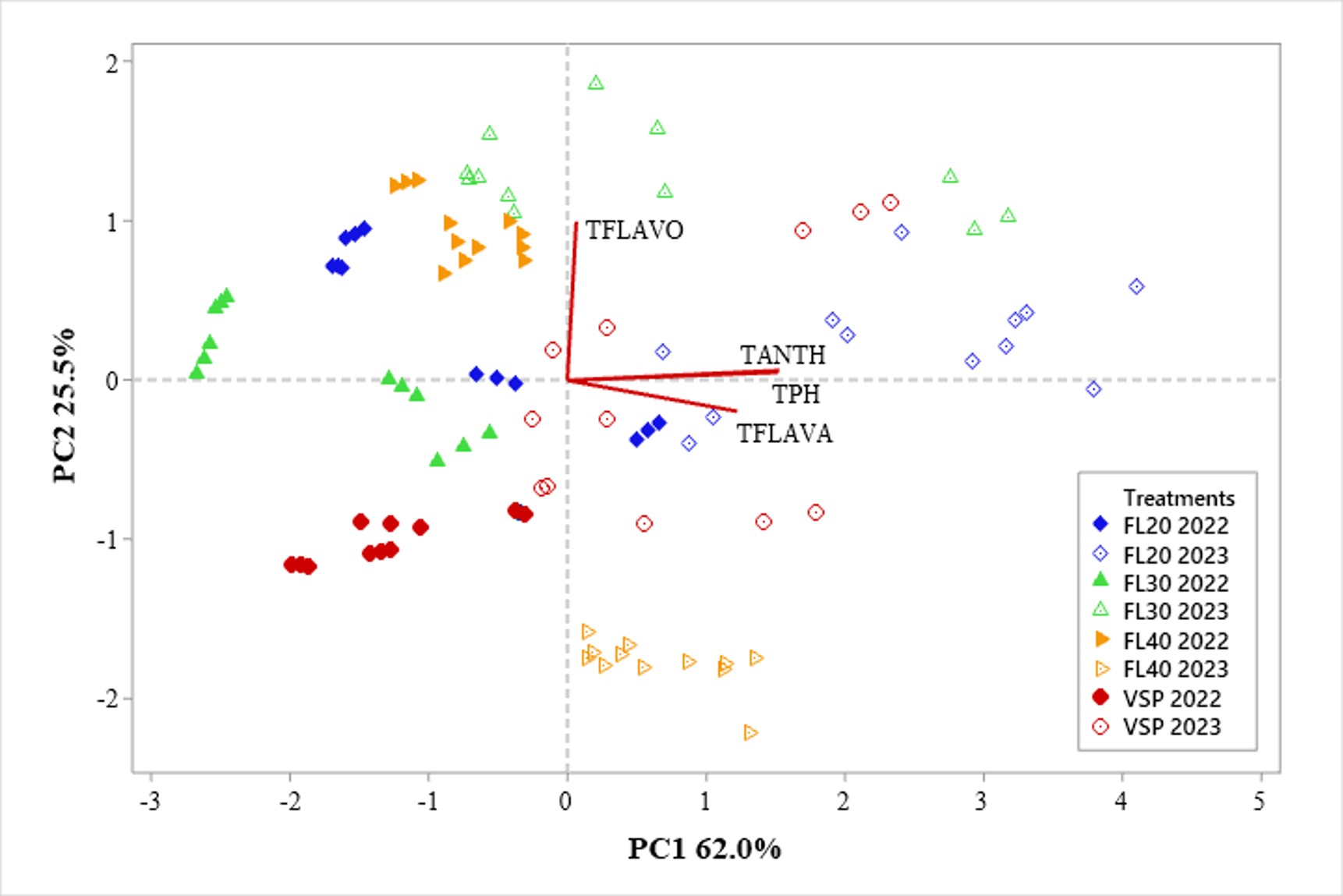
Figure 3. Principal component analysis (PCA) applied to phenolic compound data of ‘Merlot’ grapes from the 2022 and 2023 harvests, determined in four training system treatments.
PC1 (explaining 62.0 % of the total variance) captured a dominant vintage effect, clearly separating the two growing seasons. All the 2022 training systems clustered on the negative axis of PC1 (–2.7 to –0.2), indicating lower overall phenolic levels. In contrast, the 2023 samples shifted positively (up to +4.1). The 2023 season showed a strong correlation with vectors for total anthocyanins, total phenolics, total flavanols, and total procyanidins, reflecting an overall increase in these metabolites across all treatments.
PC2, which explains 25.5 % of the variance, revealed micro-discrimination among the training systems. These differences became more pronounced in 2023. In 2022, the systems showed limited dispersion. FL30, FL40, and FL20 occupied the upper left quadrant, while VSP was confined to the lower left negative quadrant (PC2 at approximately –1.0). In 2023, the effects of canopy architecture intensified. FL30 (2023) moved into the top right quadrant (PC2 > +1.0) and exhibited a positive correlation with total flavonols, flavanonols, and stilbenes. Meanwhile, FL40 (2023) occupied the top right quadrant (PC2: –1.5 to –2.2). VSP (2023) and FL20 (2023) showed broader dispersion across the central right area.
The PCA highlight the significant impact of vintage on grape phenolic profiles, revealing distinct patterns of discrimination across seasons and training systems. This variability highlights the sensitivity of metabolic composition to changing climatic conditions and management practices (Pereira et al., 2005; Pereira et al., 2006; Oliveira et al., 2019; Da Costa et al., 2020; Minnaar et al., 2022; van Leeuwen et al., 2024; Faralli et al., 2024).
Conclusion
The Foldable Lyre system significantly increases bud load by up to 70 % and production by over 50 %, without compromising oenological quality. The system's primary advantage relates to its metabolic versatility: the 20° configuration maximises total anthocyanins, while the 30° and 40° configurations promote the accumulation of flavonols, stilbenes, and procyanidins.
In humid, temperate climates, the 30° and 40° configurations optimise canopy architecture, increasing leaf area by 36 % and enhancing light interception. These configurations offered the most balanced performance in terms of vegetative development, yield, and phenolic synthesis.
These findings provide the wine sector with a strategic tool to maximise profitability and land-use efficiency. Winegrowers can ensure higher production and economic sustainability as compared to the VSP system by adjusting canopy angles to specific oenological objectives.
Acknowledgements
The authors would like to thank the São Paulo State University (UNESP), School of Agricultural Science, Botucatu, for the opportunity to pursue the master’s degree in Agronomy/Horticulture, and the Brazilian Agricultural Research Corporation (EMBRAPA), National Centre for Grape and Wine Research (CNPUV), for allowing the implementation and execution of this research. This study was financed in part by the Coordenação de Aperfeiçoamento de Pessoal de Nível Superior - Brasil (CAPES) – Finance Code 001, CNPq (Productivity Grants 304258/2024-5 and 302930/2022-1; Project 405775/2021-0), and EMBRAPA (Project 20.22.00.050.00.00).
References
- Al-Saif, A. M., Fahmy, M. A., Baghdady, G. A., El-Razik, A. M. A., Kabsha, E. A., Farouk, M. H., & Hamdy, A. E. (2023). The impact of bud load on berry quality, yield, and cluster compactness in H4 strain grapevines. Agronomy, 13(9), 2431. https://doi.org/10.3390/agronomy13092431
- Alston, J. M., & Sambucci, O. (2019). Grapes in the world economy. In Compendium of plant genomes (pp. 1–24). https://doi.org/10.1007/978-3-030-18601-2_1
- Bergqvist, J., Dokoozlian, N., & Ebisuda, N. (2001). Sunlight exposure and temperature effects on berry growth and composition of cabernet sauvignon and grenache in the central San Joaquin Valley of California. American Journal of Enology and Viticulture, 52(1), 1–7. https://doi.org/10.5344/ajev.2001.52.1.1
- Bonin, B., Biasi, L., Filho, J. M., Brighenti, A. F., Soldi, C., Brighenti, L. H., & Franciscon, V. G. (2024). Bud load and its influence on agronomic performance and wine aromatic composition of ‘Fiano’ grapevine in Southern Brazil. South African Journal of Enology and Viticulture, 45(2). https://doi.org/10.21548/45-2-6515
- Campos, L. S., Oliveira, J. B. de, Maniero, C. R., Cerutti, L. A., Alves, C. A. A., Diogo, Y. S., Conceição, L. D. H. C. S. da, Cargnin, A., Zanus, M. C., Pereira, G. E. (2024). Oenological potential of wines and agronomical characterisation of grapes from five white resistant Italian varieties at Serra Gaúcha, Southern Brazil. IVES Conference Series, OIV 2024. https://doi.org/10.58233/enrWZMn4
- Campos, L. S., Tecchio, M. A., Santos, H. P. D., De Oliveira, J. B., Maniero, C. R., De Camargo Cham, J. F. L., De Aguiar, A. C., Roberto, S. R., & Pereira, G. E. (2026). Foldable lyre and vertical shoot positioning training systems on physiology and yield of ‘Merlot’ grapevines grown in a humid temperate region. Horticulturae, 12(4), 407. https://doi.org/10.3390/horticulturae12040407
- Canedo-Reis, N. a. P., Guerra, C. C., Da Silva, L. F., Wetzstein, L. C., Junges, C. H., Ferrão, M. F., & Bergold, A. M. (2020). Fast quantitative determination of phenolic compounds in grape juice by UPLC-MS: method validation and characterization of juices produced with different grape varieties. Journal of Food Measurement & Characterization, 15(2), 1044–1056. https://doi.org/10.1007/s11694-020-00706-8
- Carbonneau, A., Del Monte, R., López, F., & Ojeda, H. (2004). The foldable lyre: ecophysiological interest for management of light absorption and water; technological interest for mechanical harvesting. OENO One, 38(1), 89. https://doi.org/10.20870/oeno-one.2004.38.1.931
- Carbonneau, A., Deloire, A., & Jaillard, B. (2007). Viticulture. La vigne: Physiologie, terroir, culture(2nd ed., Pratiques vitivinicoles. Série Viticulture, 441 p. Paris, France: Dunod.
- Chedea, V. S., Tomoiagǎ, L. L., Macovei, Ş. O., Mǎgureanu, D. C., Iliescu, M. L., Bocsan, I. C., Buzoianu, A. D., Voşloban, C. M., & Pop, R. M. (2021). Antioxidant/Pro-Oxidant actions of polyphenols from grapevine and wine By-Products-Base for complementary therapy in ischemic heart diseases. Frontiers in Cardiovascular Medicine, 8. https://doi.org/10.3389/fcvm.2021.750508
- Da Costa, R. R., Rodrigues, A. a. M., De Vasconcelos, V. a. F., Costa, J. P. D., & De Lima, M. a. C. (2020). Trellis systems, rootstocks and season influence on the phenolic composition of ‘Chenin Blanc’ grape. Scientia Agricola, 77(3). https://doi.org/10.1590/1678-992x-2018-0207
- Decendit, A., Mamani-Matsuda, M., Aumont, V., Waffo-Teguo, P., Moynet, D., Boniface, K., Richard, E., Krisa, S., Rambert, J., Mérillon, J., & Mossalayi, M. (2013). Malvidin-3-O-β glucoside, major grape anthocyanin, inhibits human macrophage-derived inflammatory mediators and decreases clinical scores in arthritic rats. Biochemical Pharmacology, 86(10), 1461–1467. https://doi.org/10.1016/j.bcp.2013.06.010
- Delić, K., Milinčić, D. D., Pešić, M. B., Lević, S. S., Nedović, V. A., Gancel, A., Jourdes, M., & Teissedre, P. (2024). Grape, wine and pomace anthocyanins: winemaking biochemical transformations, application and potential benefits. OENO One, 58(4). https://doi.org/10.20870/oeno-one.2024.58.4.8039
- Domingues Neto, F. J., Pimentel, A., Junior, Borges, C. V., Rodrigues, J. D., Figueira, R., Moura, M. F., Minatel, I. O., Nunes, A., Lima, G. P. P., & Tecchio, M. A. (2024). Polyphenolic Profile and Antioxidant Activity of Whole Grape Juices from Vitis labrusca and Brazilian Hybrid Grapes in Two Training Systems. Antioxidants, 13(9), 1132. https://doi.org/10.3390/antiox13091132
- Downey, M. O., Dokoozlian, N. K., & Krstic, M. P. (2006). Cultural practice and environmental impacts on the flavonoid composition of grapes and wine: a review of recent research. American Journal of Enology and Viticulture, 57(3), 257–268. https://doi.org/10.5344/ajev.2006.57.3.257
- Faralli, M., Mallucci, S., Bignardi, A., Varner, M., & Bertamini, M. (2024). Four decades in the vineyard: the impact of climate change on grapevine phenology and wine quality in northern Italy. OENO One, 58(3). https://doi.org/10.20870/oeno-one.2024.58.3.8083
- Farias Bonin, B., Biasi, L. A., Marcon Filho, J. L., Fontanella Brighenti, A., Soldi, C., Guimarães Franciscon, V., & Cosmo, A. C. (2025). Agronomic performance of ‘Viognier’ grapevines in subtropical conditions and wine aromatic compounds under different bud numbers retained at pruning. OENO One, 59(3). https://doi.org/10.20870/oeno-one.2025.59.3.9257
- Ferreira, D. F. (2011). Sisvar: a computer statistical analysis system. Ciência E Agrotecnologia, 35(6), 1039–1042. https://doi.org/10.1590/s1413-70542011000600001
- Ferrer, M., González-Neves, G., Priore, E., Montaña, A., & Carbonneau, A. (2008). Los componentes del rendimiento, la expresión vegetativa y los indicadores fisiológicos de Vitis vinifera L. cv Merlot en función de la arquitectura de la planta. Agrociencia, 12(1), 6–19. https://doi.org/10.31285/agro.12.740
- Filho, J. M., Schlemper, C., De Macedo, T., Meneguzzi, A., De Bem, B., Kretzschmar, A., & Rufato, L. (2017). Lyre and trellis training systems on the berry composition of ‘Cabernet Sauvignon’ in the Brazilian highlands. Acta Horticulturae, 1157, 417–422. https://doi.org/10.17660/actahortic.2017.1157.59
- González-Neves, G., & Ferrer, M. (2008). Efectos del sistema de conducción y del raleo de racimos en la composición de uvas Merlot. Agrociencia, 12(2), 10–18. https://doi.org/10.31285/agro.12.730
- Han, S., Xie, H., Wang, M., Zhang, J., Xu, Y., Zhu, X., Caikasimu, A., Zhou, X., Mai, S., Pan, M., & Zhang, W. (2022). Transcriptome and metabolome reveal the effects of three canopy types on the flavonoids and phenolic acids in ‘Merlot’ (Vitis vinifera L.) berry pericarp. Food Research International, 163, 112196. https://doi.org/10.1016/j.foodres.2022.112196
- Hornedo-Ortega, R., Reyes González-Centeno, M., Chira, K., Jourdes, M., & Teissedre, P. L. (2021). Phenolic compounds of grapes and wines: Key compounds and implications in sensory perception. In A. Morata (Ed.), Chemistry and Biochemistry of Winemaking, Wine Stabilization and Aging. (pp. 256–275). IntechOpen. https://doi.org/10.5772/intechopen.87471
- Ibravin. (2016). Cadastro Viticola - RS. Retrieved April 19, 2026, from https://www.cnpuv.embrapa.br/cadastro-viticola/rs-2013-2015/dados/evolucao_descricao.html
- Junges, A. H., & Tonietto, J. (2022). Caracterização climática da precipitação pluvial e temperatura do ar em Bento Gonçalves e Veranópolis, Serra Gaúcha, Brasil. Agrometeoros, 30. https://doi.org/10.31062/agrom.v30.e027126
- Karaoğlan, S. N. Y., Çelik, Z. D., Darici, M., Kelebek, H., Erten, H., Işçi, B., Altindişli, A., & Cabaroglu, T. (2015). Effect of terroir on the phenolic compounds of Muscat of Bornova Wines from 3 different sub-regions of Aegean, Turkey. BIO Web of Conferences, 5, 02017. https://doi.org/10.1051/bioconf/20150502017
- Katerji, N., Daudet, F. A., Carbonneau, A., & Ollat, N. (1994). Etude à l’échelle de la plante entière du fonctionnement hydrique et photosynthétique de la vigne: comparaison des systèmes de conduite traditionnel et en Lyre. Vitis, 33(4), 197-203. https://doi.org/10.5073/vitis.1994.33.197-203
- Kliewer, W. M., & Dokoozlian, N. K. (2005). Leaf Area/Crop Weight Ratios of grapevines: Influence on fruit composition and wine quality. American Journal of Enology and Viticulture, 56(2), 170–181. https://doi.org/10.5344/ajev.2005.56.2.170
- Kyraleou, M., Kallithraka, S., Koundouras, S., Chira, K., Haroutounian, S., Spinthiropoulou, H., & Kotseridis, Y. (2015). Effect of vine training system on the phenolic composition of red grapes (Vitis vinifera L. cv. Xinomavro). OENO One, 49(1), 71. https://doi.org/10.20870/oeno-one.2015.49.2.92
- Liu, Y., Yan, J., Li, Q., Wang, J., & Shi, Y. (2018). Effect of training systems on accumulation of flavan-3-ols in cabernet sauvignon grape seeds at the north foot of Mt. Tianshan. South African Journal of Enology and Viticulture, 39(1). https://doi.org/10.21548/39-1-1579
- Marcon, J. L., Wurz, D. A., Brighenti, A. F., Allebrandt, R., De Bem, B. P., & Rufato, L. (2020). Agronomic performance of ‘Sauvignon Blanc’ variety trained in Y-trellis and vertical shoot position trellis in a high-altitude region of southern Brazil. Ciência e Técnica Vitivinícola, 35(2), 167–175. https://doi.org/10.1051/ctv/20203502167
- Mattos Rocha, R. K., Andrioli, J., Scariot, F. J., Schwarz, L. V., Delamare, A. P. L., & Echeverrigaray, S. (2022). Yeast diversity in Cabernet-Sauvignon and Merlot grapes grown in the highlands of Southern Brazil. OENO One, 56(2), 101–110. https://doi.org/10.20870/oeno-one.2022.56.2.4660
- Minitab® 19.01 Software. (2019). Minitab 19 statistical software. State College. http://www.minitab.com/
- Minnaar, P., Van Der Rijst, M., & Hunter, K. (2022). Grapevine row orientation, vintage and grape ripeness effect on anthocyanins, flavan-3-ols, flavonols and phenolic acids: I. Vitis vinifera L. cv. Syrah grapes. OENO One, 56(1), 275–293. https://doi.org/10.20870/oeno-one.2022.56.1.4857
- Mori, K., Goto-Yamamoto, N., Kitayama, M., & Hashizume, K. (2007). Loss of anthocyanins in red-wine grape under high temperature. Journal of Experimental Botany, 58(8), 1935–1945. https://doi.org/10.1093/jxb/erm055
- OIV. (2021). Recueil des méthodes internationales d’analyse des vins et des moûts (Vol. 1). Paris, France: Office International de la Vigne et du Vin. https://www.oiv.int/public/medias/8533/methodesdanalysevol1.pdf
- OIV. (2024). State of the world vine and wine sector in 2024. Paris, France: Office International de la Vigne et du Vin. https://www.oiv.int/sites/default/files/2025-04/OIV-State_of_the_World_Vine-and-Wine-Sector-in-2024.pdf
- Oliveira, J. B.de., Egipto, R., Laureano, O., De Castro, R., Pereira, G. E., & Ricardo-Da-Silva, J. M. (2019). Climate effects on physicochemical composition of Syrah grapes at low and high-altitude sites from tropical grown regions of Brazil. Food Research International, 121, 870–879. https://doi.org/10.1016/j.foodres.2019.01.011
- Orlandini, S., Dalla Marta, A., & Mattii, G. B. (2015). Analysis and agrometeorological modelling of grapevine responses to different trellising systems. VITIS - Journal of Grapevine Research, 47(2), 89. https://doi.org/10.5073/vitis.2008.47.89-96
- Palliotti, A. (2011). A new closing Y-shaped training system for grapevines. Australian Journal of Grape and Wine Research, 18(1), 57–63. https://doi.org/10.1111/j.1755-0238.2011.00171.x
- Pereira, G. E., Gaudillere, J., Pieri, P., Hilbert, G., Maucourt, M., Deborde, C., Moing, A., & Rolin, D. (2006). Microclimate influence on mineral and metabolic profiles of grape berries. Journal of Agricultural and Food Chemistry, 54(18), 6765–6775. https://doi.org/10.1021/jf061013k
- Pereira, G. E., Gaudillere, J., Van Leeuwen, C., Hilbert, G., Lavialle, O., Maucourt, M., Deborde, C., Moing, A., & Rolin, D. (2005). 1H NMR and chemometrics to characterize mature grape berries in four Wine-Growing areas in Bordeaux, France. Journal of Agricultural and Food Chemistry, 53(16), 6382–6389. https://doi.org/10.1021/jf058058q
- Pereira, G. E., Padhi, E. M. T., Girardello, R. C., Medina-Plaza, C., Tseng, D., Bruce, R. C., Erdmann, J. N., Kurtural, S. K., Slupsky, C. M., & Oberholster, A. (2020). Trunk girdling increased stomatal conductance in cabernet sauvignon grapevines, reduced glutamine, and increased Malvidin-3-Glucoside and Quercetin-3-Glucoside concentrations in skins and pulp at harvest. Frontiers in Plant Science, 11. https://doi.org/10.3389/fpls.2020.00707
- Pereira, G. E., Padhi, E. M. T., Sudarshana, M. R., Fialho, F. B., Plaza, C. M.; Girardello, R. C., Tseng, D., Bruce, R. C., Erdmann, J. N., Slupsky, C. M., & Oberholster, A. (2021). Impact of grapevine red blotch disease on primary and secondary metabolites in Cabernet Sauvignon grape tissues. Food Chemistry, 342, 128312. https://doi.org/10.1016/j.foodchem.2020.128312
- Plantevin, M., Merpault, Y., Lecourt, J., Destrac-Irvine, A., Dijsktra, L., & Van Leeuwen, C. (2024). Characterization of varietal effects on the acidity and pH of grape berries for selection of varieties better adapted to climate change. Frontiers in Plant Science, 15. https://doi.org/10.3389/fpls.2024.1439114
- Price, S. F., Breen, P. J., Valladao, M., & Watson, B. T. (1995). Cluster Sun Exposure and Quercetin in Pinot noir Grapes and Wine. American Journal of Enology and Viticulture, 46(2), 187–194. https://doi.org/10.5344/ajev.1995.46.2.187
- Protas, J. F. da S., Lazzarotto, J. J., & Machado, C. A. E. (2026). Panorama da vitivinicultura brasileira em 2024. Embrapa Uva e Vinho. (Documentos, 141). https://www.infoteca.cnptia.embrapa.br/infoteca/bitstream/doc/1186269/1/Documentos-141.pdf
- Ramos, M. C. (2025). The Influence of Weather Conditions and Available Soil Water on Vitis vinifera L. Albillo Mayor in Ribera del Duero DO (Spain) and Potential Changes Under Climate Change: A Preliminary Analysis. Agriculture, 15(11), 1229. https://doi.org/10.3390/agriculture15111229
- Rao, M. J., & Zheng, B. (2025). The role of polyphenols in abiotic stress tolerance and their antioxidant properties to scavenge reactive oxygen species and free radicals. Antioxidants, 14(1), 74. https://doi.org/10.3390/antiox14010074
- Reynolds, A. G., & Vanden Heuvel, J. E. (2009). Influence of grapevine training systems on vine growth and fruit Composition: a review. American Journal of Enology and Viticulture, 60(3), 251–268. https://doi.org/10.5344/ajev.2009.60.3.251
- Shi, N., Wang, W., Li, H., Han, X., Lu, H., Tian, M., He, F., & Wang, J. (2023). Modifications of Vitis vinifera L. cv. Petit Verdot grape flavonoids as affected by the different rootstocks in eastern China. Technology in Horticulture, 3(1), 0. https://doi.org/10.48130/tih-2023-0014
- Silva, M. J. R. da., Paiva, A. P. M., De Souza, J. F., Da Silva Padilha, C. V., Basílio, L. S. P., Lima, M. D. S., Pereira, G. E., Corrêa, L. C., Vianello, F., Lima, G. P. P., Moura, M. F., & Tecchio, M. A. (2022). Phytochemical profile of Brazilian grapes (Vitis labrusca and hybrids) grown on different rootstocks. PLoS ONE, 17(10), e0275489. https://doi.org/10.1371/journal.pone.0275489
- Susin, E., Silvestre, W. P., & Cocco, C. (2022). Effect of the application of abscisic acid and ethephon on the quality of Merlot grapes grown in Serra Gaúcha, South Brazil. Research Society and Development, 11(16), e370111638513. https://doi.org/10.33448/rsd-v11i16.38513
- Sy, B., Krisa, S., Richard, T., & Courtois, A. (2023). Resveratrol, ε-Viniferin, and Vitisin B from Vine: Comparison of Their In Vitro Antioxidant Activities and Study of Their Interactions. Molecules, 28(22), 7521. https://doi.org/10.3390/molecules28227521
- Tarara, J. M., Lee, J., Spayd, S. E., & Scagel, C. F. (2008). Berry temperature and solar radiation alter acylation, proportion, and concentration of anthocyanin in merlot grapes. American Journal of Enology and Viticulture, 59(3), 235–247. https://doi.org/10.5344/ajev.2008.59.3.235
- Teissedre, P., Stockley, C., Boban, M., Ruf, J., Alba, M. O., Gambert, P., & Flesh, M. (2018). The effects of wine consumption on cardiovascular disease and associated risk factors: a narrative review. OENO One, 52(1), 67–79. https://doi.org/10.20870/oeno-one.2018.52.1.2129
- Tonietto, J., & Carbonneau, A. (2004). A multicriteria climatic classification system for grape-growing regions worldwide. Agricultural and Forest Meteorology, 124(1–2), 81–97. https://doi.org/10.1016/j.agrformet.2003.06.001
- van Leeuwen, C., Friant, P., Choné, X., Tregoat, O., Koundouras, S., & Dubourdieu, D. (2004). Influence of climate, soil, and cultivar on terroir. American Journal of Enology and Viticulture, 55(3), 207–217. https://doi.org/10.5344/ajev.2004.55.3.207
- van Leeuwen, C., Sgubin, G., Bois, B., Ollat, N., Swingedouw, D., Zito, S., & Gambetta, G. A. (2024). Climate change impacts and adaptations of wine production. Nature Reviews Earth & Environment, 5(4), 258–275. https://doi.org/10.1038/s43017-024-00521-5
- Vilanova, M., Genisheva, Z., Tubio, M., Álvarez, K., Lissarrague, J., & Oliveira, J. (2017). Effect of Vertical Shoot-Positioned, Scott-Henry, Geneva Double-Curtain, Arch-Cane, and Parral training systems on the volatile composition of Albariño wines. Molecules, 22(9), 1500. https://doi.org/10.3390/molecules22091500
- Viret, O., Spring, J., & Gindro, K. (2018). Stilbenes: biomarkers of grapevine resistance to fungal diseases. OENO One, 52(3), 235–241. https://doi.org/10.20870/oeno-one.2018.52.3.2033
- Yu, R., Torres, N., Tanner, J. D., Kacur, S. M., Marigliano, L. E., Zumkeller, M., Gilmer, J. C., Gambetta, G. A., & Kurtural, S. K. (2022). Adapting wine grape production to climate change through canopy architecture manipulation and irrigation in warm climates. Frontiers in Plant Science, 13. https://doi.org/10.3389/fpls.2022.1015574
- Zoecklein, B. W., Wolf, T. K., Pélanne, L., Miller, M. K., & Birkenmaier, S. S. (2008). Effect of Vertical Shoot-Positioned, Smart-Dyson, and Geneva Double-Curtain training systems on Viognier grape and wine composition. American Journal of Enology and Viticulture, 59(1), 11–21. https://doi.org/10.5344/ajev.2008.59.1.11
- Zohar, Y., Reta, K., Drori, E., Gliksman, U., Rauchberger, S., Bar, E., Lewinsohn, E., Agam, N., & Fait, A. (2024). Improved berry and wine quality of Vitis vinifera L. cv. Gewürztraminer grown in an arid climate using a Y-shaped training system. OENO One, 58(1). https://doi.org/10.20870/oeno-one.2024.58.1.7148
 Views: 241
 XML: 30