

VITICULTURE / Original research article
Abstract
Morocco, located at the crossroads of ancient Mediterranean viticultural routes and within the natural distribution range of wild grapevine, can represent a valuable yet underexplored reservoir of grapevine diversity that might be useful as a source of adaptive traits to improve grapevine resilience to current climatic scenarios. In this study, we conducted a systematic prospection of former viticultural areas in the Beni Mellal–Khénifra region of the Atlas region in central Morocco that led to the identification of 67 relict grapevines. These plants were genetically characterized using a combined strategy based on 13 nuclear SSR markers and 240 SNPs, an approach that revealed 20 distinct genetic profiles. Seven of them corresponded to known cultivated varieties, while the remaining profiles were not found in international reference databases. Several unidentified genotypes were detected repeatedly across distant locations, suggesting former local relevance for grape production. Parentage analyses uncovered previously unreported familial relationships among Moroccan varieties, and identified potential ancient key founder genotypes contributing to regional grapevine diversity. Comparative analyses with a representative panel of Western Mediterranean wild and cultivated grapevines demonstrated that most relict plants belong to the Vitis vinifera ssp. sativa gene pool. However, a subset of them displayed significant genetic contributions from V. vinifera ssp. sylvestris, indicating historical hybridization events between both subspecies. Overall, our results indicate that the traditional grapevine assortment of the Moroccan Atlas region was shaped by three main sources of genetic diversity: autochthonous Maghrebi varieties, introduced varieties from the Iberian Peninsula, and local sativa-sylvestris hybrids locally adopted for grape cultivation. This complex genetic background reflects a long history of grapevine cultivation, exchange, and adaptation in Morocco. The identification of uncatalogued grapevine genotypes and multiple partial parentage relationships highlights the high level of genetic erosion suffered by Moroccan viticulture, but also emphasizes the considerable potential of relict grapevines as a source of unique genetic resources. These findings support the urgent need for conservation, further agronomic evaluation, and potential valorisation of Moroccan grapevine germplasm in the context of climate change adaptation.
Introduction
Grapevine (Vitis vinifera L.) is one of the most popular and valuable fruit crops in the world, with a global vineyard surface estimated at about 7.1 million hectares (www.oiv.int). Adaptation to evolving climate conditions is currently a top priority for the grape and wine sector. Rising temperatures, prolonged drought periods, increased frequency of extreme weather events, and shifting pest and disease pressures are some of the climate change-derived factors threatening grape and wine production worldwide (Fraga et al., 2013; van Leeuwen et al., 2024). The situation is of particularly concern in regions already characterised by hot and arid climates (van Leeuwen et al., 2024), where the area suitable for grape production is expected to dramatically decrease if no action is taken (Morales-Castilla et al., 2020). Among the potential alleviating strategies, harnessing the natural genetic diversity of grapevines is essential (Wolkovich et al., 2018), and the use of more resilient varieties has emerged as a key strategy for sustaining viticulture under warming conditions (Morales-Castilla et al., 2020). Overall, the genetic diversity of V. vinifera L. is high, with an estimated six to ten thousand varieties available worldwide (Morales-Castilla et al., 2020; Wolkovich et al., 2018). This diversity is the result of independent local selection processes traditionally conducted by grape growers, who chose different grapevine varieties that matched their local climates to produce stable yields of grapes with an adequate balance of sugar, acids, and other compounds of interest for fresh fruit consumption and winemaking (Wolkovich et al., 2018). These efforts have resulted in a broad genetic diversity of traits of interest, including some that could be useful for coping with climate warming, like late-ripening (Boursiquot et al., 1995), better water use efficiency (Tortosa et al., 2016), and tolerance to extreme heat events (Coupel-Ledru et al., 2024). This situation has led to a renewed interest in the exploration of the genetic diversity preserved in old and abandoned vineyards throughout traditional viticulture regions (Maraš et al., 2020; Mendoza et al., 2022; Merheb et al., 2025; Tello et al., 2024b; Zombardo et al., 2021). In some cases, these efforts have resulted in the identification of relict plants of old varieties that may have had some relevance in the past, and which are currently being tested for their performance under current climate conditions (Maraš et al., 2020; Mendoza et al., 2022). These old varieties are also key to understanding how the local varietal assortment has changed over time in a region (Maraš et al., 2020; Tello et al., 2024b), sometimes reflecting major historical stages (El-Oualkadi et al., 2011; Tello et al., 2024b). Moreover, this information has revealed the genetic origin of some grapevine varieties of relevance (Boursiquot et al., 2009; Maraš et al., 2020; Tello et al., 2024a).
Viticulture has been practised in North Africa for centuries, with the earliest cultivated forms probably introduced by the Phoenicians by the tenth century BCE (El-Oualkadi et al., 2011; Ghaffari et al., 2014; Laiadi et al., 2009; Zinelabidine et al., 2010). Grape cultivation practices were later consolidated during the Roman and Christian periods, before undergoing a marked transformation during the Islamic period, when many pre-existing wine grape varieties were displaced in favour of table grapes (Ghaffari et al., 2014; Zinelabidine et al., 2014). Following the European grape phylloxera crisis, numerous wine grape varieties from France, Spain, and Italy were introduced to the region (Ghaffari et al., 2014; Zinelabidine et al., 2010), contributing to the present-day composition of local grapevine diversity. Moreover, this region lies within the natural range of distribution of V. vinifera ssp. sylvestris grapevines (This et al., 2006), providing an opportunity for local hybridisation events between cultivars and wild grapevines that might have shaped regional genetic diversity. Previous studies on the genetic characterisation of grapevines from the Maghreb have revealed a high level of genetic diversity (Riahi et al., 2010), and different studies have reported a considerable number of uncatalogued local genotypes (Ghaffari et al., 2014; Laiadi et al., 2009; Riahi et al., 2010; Zinelabidine et al., 2014).
Genetic analyses have revealed some differentiation between local Moroccan grapevines and those from other Maghrebi and European genetic pools (El-Oualkadi et al., 2011; Riahi et al., 2010). Prospection efforts across the country have led to the identification of diverse unknown or unclassified cultivated grapevines (Zinelabidine et al., 2010), suggesting the presence of potentially valuable varieties that are at high risk of disappearing. The Beni Mellal–Khénifra region, located in central Morocco, encompasses a wide range of landscapes, from the mountainous peaks of the Middle Atlas (900–3,890 masl) to extensive plains and plateaus at around 600 masl (Eddoughri et al., 2022). This altitudinal gradient generates pronounced climatic variability, with conditions ranging from humid in the high mountains to semi-arid in the plains, and marked seasonality characterised by intensely cold winters and very hot summers (Lebrini et al., 2019). This region is one of the main agricultural areas of the country, with land-use predominantly devoted today to rainfed agriculture, primarily cereals, citrus, and olive trees (Eddoughri et al., 2022). However, technical reports provide documentary evidence of traditional viticultural practices in the region (Protectorat de la République Française au Maroc, 1930), where relict plants still growing in areas no longer devoted to viticulture can be found (Zinelabidine et al., 2010). In light of the relevance of detecting novel grapevine genetic resources to face current challenges in viticulture, in this work we conducted a prospection of grapevines across the Beni Mellal–Khénifra region in the Atlas region of central Morocco. This effort led to the detection of 67 relict grapevines, which were analysed with a combined SSR (simple sequence repeat) and SNP (single nucleotide polymorphism) genotyping strategy for further genetic analyses. We proved that most of the prospected grapevines belong to the sativa subspecies, while some genotypes likely resulted from natural crosses between sylvestris and sativa individuals. The abundance of some unidentified genotypes suggests that they may have been varieties of local relevance in the past, warranting preservation and future characterisation.
Materials and methods
1. Plant material
The inspection of 12 sites across the Beni Mellal–Khénifra region of the Atlas region of Morocco resulted in the identification of 67 relict grapevines, which were investigated in this work (Figure 1). Most of these grapevines were found in abandoned areas previously devoted to viticulture, some of them in natural areas along river banks, such as those of the Oum Rbia river. Young leaves were collected from each grapevine and placed in individual envelopes. They were preserved in ice prior to lyophilisation in an Alpha 2-4 freeze-drying system (Martin Christ, Germany). Lyophilised samples were then stored at room temperature until total genomic DNA (gDNA) extraction. Each sample was named according to the place where the grapevines were found (Table S1).
For reference, main Moroccan cities are shown as black dots.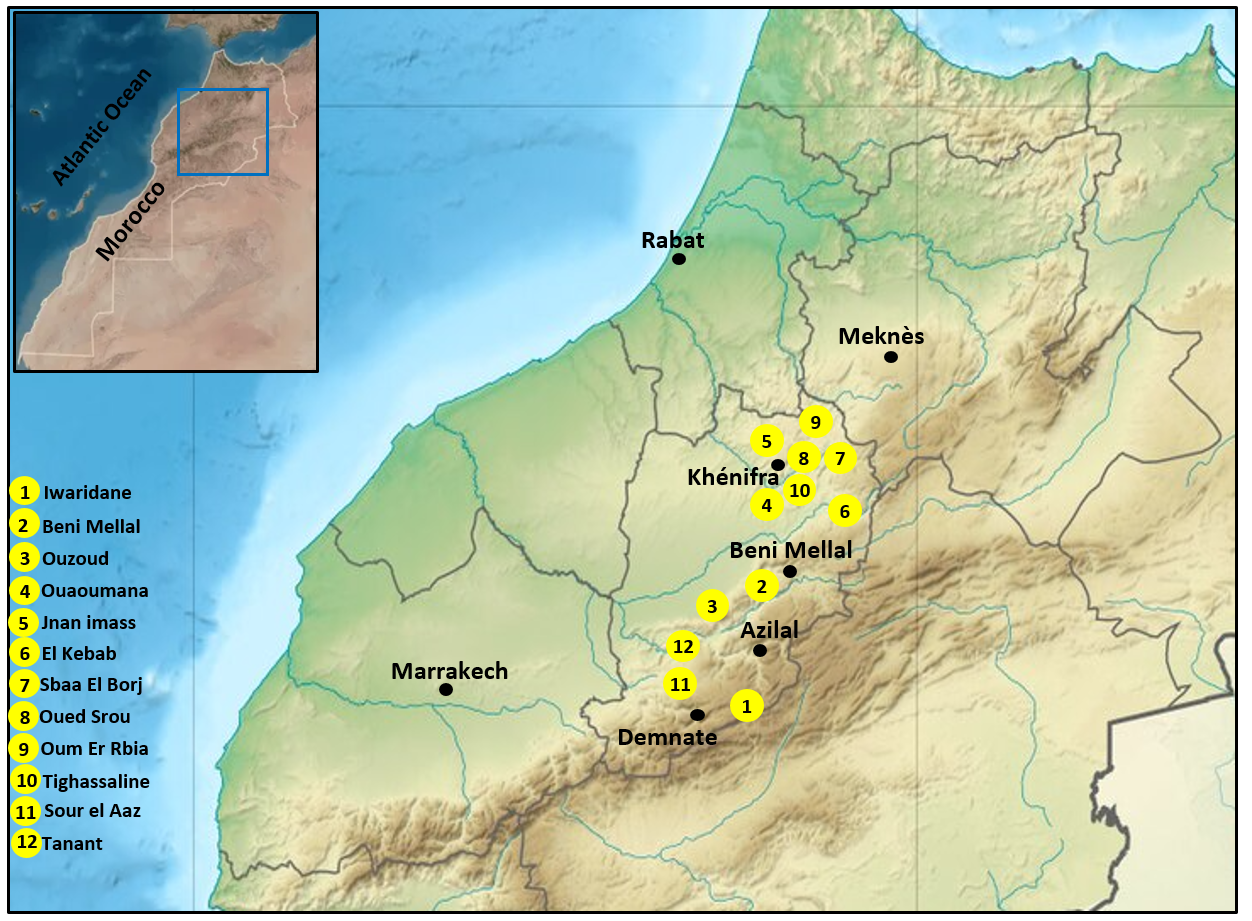
Figure 1. Location of the 12 sites of the Beni Mellal–Khénifra region of Morocco where the relict grapevines included in this work were found (yellow dots).
2. gDNA extraction and genotyping
Lyophilised samples were ground in individual ceramic mortars using liquid nitrogen, and 100 mg of the resulting powder was used for gDNA extraction using the NZY Plant/Fungi gDNA Isolation Kit (NZYTech, Lisbon, Portugal), following manufacturer instructions. DNA quality and quantity were evaluated using a NanoDrop Spectrophotometer (Thermo Scientific, Wilmington, USA). All samples were screened at 13 nuclear SSR loci (VVS2, VVMD5, VVMD7, VVMD25, VVMD27, VVMD28, VVMD32, VrZAG62, VrZAG79, VrZAG29, VrZAG67, VrZAG83, and VrZAG112), which were divided into two multiplex polymerase chain reactions (PCRs) according to Tello et al. (2024a). These SSR markers included those recommended by the International Organisation of Vine and Wine (OIV) for the efficient identification of grapevine varieties, allowing them to be directly compared to the genetic profiles stored in the Vitis International Variety Catalogue (VIVC) database. PCR conditions were set up according to Tello et al. (2024a), and PCR products were subjected to capillary electrophoresis in an ABI 3130XL genetic analyser (Applied Biosystems, Foster City, CA, USA) at the Centro de Investigación Biomédica de La Rioja (CIBIR). Fragments size were determined by means of GeneMapper v.4.1 (Applied Biosystems, Darmstadt, Germany). Each analysis included a ‘Tempranillo Tinto’ DNA as a positive control and a non-template as negative control.
All non-redundant SSR genetic profiles were screened at 240 SNP markers using Fluidigm technology at the Sequencing and Genotyping Unit of the Universidad del País Vasco (UPV/EHU). This set included a core set of 48 SNPs for variety identification (Cabezas et al., 2011) and 192 additional SNPs for robust diversity and parentage analyses (Cunha et al., 2020). In addition, three chloroplast SNPs (SNP_NG_C_001, SNP_NG_C_003, and SNP_NG_D_003) were included for the differentiation of the major grapevine chloroplast haplotypes (chlorotypes), as has previously been defined (Augusto et al., 2021).
3. Varietal identification and parentage analyses
Experimental SSR and SNP profiles were compared with those stored in the VIVC (6,347 SSR genetic profiles) and the ICVV-DNA (3,574 genetic profiles) databases. Any correspondence between experimental and reference varietal genotypes was established by the previous analysis of a set of true-to-type reference varieties encompassing a broad range of allele sizes (This et al., 2004). Full genetic identifications were declared only when no mismatches were detected between the experimental and the reference genetic profiles. Genetic profiles were considered as unknown if they did not match any of those stored in these two databases. For parentage analyses, the non-redundant SNP genetic profiles were merged with those available at the ICVV-DNA database for a wide search of compatible trios (parents and offspring) and duos (parent-offspring). This analysis was performed using the likelihood-based method implemented in Cervus v.3.071 (Kalinowski et al., 2007) according to Tello et al. (2024b). The natural logarithm of the overall likelihood ratio (LOD) score was used as a metric of the robustness of each proposed relationship, and two and one mismatching SNP were allowed for trios and duos, respectively. For duos, only relationships with LOD values above 25 were considered (Tello et al., 2024b). All the new relationships found with SNPs were confirmed using microsatellite data. For each proposed trio, chlorotype data was used to determine the female progenitor, given that in grapevine chloroplasts are inherited from the maternal parent (Arroyo-García et al., 2002).
4. Population analyses
To unveil the genetic background of the uncatalogued genetic profiles detected in this work, a representative panel of 100 wild and cultivated grapevine genotypes from four Western Mediterranean countries (Morocco, Portugal, Spain, and Tunisia) was assembled. For this purpose, we retrieved from the ICVV-DNA database the 240-SNP genetic profiles of 292 wild and 447 cultivated grapevines from these four countries. Then, two core collections (comprising wild and cultivated grapevines, respectively, and each containing 50 individuals) were created using the entry-to-nearest-entry distance method implemented in the R package CoreHunter v.3.0 (de Beukelaer et al., 2018). These two core collections were merged in a panel that was subsequently merged with the 240-SNP genetic profiles obtained in this work for the calculation of an Unweighted Neighbor Joining (UwNJ) distance tree and a Principal Coordinate Analysis (PCoA), using the DARwin software package v.6.0. (Perrier & Jacquemond-Collet, 2006), according to Nebish et al. (2021). In parallel, the same dataset was used for a genetic structure analysis following the Bayesian approach implemented in the software STRUCTURE v.2.3.4. (Pritchard et al., 2000), considering a number of hypothetical genetic groups (K) ranging from 1 to 10, and calculating ten independent runs per K value, as described by Maraš et al. (2020). STRUCTURE results were evaluated using the online tool Structure Selector (Li & Liu, 2018) to identify the more likely number of genetic groups within the dataset, based on the Evanno’s ΔK ad hoc criteria (Evanno et al., 2005). For the optimal value, the ten independent runs were aligned using CLUMPP v.1.1.2 (Jakobsson & Rosenberg, 2007), and results were visualised using DISTRUCT v.1.1 (Rosenberg, 2004).
Results
1. Genetic identification of relict grapevines from the Atlas region
The inspection of former viticulture sites throughout the Beni Mellal–Khénifra region of Morocco resulted in the detection of 67 relict grapevines (Table S1). Their genetic profiling at 13 SSR markers allowed 20 distinct genetic profiles to be differentiated, which were subsequently genotyped at 240 SNPs. These genetic profiles are provided in Table S2. Their pairwise comparison with the genetic profiles stored in the VIVC and ICVV-DNA databases led to seven genotypes being matched with the reference genetic profiles of the grapevine varieties ‘Abouhou’, ‘Agueyer’, ‘Bou Choukka’, ‘Dedo de Dama’, ‘Hadari’, ‘Negra Rayada’, and ‘Outanat’ (Table 1). For the remaining genetic profiles, we did not find any matches; therefore, they were considered as unknown. The unidentified genetic profiles “MAR-01” and “MAR-02” were the most frequently observed, each appearing twelve times. “MAR-01” was found in the Beni Mellal–Khénifra subregions of Khénifra and Demnate as relict plants separated by approximately 200 km. “MAR-02” was detected in relict plants of the Demnate subregion. Plants with the genetic profile “MAR-03” were found six times in the surrounding area of Beni Mellal. Both “MAR-04” and “MAR-05” were identified in four relict plants in the subregion of Khénifra, and “MAR-06” was found three times in nearby Ouaoumana, a town in the Khénifra subregion. The two relict plants with the genetic profile “MAR-07” were found in the towns of Iwaridane (Demnate) and Ouzoud (Azilal), which are 79 km away from each other. The remaining six unidentified genetic profiles were detected only once in sites in different regions, suggesting that they may be either plants derived from seeds or rare varieties at a high risk of disappearance.
Variety name | N | VIVC Variety number | Origina | Usea,b | Chlorotype |
MAR-01 | 12 | - | Morocco | - | B |
MAR-02 | 12 | - | Morocco | - | B |
MAR-03 | 6 | - | Morocco | - | B |
Abouhou | 5 | 35 | Morocco | T | C |
MAR-04 | 4 | - | Morocco | - | A |
MAR-05 | 4 | - | Morocco | - | A |
Agueyer | 4 | 128 | Morocco | T | - |
MAR-06 | 3 | - | Morocco | - | B |
Bou Choukka | 2 | 1590 | Morocco | T | C |
Dedo de Dama | 2 | 14842 | Portugal | T,W | C |
Hadari | 2 | 59 | Morocco | T | C |
Negra Rayada | 2 | 1494 | Spain | T,W | C |
MAR-07 | 2 | - | Morocco | - | A |
Outanat | 1 | 17497 | Morocco | W | C |
MAR-08 | 1 | - | Morocco | - | B |
MAR-09 | 1 | - | Morocco | - | A |
MAR-10 | 1 | - | Morocco | - | - |
MAR-11 | 1 | - | Morocco | - | - |
MAR-12 | 1 | - | Morocco | - | B |
MAR-13 | 1 | - | Morocco | - | A |
a According to VIVC information (www.vivc.de). b T = Table grape variety; W = Wine grape variety.
2. Parentage analyses
The integration of the 20 non-redundant grapevine SNP profiles with the ICVV-DNA database enabled in-depth exploration of potential family relationships. Focusing on the genotypes obtained in this work, we confirmed the full pedigree of the Moroccan table grape varieties ‘Bezoul el Aouda’ (‘Dedo de Dama’ × ‘Abouhou’), with only one mismatching SNP and a LOD value of 42.6, and ‘Bouzouga’ (‘Dedo de Dama’ × ‘Abouhou’), with also one mismatching SNP and a LOD value of 94.3. These pedigrees have previously been indicated by either SSR (El-Oualkadi et al., 2011; Lacombe et al., 2013) and/or SNP (Laucou et al., 2018) markers. In addition, we found that the unidentified genotype “MAR-13” might have resulted from a self-pollination event of the Spanish cultivar ‘Beba’ (one mismatching SNP; LOD: 147.5). In contrast to the low number of full trios found, we identified ten parent-offspring relationships (duos) with LOD values above 25.0 and a maximum of one mismatching SNP (Table 2). Seven of these duos comprised two grapevine varieties catalogued in the VIVC database, and four of them had already been reported in the available literature (D'Onofrio et al., 2021; Lacombe et al., 2013; Laucou et al., 2018; Santana et al., 2010). Thus, we report for the first time a parent-offspring relationship between the grapevine varieties ‘Hadari’ and ‘Bou Choukka’, ‘Hadari’ and ‘El Gouz’, and ‘Hadari’ and ‘Negra Dorada’. Similarly, we identified a parent-offspring relationship between the Moroccan variety ‘Abouhou’ and the uncatalogued genotype “MAR-02”. Being a variety that has female flowers and chlorotype C (El-Oualkadi et al., 2009; Lacombe et al., 2025), all the offspring of ‘Abouhou’ must have inherited this chlorotype (Arroyo-García et al., 2006). Therefore, “MAR-02” (with chlorotype B) could be considered the male progenitor of ‘Abouhou’. Moreover, we identified a compatible parent-offspring relationship between the uncatalogued genetic profiles “MAR-01” and “MAR-09”, and between “MAR-03” and “MAR-05” (Table 2).
Genotype 1 (Chlorotype) | Genotype 2 (Chlorotype) | SNPs compared/ mismatched | Pair LOD score | SSR compared/ mismatched | Reference |
Abouhou (C) | MAR-02 (B) | 190/0 | 39.02 | 13/0 | This work |
Agueyer (-) | Tiniouine (C) | 222/1 | 41.44 | 13/0 | Lacombe et al (2013) |
Bou Choukka (C) | Dedo de Dama (C) | 225/1 | 35.74 | 13/0 | Lacombe et al. (2013) |
Dedo de Dama (C) | Negra Dorada (C) | 227/1 | 34.68 | 13/0 | D'Onofrio et al. (2021), Laucou et al. (2018), Santana et al. (2010) |
Hadari (C) | Bou Choukka (C) | 213/1 | 31.18 | 13/1 | This work |
Hadari (C) | Dedo de Dama (C) | 221/0 | 27.00 | 13/0 | D'Onofrio et al. (2021), Lacombe et al. (2013), Laucou et al. (2018) |
Hadari (C) | El Gouz (-) | 224/0 | 25.49 | 13/1 | This work |
Hadari (C) | Negra Dorada (C) | 219/1 | 42.67 | 11/0 | This work |
MAR-01 (B) | MAR-09 (A) | 214/0 | 39.19 | 13/0 | This work |
MAR-03 (B) | MAR-05 (A) | 214/0 | 37.31 | 13/0 | This work |
3. Elucidating the cultivated or wild background of the uncatalogued genetic profiles
The global principal coordinates analysis (PCoA) carried out on the 739 genetic profiles obtained from the ICVVDNA database of 292 wild and 447 cultivated grapevines from Morocco, Portugal, Spain, and Tunisia shows the expected division between both subspecies (Figure 2). The wild and cultivated genotypes form clearly differentiated clusters along PCoA1, which explain 17.0 % of the total variation. As observed in Figure 2, the 50 wild and 50 cultivated genetic profiles selected for the core panel of genetic profiles used for comparative purposes (Table S3) capture the overall dispersion of the whole dataset. Therefore, this panel was considered appropriate for elucidating the wild or cultivated origin of the unknown genetic profiles obtained in this work.
Cultivated varieties are represented by triangles. Wild individuals are represented by circles. Coloured symbols represent the 100 genotypes selected for the core panel of genetic profiles used for comparative aims (red = wild; green = cultivated).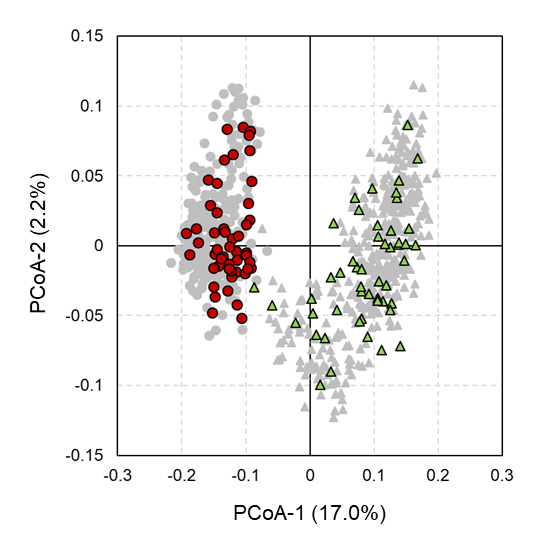
Figure 2. Principal Coordinate Analysis (PCoA) of 739 wild and cultivated grapevine genotypes from Morocco, Portugal, Spain, and Tunisia, obtained from the ICVV-DNA database and based on 240 SNPs.
The UwNJ phylogenetic tree shows a clear genetic separation between the V. vinifera ssp. sylvestris individuals and the V. vinifera ssp. sativa varieties included in the core panel of genetic profiles used as a reference (Figure 3A). Individuals of each subspecies form largely distinct clusters with only limited intermixing at the central node, which is consistent with expectations for wild vs. cultivated populations of grapevine. Most of the wild grapevines form a compact sector in the tree, with external branches radiating from a common internal region, coherent with a solid genetic group of sylvestris grapevines. On the other hand, the genotypes of the cultivated varieties occupy a broad sector that can be visually divided into several sub-clusters, indicating the presence of different genetic lineages, rather than a single homogeneous group. Interestingly, most of the 13 uncatalogued genetic profiles identified in this work fell into the sector of the sativa subspecies (Figure 3A), implying that these grapevines are genetically closer to the cultivated grapevines than to the wild ones. Amongst them, most of the unknown individuals (“MAR-01”, “MAR-02”, “MAR-03”, “MAR-05”, “MAR-08”, “MAR-07”, “MAR-09”, and “MAR-10”) are grouped in one clade with diverse Maghrebi varieties (like ‘Graeco’, ‘Turki’, and ‘Tiniouine’). “MAR-13” originated as a selfing of the Spanish variety ‘Beba’, and it thus accordingly clustered with other varieties of alleged Spanish origin, such as ‘Aledo Real’, ‘Alcañon’, and ‘Gafarro’. “MAR-06”, and “MAR-12” clustered next to a set of varieties of alleged Portuguese origin, like ‘Tinto Cao’, ‘Touriga Franca’, and ‘Nevoeira’. Lastly, the uncatalogued genotypes “MAR-04”, and “MAR-11” formed an independent sub-cluster, together with two genetic profiles of sylvestris origin and next to a branch that clusters the genetic profiles of the cultivated varieties ‘Alvarinho’ and ‘Ondarrabi Beltza’. The PCoA results corroborate this marked sylvestris-sativa differentiation, with the uncatalogued genetic profiles falling mostly within the cultivated space (Figure 3B). PCoA-1 (explaining 21.7 % of variation) clearly separated the cultivated grapevines from the sylvestris genotypes, which formed a compact cluster that suggests a relatively low genetic variability compared with that of the cultivated genotypes used for the analysis. Two uncatalogued genetic profiles (“MAR-04” and “MAR-11”) occupied intermediate positions between the sativa and sylvestris spaces. STRUCTURE results also support the clear genetic differentiation between both V. vinifera subspecies. As expected, the Evanno criteria indicate the presence of two ancestral genetic groups (K1 and K2) as the most likely level of structure, which corresponds to V. vinifera ssp. sylvestris and V. vinifera ssp. sativa backgrounds (Figure 3C). All the sylvestris genetic profiles in the core panel exhibited almost exclusively K1 ancestry, whereas nearly all cultivated genotypes showed predominantly K2 ancestry. Interestingly, the cultivated varieties ‘Alvarinho’ and ‘Ondarrabi Beltza’ obtained higher ancestry levels in K1 than in K2 (0.64/0.36 for ‘Alvarinho’ and 0.68/0.32 for ‘Ondarrabi Beltza’). Regarding the unknown genotypes identified in this study, most of them showed predominant K2 ancestry, indicating a primarily sativa genetic background. However, “MAR-04” (K1 = 0.56; K2 = 0.44), “MAR-11” (K1 = 0.39; K2 = 0.61), and “MAR-12” (K1 = 0.41; K2 = 0.59) displayed comparable levels of ancestry from both V. vinifera ssp. sylvestris and V. vinifera ssp. sativa backgrounds.
(A) Unweighted Neighbor-Joining (UwNJ) radiation tree depicting the genetic relationships between the 20 genetic profiles identified in this work (in yellow) and a core panel of 50 V. vinifera L. sativa and 50 sylvestris genotypes (in green and red, respectively). (B) Principal Coordinate Analysis (PCoA) of all genotypes. Each genotype is shown as a dot, following the same colour scheme. The percentage of variance explained by PCoA-1 and PCoA-2 is indicated on the axes. (C) Estimated population structure using STRUCTURE values for K = 2. Each vertical bar represents one genetic profile, with different colours representing the different ancestry components (K1 = red; K2 = green). For simplicity, sylvestris codes are excluded in A. In B and C, only the codes of the genetic profiles differentiated and discussed in this work are labelled.
Figure 3. Genetic origin of the 20 grapevine genotypes identified in relict grapevines of Beni Mellal–Khénifra (Morocco).
Discussion
Today, the agricultural sector of the Beni Mellal–Khénifra region in central Morocco focuses on cereals, citrus and olive trees (Eddoughri et al., 2022). However, an important tradition of grapevine cultivation used to exist, and grape production played a relevant role in the local economy decades ago (Protectorat de la République Française au Maroc, 1930). Previous works have revealed that, despite severe genetic erosion, a few relict grapevines have survived throughout the region as isolated plants (Zinelabidine et al., 2010). The identification of 67 relict grapevines in this work highlights the relevance of this region for the traditional production of grapes in Morocco, and the identification of up to 20 different grapevine genetic profiles indicates that a remarkable level of genetic diversity was cultivated in the recent past. Interestingly, the study of these genotypes has provided an opportunity to uncover how local diversity originated and was shaped. Comparative analyses with a core panel of V. vinifera ssp. sativa and V. vinifera ssp. sylvestris grapevines of Western Mediterranean origin revealed three distinct sources of genetic diversity underlying the origin of these traditional varieties: i) local sativa varieties of autochthonous Maghrebi origin, ii) introduced sativa varieties from the Iberian Peninsula, and iii) cultivated varieties originating from hybridisation events between sativa varieties and local sylvestris individuals. Together, these three sources of genetic diversity have shaped the traditional local assortment of the region explored in this work, contributing to the overall heterogeneity of the Moroccan germplasm available today, which reflects a complex history of grapevine cultivation.
A high phyletic affinity was found between 13 of the 20 differentiated genotypes and the sativa varieties from the Maghreb included in the core panel of genetic profiles designed for comparative purposes (Figure 3A). This finding indicates that the traditional Maghrebi sativa germplasm was the main source of diversity that contributed to the current traditional local assortment of the Atlas region explored in this work. These varieties include five cultivated grapevines (‘Abouhou’, ‘Agueyer’, ‘Bou Choukka’, ‘Hadari’, and ‘Outanat’) that are commonly found across distinct viticultural regions of the country (El-Oualkadi et al., 2011; Zinelabidine et al., 2010; Zinelabidine et al., 2014), which corroborates their alleged Moroccan origin and their historical relevance for grape cultivation in the country. Interestingly, pedigree analyses revealed ‘Hadari’ as a relevant founder of local varieties (Table 2), indicating an important role in the historical development of the Moroccan grapevine germplasm. This group of autochthonous grapevine varieties also contained ‘Dedo de Dama’ (Figure 3A), an important genitor in North Africa (Lacombe et al., 2013) that is known in Morocco as ‘Bouqseb’/‘Bougseb’ (El-Oualkadi et al., 2011; Zinelabidine et al., 2014)). ‘Dedo de Dama’ is a table grape variety with elongated berries, which is considered today to be of Portuguese origin (www.vivc.de). However, its region of origin is controversial (El-Oualkadi et al., 2011). Identifying its true region of origin has been hindered by the lack of a complete pedigree, as well as by the identification of descendants of ‘Dedo de Dama’ in the Iberian Peninsula (e.g., ‘Montua’ and ‘Boal Branco’) and in the Maghreb (e.g., ‘Azougah’, ‘Bezoul el Aouda’, and ‘Bouzouga’) (Cunha et al., 2020; El-Oualkadi et al., 2011; Lacombe et al., 2013; Zinelabidine et al., 2015). In fact, the ubiquity of its offspring suggests that ‘Dedo de Dama’ might have been among the varieties involved in the long history of interaction and traditional exchange of plant material between the Iberian Peninsula and the Maghreb (Zinelabidine et al., 2010). While this bidirectional movement of plant material might have obscured the geographic origin of ‘Dedo de Dama’, our results point to a plausible Maghrebi origin for this variety (Figure 3A). Thus, ‘Dedo de Dama’ could have been introduced into the Iberian Peninsula during the Arab period when table grape cultivation was favoured (Zinelabidine et al., 2010). It then might have been adopted by local Iberian grape growers, further contributing to the development of new cultivars. Moreover, we found eight genetic profiles with no matches in the consulted databases clustering within this group of varieties. This result suggests that the traditional Moroccan sativa germplasm exhibits greater diversity than has previously been assumed, with numerous varieties of former relevance persisting as relict plants in areas that are no longer dedicated to viticulture. The fact that some of these genetic profiles were repeatedly found across different sites of the Beni Mellal–Khénifra region (Table 1) not only supports their historical relevance, but suggests that they harbour beneficial traits that at some point promoted their vegetative propagation (This et al., 2006). In addition, the parentage relationships obtained between some of these unknown genotypes in grapevines from different locations (Table 2) indicate that they could have originated from the human-mediated propagation of seeds, a common process observed in other Maghrebi regions (El-Oualkadi et al., 2011; Zinelabidine et al., 2010). Remarkably, we identified the unknown variety “MAR-02” as the likely father of ‘Abouhou’ (Table 2), which is itself the mother of several Moroccan varieties (‘Azougah’, ‘Bezoul el Aouda’, ‘Bouzouga’ (Lacombe et al., 2013)). Although finding a compatible duo between two genotypes does not necessarily correspond to a parent–offspring relationship (Augusto et al., 2021), our results suggest that a distinctive lineage of Moroccan grapevine varieties originated from the unknown variety “MAR-02”.
This study was useful for evaluating the additional impact of most recent exogenous introductions on the composition of the Moroccan grapevine germplasm. The traditional Moroccan grapevine germplasm, initiated by Phoenicians and Romans (El-Oualkadi et al., 2011; Ghaffari et al., 2014; Zinelabidine et al., 2010; Zinelabidine et al., 2014), was further modified during the Arab period and later as a result of French influence (El-Oualkadi et al., 2011). Additional changes occured as a result of the introduction of wine grape varieties from France, Spain, and Italy following the European grape phylloxera crisis (Ghaffari et al., 2014; Zinelabidine et al., 2010). The two relict plants that we identified as being the alleged Spanish variety ‘Negra Rayada’ (Table 1) are likely linked to these historical introductions. Although this variety lacks a full pedigree and thus cannot be fully assigned a region of origin, ‘Negra Rayada’ has been recently identified in old Spanish vineyards (Tello et al., 2024a), and pedigree analyses indicate some parent-offspring relationships with other Spanish cultivars (Lacombe et al., 2013; Tello et al., 2024a). Based on these previous results, an Iberian origin can be assigned to ‘Negra Rayada’, which is reinforced by its genetic similarity to other Iberian varieties as observed in this work (Figure 3A). Thus, ‘Negra Rayada’ might have been introduced into the Maghreb from the Iberian Peninsula through vegetative propagation by cuttings, a practice that was subsequently maintained to preserve its varietal characteristics. This strategy would have complemented the commonly documented historical approach of grapevine multiplication by seeds in the Maghreb (El-Oualkadi et al., 2011; Zinelabidine et al., 2010). In fact, as observed in previous work (El-Oualkadi et al., 2011), we obtained few parentage relationships between Maghrebi and European varieties, pointing to seed propagation as an important method for the traditional multiplication of grapevines in Morocco. The use of seeds for grapevine propagation might have derived in a differentiated local germplasm that has a unique genetic identity (El-Oualkadi et al., 2011) while being residually genetically related to old varieties from abroad. Thus, “MAR-06” and “MAR-13” might be two examples of local varieties derived from exogenous introductions, as observed from their genetic affinity with varieties from Portugal and Spain, respectively (Figure 3A). In fact, our findings indicate that “MAR-13” could have resulted from a self-pollination event of ‘Beba’, a variety of Spanish origin, but which is commonly found in the Maghreb (Laiadi et al., 2009; Zinelabidine et al., 2010). The identification of grape varieties derived from selfing is rare (Maraš et al., 2020; Tello et al., 2024a) due to the negative effects of inbreeding depression on agronomic performance (Cattonaro et al., 2014). In fact, “MAR-13” was only found once, so it may be not a variety but a single plant that had not been subjected to vegetative propagation.
Lastly, we analysed the potential contribution of the local sylvestris genetic pool to the Moroccan germplasm explored in this study. The region included in this study lies within the natural range of wild grapevine distribution (This et al., 2006; Zinelabidine et al., 2010), providing an opportunity for natural hybridisation between grapevines of both subspecies. Our results suggest intrasubspecific sativa-sylvestris hybridisation as the origin of three of the unknown genotypes differentiated in this work: “MAR-04”, “MAR-11”, and “MAR-12” (Figure 3C). The presence of cultivated varieties with similar sativa-sylvestris genome ancestries has been documented in different viticultural regions where commercial vineyards are in close proximity to wild populations (Maraš et al., 2020; Schneider et al., 2024), including the Maghreb (Riahi et al., 2010). In fact, some renowned cultivated varieties like ‘Cabernet franc’, ‘Pinot’, or ‘Savagnin’ are known to share an ancestry percentage of around 50 % with the sylvestris subspecies (Maraš et al., 2020; Schneider et al., 2024), which is probably the result of the low number of sexual generations separating these varieties from the sylvestris genetic pool (Cattonaro et al., 2014). Our results add ‘Alvarinho’ and ‘Ondarrabi Beltza’ to this group of varieties with high sylvestris ancestry, which is in agreement with previous studies that had identified them as potential first-generation descendants of sylvestris individuals (D'Onofrio, 2020; Lopes et al., 2009). Interestingly, and in contrast to previous studies where intrasubspecific hybrid genotypes had been identified only once (Maraš et al., 2020), we identified the genetic profile named “MAR-04” in four plants from Oued Srou, a location next to Khénifra (Table 1). This result indicates that, due to some likely desirable traits, intrasubspecific sativa-sylvestris hybrids generated in the Beni Mellal–Khénifra region in central Morocco were selected by humans for vegetative propagation in order to adapt viticultural practices to local needs.
Conclusion
This study demonstrates that a previously underestimated reservoir of grapevine genetic diversity has been preserved in the Beni Mellal–Khénifra region of Morocco, despite severe erosion of traditional viticulture systems having taken place in the region. The identification of numerous relict grapevines that have uncatalogued genetic profiles (some of them family-related) has revealed a complex genetic landscape shaped by autochthonous Maghrebi varieties, historical introductions from the Iberian Peninsula, and local hybridisation events involving wild grapevines. These findings not only provide new insight into the historical dynamics that has shaped Moroccan grapevine germplasm, but they also highlight the importance of characterising the agronomic and adaptive value of these old varieties in the context of climate change. Preserving and characterising this genetic heritage is therefore essential, to both safeguard an important component of Mediterranean viticultural history and expand the pool of genetic resources available for the development of more resilient grapevine varieties.
Acknowledgements
This research was supported by the Spanish CSIC through the I-COOP+ 2020 call (Project COOPB20562) and by the research project PID2023-152513OB-I00 funded by MICIU/AEI/10. 13039/501100011033 and by ERDF/EU. JT acknowledges funding from the Ramón y Cajal Programme (RYC2022-037758-I), supported by MCIU/AEI/10.13039/501100011033 and the European Social Fund Plus (ESF+). We gratefully acknowledge Silvia Hernáiz (ICVV) for her technical support in the laboratory. We also thank SGIker (UPV/EHU/ERDF, Spain) and Centro de Investigación Biomédica de La Rioja (CIBIR, Spain) for their technical and human support in SNP and SSR genotyping, respectively. Finally, we extend our appreciation to all collaborators whose contributions helped to expand the number of genotypes included in the ICVV-DNA database.
References
- Arroyo-García, R., Lefort, F., de Andrés, M.T., Ibáñez, J., Borrego, J., Jouve, N., Cabello, F., Martínez-Zapater, J.M. (2002). Chloroplast microsatellite polymorphisms in Vitis species. Genome, 45, 1142-1149. https://doi.org/10.1139/G02-087
- Arroyo-García, R., Ruiz-Garcia, L., Bolling, L., Ocete, R., Lopez, M. A., Arnold, C., Ergul, A., Soylemezoglu, G., Uzun, H. I., Cabello, F., Ibáñez, J., Aradhya, M. K., Atanassov, A., Atanassov, I., Balint, S., Cenis, J. L., Costantini, L., Goris-Lavets, S., Grando, M. S., Klein, B. Y., McGovern, P. E., Merdinoglu, D., Pejic, I., Pelsy, F., Primikirios, N., Risovannaya, V., Roubelakis-Angelakis, K. A., Snoussi, H., Sotiri, P., Tamhankar, S., This, P., Troshin, L., Malpica, J. M., Lefort, F., & Martinez-Zapater, J. M. (2006). Multiple origins of cultivated grapevine (Vitis vinifera L. ssp sativa) based on chloroplast DNA polymorphisms. Molecular Ecology, 15(12), 3707–3714. https://doi.org/10.1111/j.1365-294X.2006.03049.x
- Augusto, D., Ibáñez, J., Pinto-Sintra, A.L., Falco, V., Leal, F., Martínez-Zapater, J.M., Oliveira, A.A. & Castro, I. (2021). Grapevine diversity and genetic relationships in Northeast Portugal old vineyards. Plants, 10:2755. https://doi.org/10.3390/plants10122755
- Boursiquot, J. M., Dessup, M., & Rennes, C. (1995). Distribution des principaux caractères phénologiques et technologiques chez Vitis vinifera L. Vitis, 34(1), 31–35. https://doi.org/10.5073/vitis.1995.34.31-35
- Boursiquot, J. M., Lacombe, T., Laucou, V., Julliard, S., Perrin, F. X., Lanier, N., Legrand, D., Meredith, C., & This, P. (2009). Parentage of Merlot and related winegrape cultivars of southwestern France: discovery of the missing link. Australian Journal of Grape and Wine Research, 15(2), 144–155. https://doi.org/10.1111/j.1755-0238.2008.00041.x
- Cabezas, J. A., Ibáñez, J., Lijavetzky, D., Vélez, M. D., Bravo, G., Rodríguez, V., Carreño, I., Jermakow, A. M., Carreño, J., Ruiz-García, L., Thomas, M. R., & Martínez-Zapater, J. M. (2011). A 48 SNP set for grapevine cultivar identification. BMC Plant Biology, 11: 153. https://doi.org/10.1186/1471-2229-11-153
- Cattonaro, F., Testolin, R., Scalabrin, S., Morgante, M., & Di Gaspero, G. (2014). Genetic diversity in the grapevine germplasm. In R. Tuberosa, A. Graner, & E. Frison (Eds.), Genomics of plant genetic resources (Vol. 1, pp. 683–704). Springer. https://doi.org/10.1007/978-94-007-7572-5_27
- Coupel-Ledru, A., Westgeest, A. J., Albasha, R., Millan, M., Pallas, B., Doligez, A., Flutre, T., Segura, V., This, P., Torregrosa, L., Simonneau, T., & Pantin, F. (2024). Clusters of grapevine genes for a burning world. New Phytologist, 242, 10–18. https://doi.org/10.1111/nph.19540
- Cunha, J., Ibáñez, J., Teixeira-Santos, M., Brazao, J., Fevereiro, P., Martínez-Zapater, J. M., & Eiras-Dias, J. E. (2020). Genetic relationships among Portuguese cultivated and wild Vitis vinifera L. germplasm. Frontiers in Plant Science, 11:127. https://doi.org/10.3389/fpls.2020.00127
- D'Onofrio, C. (2020). Introgression among cultivated and wild grapevine in Tuscany. Frontiers in Plant Science, 11:202. https://doi.org/10.3389/fpls.2020.00202
- D'Onofrio, C., Tumino, G., Gardiman, M., Crespan, M., Bignami, C., De Palma, L., Barbagallo, M. G., Muganu, M., Morcia, C., Novello, V., Schneider, A., & Terzi, V. (2021). Parentage atlas of Italian grapevine varieties as inferred from SNP genotyping. Frontiers in Plant Science, 11:605934. https://doi.org/10.3389/fpls.2020.605934
- de Beukelaer, H., Davenport, G. F., & Fack, V. (2018). Core Hunter 3: flexible core subset selection. BMC Bioinformatics, 19:203. https://doi.org/10.1186/s12859-018-2209-z
- Eddoughri, F., LLkammarte, F. Z., El Jarroudi, M., Lahlali, R., Karmaoui, A., Yacoubi Khebiza, M., & Messouli, M. (2022). Analysis of the vulnerability of agriculture to climate and anthropogenic Impacts in the Beni Mellal-Khénifra region, Morocco. Sustainability, 14:13166. https://doi.org/10.3390/su142013166
- El-Oualkadi, A., Ater, M., Messaoudi, Z., El Heit, K., Laucou, V., Boursiquot, J., Lacombe, T., & This, P. (2011). Genetic diversity of Moroccan grape accessions conserved ex situ compared to Maghreb and European gene pools. Tree Genetics & Genomes, 7, 1287-1298. https://doi.org/10.1007/s11295-011-0413-3
- El-Oualkadi, A., Ater, M., Messaoudi, Z., Laucou, V., Boursiquot, J., Lacombe, T., & This, P. (2009). Molecular characterization of Moroccan grapevine germplasm using SSR markers for the establishment of a reference collection. Journal International des Sciences de la Vigne et du Vin, 43(3), 135-148. https://doi.org/10.20870/oeno-one.2009.43.3.797
- Evanno, G., Regnaut, S., & Goudet, J. (2005). Detecting the number of clusters of individuals using the software STRUCTURE: a simulation study. Molecular Ecology, 14(8), 2611–2620. https://doi.org/10.1111/j.1365-294X.2005.02553.x
- Fraga, H., Malheiro, A. C., Moutinho-Pereira, J., & Santos, J. A. (2013). An overview of climate change impacts on European viticulture. Food and Energy Security, 1(2), 91–110. https://doi.org/10.1002/fes3.14
- Ghaffari, S., Hasnaoui, N., Zinelabidine, L. H., Ferchichi, A., Martínez-Zapater, J. M., & Ibáñez, J. (2014). Genetic diversity and parentage of Tunisian wild and cultivated grapevines (Vitis vinifera L.) as revealed by single nucleotide polymorphism (SNP) markers. Tree Genetics & Genomes, 10, 1103–1113. https://doi.org/10.1007/s11295-014-0746-9
- Jakobsson, M., & Rosenberg, N. A. (2007). CLUMPP: a cluster matching and permutation program for dealing with label switching and multimodality in analysis of population structure. Bioinformatics, 23(14), 1801–1806. https://doi.org/10.1093/bioinformatics/btm233
- Kalinowski, S. T., Taper, M. L., & Marshall, T. C. (2007). Revising how the computer program CERVUS accommodates genotyping error increases success in paternity assignment. Molecular Ecology, 16(5), 1099–1106. https://doi.org/10.1111/j.1365-294X.2007.03089.x
- Lacombe, T., Boursiquot, J.-M., Laucou, V., Di Vecchi Staraz, M., Péros, J. P., & This, P. (2013). Large-scale parentage analysis in an extended set of grapevine cultivars (Vitis vinifera L.). Theoretical and Applied Genetics, 126, 401–414. https://doi.org/10.1007/s00122-012-1988-2
- Lacombe, T., Boursiquot, J.-M., Laucou, V., & Marchal, C. (2025). Répertoire de la collection ampélographique de Vassal-Montpellier 2023. INRAe- Institut Agro (hal-05329499). http:// https://hal.science/hal-05329499v1
- Laiadi, Z., Bentchikou, M. M., Bravo, G., Cabello, F., & Martínez-Zapater, J. M. (2009). Molecular identification and genetic relationships of Algerian grapevine cultivars maintained at the germplasm collection of Skikda (Algeria). Vitis, 48(1), 25–32. https://doi.org/10.5073/vitis.2009.48.25-32
- Laucou, V., Launay, A., Bacilieri, R., Lacombe, T., Adam-Blondon, A. F., Bérard, A., Chauveau, A., de Andrés, M. T., Hausmann, L., Ibáñez, J., Le Paslier, M.-C., Maghradze, D., Martínez-Zapater, J. M., Maul, E., Ponnaiah, M., Töpfer, R., Péros, J. P., & Boursiquot, J. M. (2018). Extended diversity analysis of cultivated grapevine Vitis vinifera with 10K genome-wide SNPs. PlosOne, 13(2), e0192540. https://doi.org/10.1371/journal.pone.0192540
- Lebrini, Y., Boudhar, A., Hadria, R., Lionboui, H., Elmansouri, L., Arrach, R., Ceccato, P., & Benabdelouahab, T. (2019). Identifying agricultural systems using SVM classification approach based on phenological metrics in a semi‑arid region of Morocco. Earth Systems and Environment, 3, 277–288. https://doi.org/10.1007/s41748-019-00106-z
- Li, Y.-L., & Liu, J.-X. (2018). STRUCTURESELECTOR: A web-based software to select and visualize the optimal number of clusters using multiple methods. Molecular Ecology Resources, 18, 176–177. https://doi.org/10.1111/1755-0998.12719
- Lopes, M. S., Mendonça, D., Rodrigues dos Santos, M., Eiras-Dias, J. E., & da Câmara Machado, A. (2009). New insights on the genetic basis of Portuguese grapevine and on grapevine domestication. Genome, 52(9), 790–800. http://dx.doi.org/10.1139/G09-048
- Maraš, V., Tello, J., Gazivoda, A., Mugoša, M., Perišić, M., Raičević, J., Štajner, N., Ocete, R., Božović, V., Popović, T., García-Escudero, E., Grbić, M., Martínez-Zapater, J. M., & Ibáñez, J. (2020). Population genetic analysis in old Montenegrin vineyards reveals ancient ways currently active to generate diversity in Vitis vinifera. Scientific Reports, 10:15000. https://doi.org/10.1038/s41598-020-71918-7
- Mendoza, K., Aliquó, G., Prieto, J. A., Blas, R., Flores, J., Casas, M., Grados, M., Aybar, L., & Torres, M. R. (2022). Prospection and identification of traditional-heritage Peruvian grapevine cultivars (Vitis vinifera L.) from Ica and Cañete valleys. Vitis, 61, 47-51. https://doi.org/10.5073/vitis.2022.61.47-51
- Merheb, J., Chalak, L., Roux, C., Laucou, V., Ouaini, N., Beyrouthy, M., Touma, J.-A., Lacombe, T., & This, P. (2025). Exploring the genetic diversity of Lebanon’s underexploited grapevine resources. Genetic Resources and Crop Evolution, 72, 4321–4343. https://doi.org/10.1007/s10722-024-02203-z
- Morales-Castilla, I., García de Cortázar-Atauri, I., Cook, B. I., Lacombe, T., Parker, A., van Leeuwen, C., Nicholas, K. A., & Wolkovich, E. M. (2020). Diversity buffers winegrowing regions from climate change losses. Proceedings of the National Academy of Science, 117(6), 2864–5869. https://doi.org/10.1073/pnas.1906731117
- Nebish, A., Tello, J., Ferradás, Y., Aroutiounian, R., Martínez-Zapater, J. M., & Ibáñez, J. (2021). SSR and SNP genetic profiling of Armenian grape cultivars gives insights into their identity and pedigree relationships. OENO One, 4, 101–114. https://doi.org/10.20870/oeno-one.2021.55.4.4815
- Perrier, X., & Jacquemond-Collet, J. P. (2006). DARwin software. http://darwin.cirad.fr
- Pritchard, J. K., Stephens, M., & Donnely, P. (2000). Inference of population structure using multilocus genotype data. Genetics, 155, 945–959. https://doi.org/10.1093/genetics/155.2.945
- Protectorat de la République Française au Maroc. (1930). Bulletin officiel. https://archive.gazettes.africa/archive/ma/1930/ma-bulletin-officiel-dated-1930-07-18-no-925.pdf
- Riahi, L., Zoghlami, N., El-Heit, K., Laucou, V., Le Cunff, L., Boursiquot, J., Lacombe, T., Mliki, A., Ghorbel, A., & This, P. (2010). Genetic structure and differentiation among grapevines (Vitis vinifera) accessions from Maghreb region. Genetic Resources and Crop Evolution, 57(2), 255–272. http://doi.org/10.1007/s10722-009-9467-6
- Rosenberg, N. A. (2004). DISTRUCT: a program for the graphical display of population structure. Molecular Ecology Notes, 4, 137–138. https://doi.org/10.1046/j.1471-8286.2003.00566.x
- Santana, J. C., Heuertz, M., Arranz, C., Rubio, J. A., Martínez-Zapater, J. M., & Hidalgo, E. (2010). Genetic structure, origins, and relationships of grapevine cultivars from the Castilian Plateau of Spain. American Journal of Enology and Viticulture, 61(2), 214–224. https://doi.org/10.5344/ajev.2010.61.2.214
- Schneider, A., Ruffa, P., Tumino, G., Fontana, M., Boccacci, P., & Raimondi, S. (2024). Genetic relationships and introgression events between wild and cultivated grapevines (Vitis vinifera L.): focus on Italian Lambruscos. Scientific Reports, 14: 12392. https://doi.org/10.1038/s41598-024-62774-w
- Tello, J., Galán, Á., Rodríguez Torres, I., Martínez-Zapater, J. M., Rubio Casanova, A., & Ibáñez, J. (2024a). Genetic fingerprinting reveals how traditional farming practices aided to preserve ancient table grape varieties in Almería (southeastern Spain). Plants, People, Planet, 6, 1453–1468. https://doi.org/10.1002/ppp3.1053716
- Tello, J., Todic, S., Ferradás, Y., Nikolic, M., Sabovljevic, A., Ivanisevic, D., Tomanovic, Z., Grbic, M., Martínez-Zapater, J. M., & Ibáñez, J. (2024b). The genetic characterization of grapevines prospected in old Serbian vineyards reveals multiple relationships between traditional varieties of the Balkans. Frontiers in Plant Science, 15: 1391679. https://doi.org/10.3389/fpls.2024.1391679
- This, P., Jung, A., Boccacci, P., Borrego, J., Botta, R., Costantini, L., Crespan, M., Dangl, G.S., Eisenheld, C., Ferreira-Monteiro, F., Grando, S., Ibáñez, J., Lacombe, T., Laucou, V., Magalhaes, R., Meredith, C. P., Milani, N., Peterlunger, E., Regner, F., Zulini, L. & Maul, E. (2004). Development of a standard set of microsatellite reference alleles for identification of grape cultivars. Theoretical and Applied Genetics, 109, 1448-1458. https://doi.org/10.1007/s00122-004-1760-3
- This, P., Lacombe, T., & Thomas, M. R. (2006). Historical origins and genetic diversity of wine grapes. Trends in Genetics, 22(9), 511–519. https://doi.org/10.1016/j.tig.2006.07.008
- Tortosa, I., Escalona, J. M., Bota, J., Tomás, M., Hernández, E., García-Escudero, E., & Medrano, H. (2016). Exploring the genetic variability in water use efficiency: evaluation of inter and intra cultivar genetic diversity in grapevines. Plant Science, 251, 35–43. https://doi.org/10.1016/j.plantsci.2016.05.008
- van Leeuwen, C., Sgubin, G., Bois, B., Ollat, N., Swingedouw, D., Zito, S., & Gambetta, G. A. (2024). Climate change impacts and adaptations of wine production. Nature Reviews Earth & Environment, 5, 258–274. https://doi.org/10.1038/s43017-024-00521-5
- Wolkovich, E. M., García de Cortázar-Atauri, I., Morales-Castilla, I., Nicholas, K. A., & Lacombe, T. (2018). From Pinot to Xinomavro in the world's future wine-growing regions. Nature Climate Change, 8, 29–37. https://doi.org/10.1038/s41558-017-0016-6
- Zinelabidine, L. H., Cunha, J., Eiras Dias, E., Cabello, F., Martinez-Zapater, J. M., & Ibanez, J. (2015). Pedigree analysis of the Spanish grapevine cultivar 'Heben'. Vitis, 54, 81–86. https://doi.org/10.5073/vitis.2015.54.special-issue.81-86
- Zinelabidine, L. H., Haddioui, A., Bravo, G., Arroyo-Garcia, R., & Martínez-Zapater, J. M. (2010). Genetic origins of cultivated and wild grapevines from Morocco. American Journal of Enology and Viticulture, 61(1), 83–90. https://doi.org/10.5344/ajev.2010.61.1.83
- Zinelabidine, L. H., Laiadi, Z., Benmehaia, R., Gago, P., Boso, S., Santiago, J. L., Haddioui, A., Ibanez, J., Martinez-Zapater, J. M., & Martinez, M. C. (2014). Comparative ampelographic and genetic analysis of grapevine cultivars from Algeria and Morocco. Australian Journal of Grape and Wine Research, 20, 324–333. https://doi.org/10.1111/ajgw.12079
- Zombardo, A., Strochi, P., Valentini, P., Ciofini, A., Migliaro, D., & Crespan, M. (2021). Recovery, molecular characterizacion, and ampelographic assessment of marginal grapevine germplasm from Southern Umbria (Central Italy). Plants, 10: 1539. https://doi.org/10.3390/plants10081539
 Views: 761
 XML: 57